
 Marina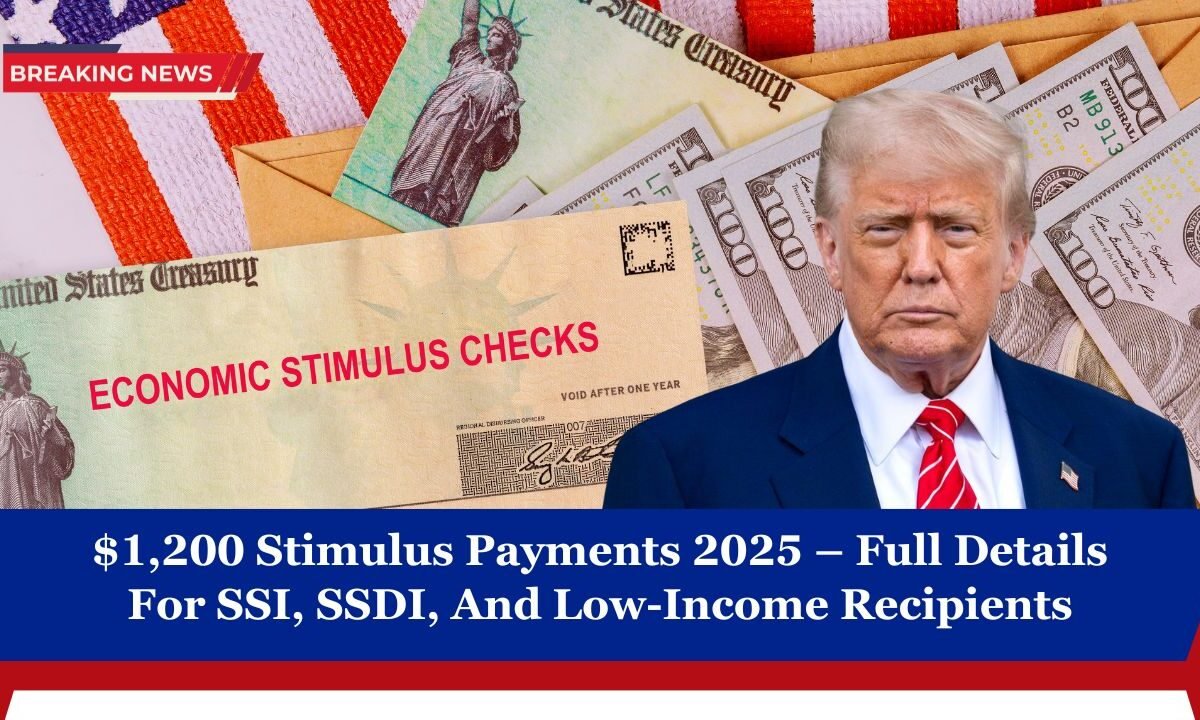
The federal government is set to roll out $1,200 stimulus payments in 2025, bringing much-needed financial relief to millions of SSI, SSDI, and low-income recipients.
This one-time payment aims to help those most affected by rising costs of living, healthcare, and housing expenses.

The payment will be automatically distributed to eligible beneficiaries, with no separate application required for most recipients.
Whether you receive benefits via Direct Deposit, Direct Express Card, or paper check, the stimulus will be delivered through your existing method.
Who Is Eligible for the $1,200 Stimulus?
To qualify, you must already be receiving benefits from one of the following federal programs:
- Social Security Disability Insurance (SSDI) – for individuals with disabilities.
- Supplemental Security Income (SSI) – for seniors or low-income individuals.
- Social Security Retirement Benefits (SSA) – for retirees and dependents.

You may also qualify if you:
- Earn below the federal income threshold for your household size.
- Are a U.S. citizen or lawful permanent resident with a valid Social Security number.
- Have your benefit payment information on record with SSA or the IRS.
If you recently started receiving benefits or changed your account information, you may experience a slight delay in your stimulus payment.
Key Highlights of the $1,200 Stimulus Payment
| Feature | Details |
|---|---|
| Payment Amount | $1,200 (one-time, non-taxable) |
| Administered By | Social Security Administration (SSA) |
| Eligible Groups | SSI, SSDI, SSA, and Low-Income Recipients |
| Payment Method | Direct Deposit, Direct Express Card, or Paper Check |
| Application Needed? | No – automatic for eligible recipients |
| Purpose | To assist with essential expenses like rent, food, and medicine |
| Country | United States |
| Estimated Arrival | Within a few weeks after federal approval |
How and When Payments Will Arrive
The $1,200 stimulus checks are expected to be released within weeks of federal approval of the economic aid plan.

Recipients using Direct Deposit will receive funds first, while those who receive paper checks or use Direct Express Cards will see payments a bit later due to processing times.
The payment is non-taxable and will not affect eligibility for existing federal assistance programs. Recipients can use the money freely — whether for rent, groceries, transportation, or overdue bills.
To avoid scams, individuals should ignore unsolicited emails or messages asking for personal or banking details. Official payment notices will only come from trusted federal agencies.
Economic Impact and Importance
The $1,200 stimulus offers more than short-term relief. It represents a step toward stabilizing household finances and supporting local economies.
When low-income and fixed-income individuals receive aid, that money often circulates within local communities, benefiting small businesses and essential services.
For millions living on limited income, this payment offers a lifeline — helping cover medical costs, heating bills, or debt that’s been accumulating amid inflation.
The $1,200 stimulus payments in 2025 bring much-needed financial relief to disabled, retired, and low-income Americans.
By ensuring automatic delivery through Social Security systems, the government seeks to provide immediate assistance without added paperwork.
This one-time support payment will help millions manage essential needs and offset rising costs — reaffirming the commitment to protect the financial stability of those who rely most on federal aid programs.
FAQs
Do I need to apply for the $1,200 stimulus check?
No. If you receive SSI, SSDI, or SSA benefits, you will receive the payment automatically through your usual method.
Will the $1,200 payment affect my benefits or taxes?
No. The payment is not taxable and does not count as income toward SSI or SSDI benefit calculations.
When will I receive my payment?
Payments are expected to be distributed within a few weeks of federal approval, with Direct Deposit recipients receiving theirs first.