
 Patrick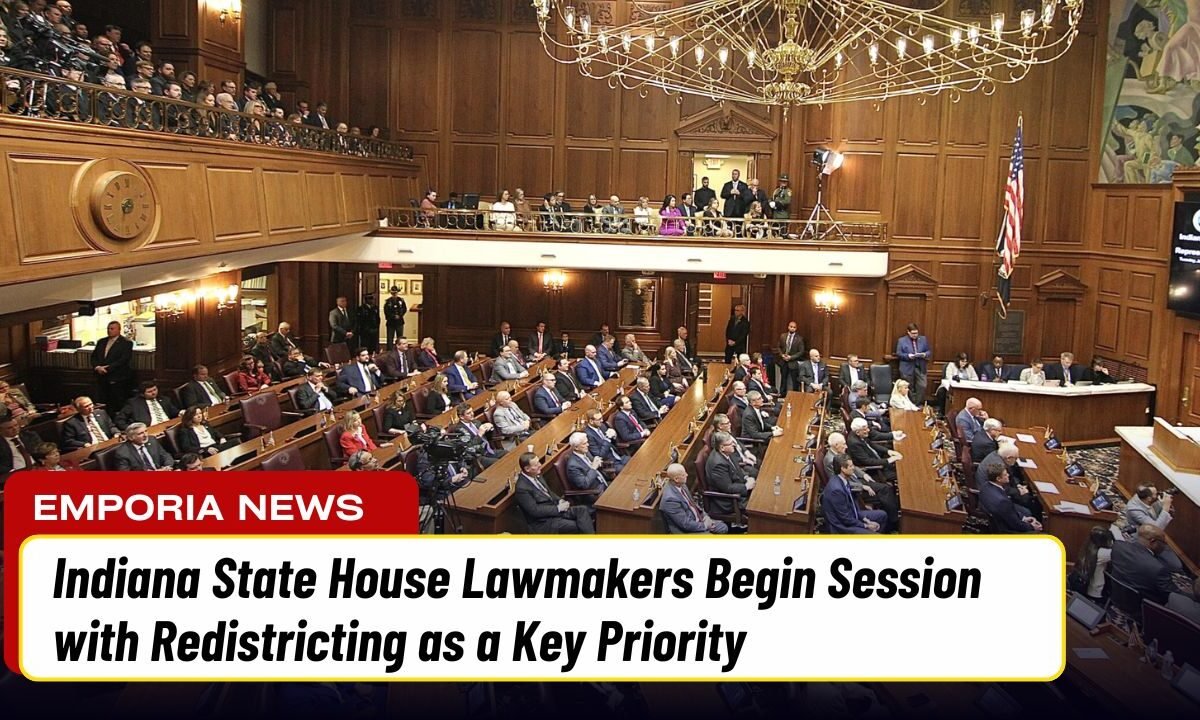
Indiana House lawmakers are preparing to advance a new congressional redistricting proposal on Monday, stepping up pressure on resistant Republicans in the state Senate to comply with President Donald Trump’s push for a strongly GOP-leaning map.
Although Republican leaders in the House have repeatedly stated that passing a redrawn map is virtually guaranteed in their chamber, the situation remains far less predictable in the Senate.

Republicans also control the Senate, but many members have pushed back for months against efforts to revise the congressional lines.
Senate Resistance Continues Despite White House Pressure
Senate leadership recently reversed an earlier decision to avoid convening, announcing plans to meet the following Monday. However, it is still uncertain whether enough senators will approve a new congressional map. As of late Friday, no formal legislation or map proposal had been released publicly.
Currently, Republicans hold seven of Indiana’s nine U.S. House seats. Trump and other national GOP figures want the state to shift to a 9–0 Republican advantage, with the goal of securing two more seats for the 2026 elections—an election cycle likely to influence control of the U.S. House of Representatives. Democrats need only a few flipped districts nationally to erase the GOP’s narrow edge.
National Context: Both Parties Maneuvering for Advantage

Federal pressure has intensified, with the White House urging Indiana Republicans to follow the redistricting paths taken by GOP-led states like Texas, Ohio, and North Carolina. In response to expected Republican gains, Democrats in California and Virginia have worked to reshape their own congressional boundaries.
Yet Indiana’s Senate Republicans remain notably more resistant than their House counterparts. In November, Senate GOP members defied Republican Gov. Mike Braun by refusing to attend a special session he called specifically for redistricting.
At the time, Senate President Pro Tempore Rodric Bray stated that the chamber did not have enough support to pass a revised map. His office offered no comment on Friday when asked whether the situation has changed.
Tensions Escalate as Trump Targets Senate Holdouts

President Trump has repeatedly criticized Indiana senators—especially Bray—on social media, vowing to back primary challengers against Republicans who do not support the redistricting effort.
Lawmakers who openly opposed the changes, or declined to take a position, have faced threats and swatting attempts. Even one supporter of redistricting and Gov. Braun himself have reportedly received threats.
House Sets Special Session; Senate Follows
The House formally announced that legislators will gather Monday in Indianapolis.
“All legislative business will be considered beginning next week, including redrawing the state’s congressional map,”
— House Speaker Todd Huston, Tuesday statement
Following the House’s announcement, the Senate declared it would reconvene on December 8, partly due to internal pressure from senators who objected to leadership’s initial refusal to hold a vote.
Bray acknowledged the tension in a public statement:
“The issue of redrawing Indiana’s congressional maps mid-cycle has received a lot of attention and is causing strife here in our state.”
He confirmed that the Senate intends to resolve the matter before the end of December.
Indiana is entering a pivotal moment in its redistricting battle, with Republicans in the House eager to advance a map that could solidify a 9–0 GOP advantage ahead of the 2026 elections.
However, Senate reluctance—and intense pressure from both Trump and the White House—has transformed the process into a high-stakes political showdown.
As lawmakers prepare for upcoming sessions, the state’s political landscape remains uncertain, and the next few weeks will determine whether Indiana joins other states in aggressively reshaping congressional power.