
 Hailey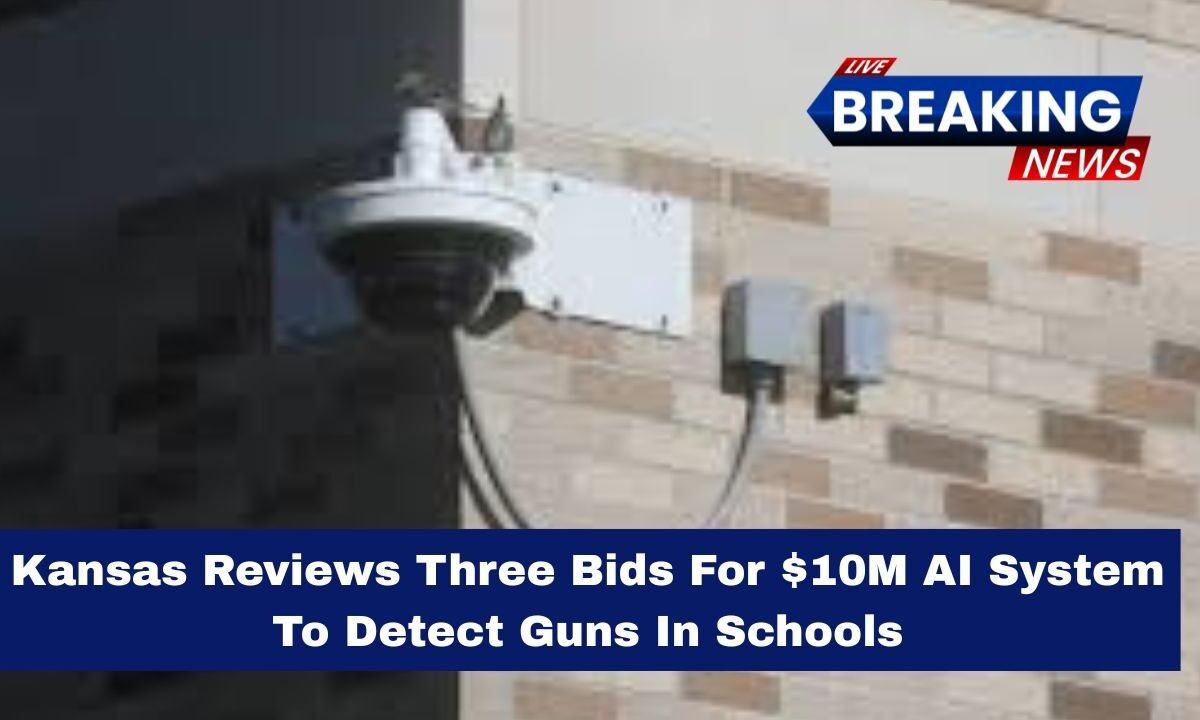
Kansas officials are now reviewing three vendor bids to build a $10 million statewide AI-powered gun-detection system aimed at identifying visible firearms on school campuses.
The proposal is part of a new statewide strategy to strengthen school safety using advanced artificial intelligence, installed on existing security camera networks across Kansas public schools.

This multi-million-dollar initiative was approved under the 2025 state budget, and the technology is expected to be deployed across hundreds of school campuses, giving districts the option to join the program at no additional cost—at least during the initial phase.
How the Kansas AI School Safety System Will Work
The system will use AI software integrated with school security cameras to identify unconcealed guns in real time.
When the AI detects what appears to be a visible firearm, the system must trigger an alert and forward it to:
- School administrators
- Designated security teams
- Local law enforcement

The goal is to send a fully verified alert within 60 seconds, allowing schools and police to respond immediately to a potential threat.
Kansas has set strict deadlines for vendors:
- Installation deadline: December 31, 2025
- Fully operational statewide: February 28, 2026
All public school districts are eligible to participate voluntarily. The state’s $10 million budget covers initial technology setup and integration.

After that period, districts may need to pay ongoing subscription or monitoring fees.
The Three Companies Competing for the Contract
Kansas has received three official bids for the project:
- Gades Sales Co. (Kansas-based security vendor)
- CIS Data Services (regional technology firm)
- ZeroEyes (a national AI gun-detection company widely known for school safety systems)
One of the leading companies, ZeroEyes, has previously quoted that outfitting Kansas schools with 24/7 monitoring and extensive camera coverage across more than 1,300 school buildings could cost over $8 million annually after the initial installation phase.
This means districts may face significant long-term subscription expenses after state funding runs out.
Most AI vendors acknowledge a major limitation: these systems cannot detect concealed or holstered weapons. They only identify visible guns held in hand or openly carried.
Kansas’ Performance Requirements for the System
State officials outlined a set of mandatory performance targets for whichever company wins the contract. The AI must achieve:
- At least 90% accuracy for detecting visible, unholstered guns
- No more than 5% false positives
- Human confirmation within 60 seconds
- Immediate alerting within the same 60-second window
These strict standards aim to prevent frequent false alarms, which can disrupt learning and trigger unnecessary lockdowns.
However, concerns remain about transparency because not all vendors publicly report their false-detection statistics.
Political Background and Previous Controversy
Kansas lawmakers initially considered a $5 million pilot program that would have exclusively benefited a single gun-detection vendor.
The plan sparked criticism because it appeared to favor one company without competition.
The updated $10 million program, however, is open to all qualifying vendors and includes all Kansas public school districts.
It also replaces an older statewide school safety grant initiative, which many districts previously relied on for broader security upgrades.
Some school leaders argue that shifting all funding to AI detection tools may leave schools without support for other needs such as:
- Door hardening
- On-site security staff
- Emergency communication upgrades
- Mental health services
Key Information
| Category | Details |
|---|---|
| Total Funding | $10 million statewide allocation |
| Purpose | AI system to detect visible firearms on school cameras |
| Number of Bids | Three (Gades Sales Co., CIS Data Services, ZeroEyes) |
| Administered By | Kansas Attorney General’s Office |
| Install Deadline | December 31, 2025 |
| Operational Deadline | February 28, 2026 |
| Accuracy Requirement | 90%+ true positive rate |
| False Positive Limit | 5% or less |
| Alert Time Requirement | Within 60 seconds |
| Detection Limitation | Cannot detect concealed weapons |
| Long-Term Costs | Districts may pay after initial state funding expires |
Supporters vs. Critics
Supporters argue the technology will:
- Provide faster alerts than traditional human monitoring
- Improve law enforcement response times
- Help prevent escalating incidents
- Serve as a deterrent if potential threats know cameras can detect them
Critics warn that:
- AI systems may create false alarms and unnecessary panic
- They do not detect concealed guns, limiting their usefulness
- Long-term subscription fees could burden districts
- Other security programs lost funding to support this initiative
Kansas’ plan to deploy a $10 million AI gun-detection system represents one of the nation’s most ambitious attempts to use artificial intelligence for school safety.
With three vendors competing and strict performance requirements in place, Kansas aims to build a fast-alert system capable of detecting visible firearms in real time.
However, limitations such as the inability to detect concealed weapons, concerns over false alerts, and significant long-term operational costs continue to spark debate.
As Kansas prepares to select a vendor, the state must balance technological promise, financial practicality, and real-world safety needs to ensure students are genuinely protected.