
 Hailey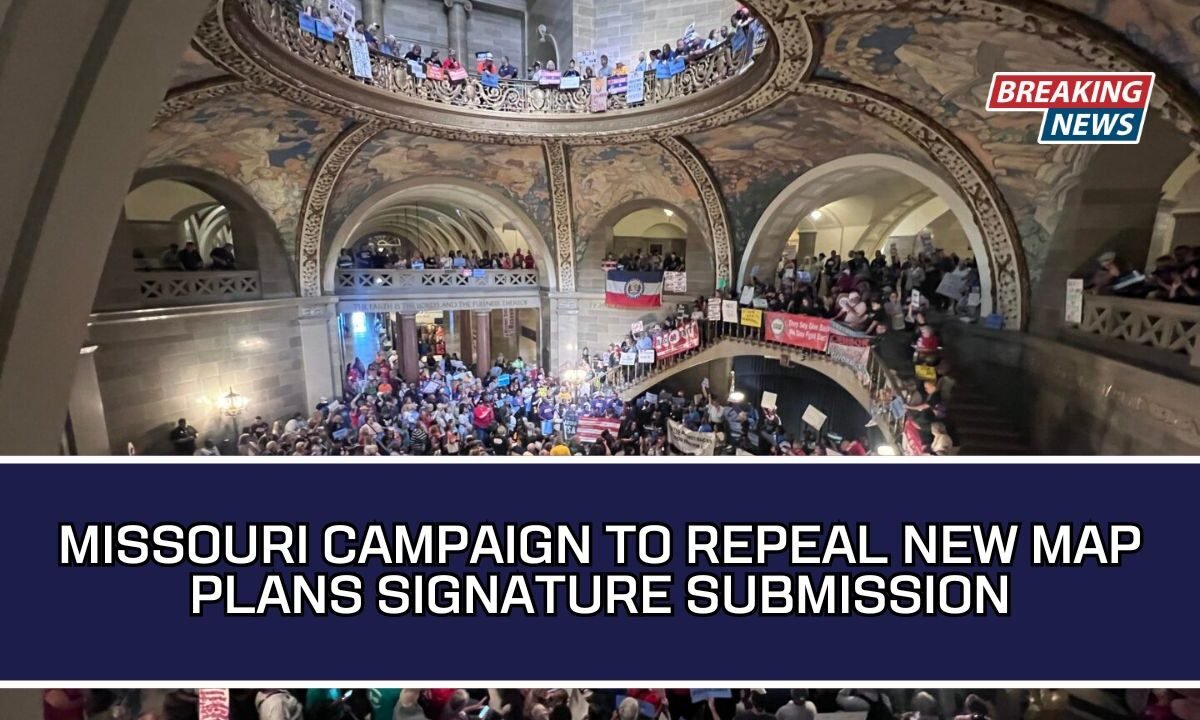
Missouri Campaign: Missouri is facing a major political showdown as citizens join together to challenge the state’s newly approved congressional map.
Many people believe the map is gerrymandered and unfair, and a fast-growing campaign says it has collected enough signatures to put the issue on the statewide ballot next year.

If the petition qualifies, the map will be placed on hold, giving Missouri voters the power to decide whether it should become law.
Why the New Map Sparked Controversy
The new congressional map was created after former President Donald Trump pushed Missouri lawmakers to design a map that would give Republicans control of seven out of eight seats.
To make this possible, GOP lawmakers broke apart the Kansas City–based 5th District represented by Democrat Emanuel Cleaver. Critics say this move was purely political and not in the interest of fair representation.
The Campaign Behind the Referendum
A group called People Not Politicians is leading the fight to repeal the map. The group began its signature drive soon after lawmakers passed the map.
Since then, it has collected more than 200,000 signatures and raised millions of dollars from nonprofit organizations. Most of the funding came from groups outside Missouri, which has created some debate but also helped the campaign grow quickly.
Signature Requirements for the Petition
For the referendum to qualify, the campaign needs at least 106,000 valid signatures from registered voters. The signatures must come from at least six of the state’s eight congressional districts.
Simple Table:
| Requirement | Details |
|---|---|
| Minimum Signatures Needed | 106,000 |
| Districts Required | 6 of 8 districts |
| Signatures Collected So Far | Over 200,000 |
| Outcome if Accepted | Map put on hold until voters decide |
If the petition is approved, the map will not take effect until Missouri voters make the final decision in 2025.
Republican Efforts to Block the Campaign
From the beginning, Republican leaders have tried to slow down or stop the campaign. Secretary of State Denny Hoskins said he would not accept any signatures collected before the governor signed the map into law. This decision could remove more than 90,000 signatures, and a court hearing will determine whether this move is legal.
Hoskins also wrote the ballot summary that voters would see. His summary says the new map “better reflects statewide voting patterns” and replaces a “gerrymandered” version that protected incumbents. The campaign argues that this wording is misleading.
The conflict grew when Attorney General Catherine Hanaway filed a federal lawsuit claiming the map should not be subject to a citizen referendum.
She also accused the signature-gathering company of bringing undocumented immigrants to Missouri to help collect signatures. The company strongly denies this, and no evidence has been presented.
Claims of Sabotage and National Attention
The company collecting signatures, Advanced Micro Targeting, filed its own lawsuit accusing four Republican consulting firms of trying to sabotage the campaign. They claim these firms offered money to workers to quit, hand over signatures, or spread negative information.
The Republican National Committee has also sent mass text messages attacking the referendum effort. Donald Trump Jr. joined the criticism online, calling the group’s director a “leftist nut,” which led to more attacks from accounts that appear to be from outside the country.
The fight over Missouri’s congressional map has grown far beyond a local political issue. With thousands of signatures collected, legal challenges from multiple sides, and national political leaders involved, this issue has become one of the most important political battles in Missouri.
Whether the map stays or goes may soon be in the hands of voters, making this a defining moment for fair representation and democratic choice in the state.