
 Mandy
Mandy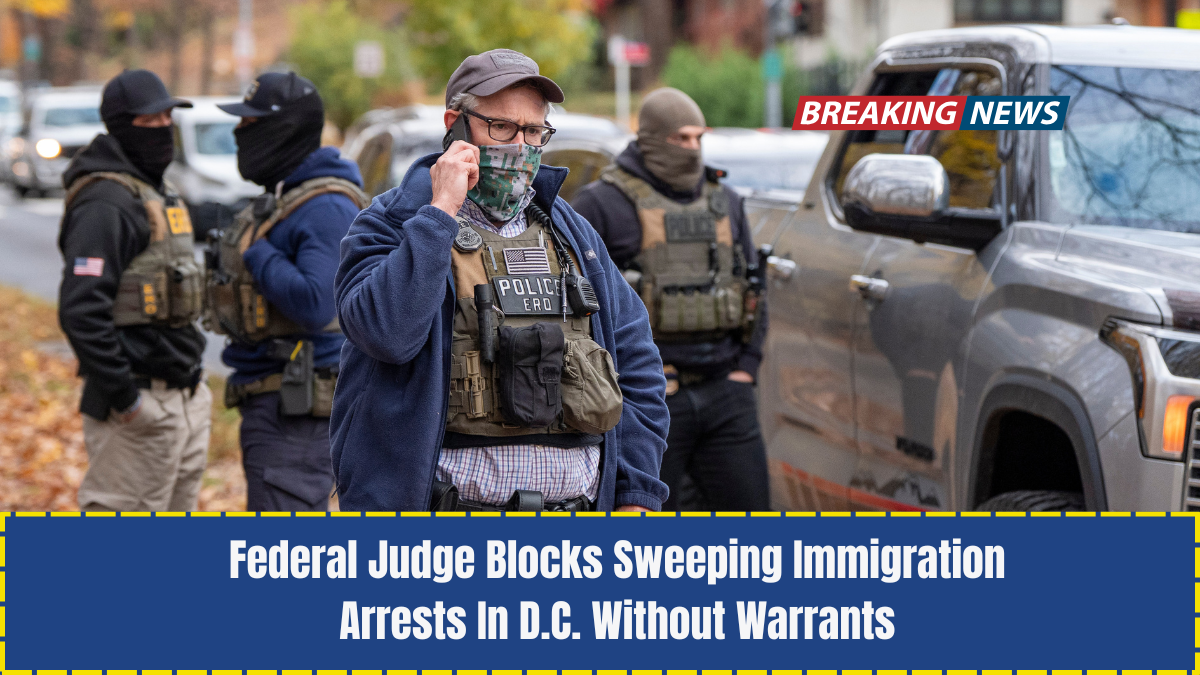
A federal judge has temporarily blocked immigration officers from making warrantless arrests in Washington, D.C. unless they can prove probable cause, marking a major development in the ongoing legal battle over enforcement practices in immigrant communities.
Judge Howell Issues Major Ruling Against Warrantless Detentions
U.S. District Senior Judge Beryl A. Howell issued a preliminary injunction preventing federal agents from arresting individuals in D.C. without a warrant unless they can clearly show that the person is unlawfully present in the United States and poses a credible flight risk before a warrant can be secured.

The lawsuit was brought forward by immigrant advocates who argued that Latino communities were being unfairly targeted—even when individuals possessed legal immigration status.
Judge Howell emphasized that federal officials have been treating all immigrants as potential criminals, a stance she described as “plainly incorrect” under the law.
She also pointed to comments from officials during the Trump administration, suggesting that enforcement goals had shifted toward meeting arrest quotas instead of maintaining proper legal standards such as probable cause.
Evidence Of A Lower Arrest Standard

In her ruling, Howell wrote that the record clearly demonstrates federal agencies have been using a reduced threshold for civil immigration arrests, effectively functioning as an unofficial policy.
According to Howell, this practice contradicts federal legal requirements and justified the need for immediate judicial intervention.
Impact Of Trump’s National Guard Deployment In D.C.
The case is directly tied to former President Donald Trump’s emergency declaration, which brought a surge of federal law enforcement and National Guard troops into the nation’s capital.

This deployment triggered a noticeable rise in aggressive immigration actions, including operations conducted by plainclothes and even masked officers, particularly in neighborhoods with larger immigrant populations.
Plaintiffs Describe Fear And Unlawful Detention
The four individual plaintiffs—all immigrants with legal protections, such as pending asylum claims or temporary status—reported being detained by federal agents, sometimes for several days.
Many described the arrests as feeling like kidnappings, and said they feared ongoing targeting solely because they are Latino.
Advocacy groups involved in the case have requested class-action certifications, which would allow the suit to cover all individuals similarly affected. Judge Howell stated she will decide on the matter at a later date.
Civil Rights Groups Applaud The Court’s Decision
Organizations leading the legal challenge, including the ACLU, ACLU of D.C., CASA, Amica Center for Immigrant Rights, National Immigration Project, the Washington Lawyers’ Committee, and the law firm Covington & Burling LLP, welcomed the injunction.
In a joint statement, they reiterated that everyone in Washington, D.C., has legal rights, regardless of immigration status, and federal agents must uphold those rights without intimidation or unlawful actions.
The preliminary injunction represents a significant check on federal immigration enforcement in Washington, D.C. Judge Howell’s ruling underscores that probable cause—not ethnic profiling or enforcement quotas—must guide federal officers.
As the lawsuit continues and the court examines broader class-action implications, immigrant communities and legal advocates see the decision as an important step toward restoring lawful and fair enforcement practices in the district.
FAQs
What did the judge’s ruling prevent?
The ruling blocks federal agents from making warrantless immigration arrests in D.C. unless they can establish probable cause and a flight risk.
Why was the lawsuit filed?
Advocates claimed that Latino immigrants, including those with legal status, were being targeted and unlawfully detained by federal officers.
Who supported the plaintiffs in this case?
Groups such as the ACLU, CASA, National Immigration Project, and Covington & Burling LLP jointly represented the plaintiffs.