
 Hailey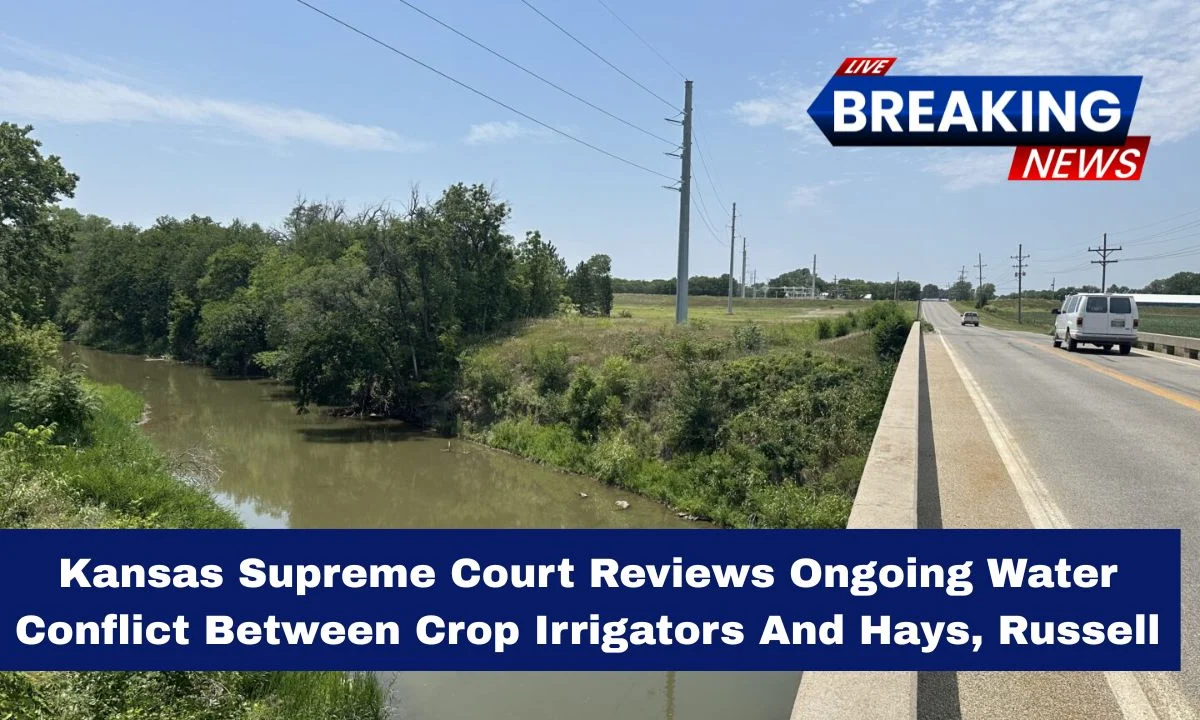
Water Conflict,TOPEKA, Kansas: — The Kansas Supreme Court is currently examining one of the state’s most complex and high‑stakes water rights disputes — a conflict between crop irrigators in Edwards County and the cities of Hays and Russell over the proposed diversion of aquifer water to supply municipal needs.
This ongoing litigation highlights fierce disagreements over water use, agricultural sustainability, legal authority, environmental impact, and constitutional rights under Kansas law.

The case before the Supreme Court focuses on whether Hays and Russell can proceed with a decades‑long plan to transfer groundwater from the R9 Ranch aquifer in Edwards County — acquired in the mid‑1990s — to meet mounting water demands in both cities.
This legal battle has included lower‑court decisions, federal court filings, and multiple regulatory reviews, making it a pivotal conflict for water policy in Kansas.
Background of the Water Conflict
The cities of Hays and Russell face persistent water supply challenges due to drought conditions and limited local sources such as the *Smoky Hill River, Big Creek, and Dakota Aquifer. In response, both cities purchased the R9 Ranch in 1995, which contains valuable water rights — a strategy intended to secure a long‑term, drought‑resistant supply.

The plan involves diverting up to 6,750+ acre‑feet of water annually from the R9 Ranch to municipal systems via a pipeline extending more than 70 miles. Water Conflict :These rights were originally for agricultural irrigation, but the cities sought to change them to municipal use under state water law.
Rural crop irrigators, including members of the Water Protection Association of Central Kansas (WaterPACK), argue this transfer will deplete local groundwater, raise irrigation costs, reduce crop yields, and degrade rural quality of life. They have repeatedly challenged the cities’ regulatory approvals and land use changes.
What the Supreme Court Is Reviewing
At the heart of the current Supreme Court hearing is whether WaterPACK and other irrigators have the legal standing to challenge the regulatory orders that allow the water rights transfer.

Attorneys for Hays and Russell contend the state law explicitly permits cities to use water rights they own, regardless of whether the aquifer level drops due to municipal diversion.
Opposing counsel for WaterPACK argues that the Chief Engineer of the Kansas Department of Agriculture’s “master order” illegally bypasses important statutory safeguards, threatening long‑term aquifer viability and irrigators’ property rights.
The Department of Agriculture’s lawyer defends the order, saying the irrigators have not shown they will be unable to satisfy their water rights if the cities begin withdrawals.
Timeline of Key Events
| Year | Event |
|---|---|
| 1995 | Hays and Russell purchase R9 Ranch (~7,000 acres) for water rights. |
| 2014–2016 | Cities file applications to change irrigation rights to municipal use and seek approval under Kansas Water Transfer Act. |
| 2019 | State Chief Engineer issues master order allowing change & future transfer. |
| 2022–2024 | Multiple legal challenges filed; Edwards County enacts zoning rules to block project. |
| 2025 (May) | Case moved to federal court; drought conditions persist. |
| 2025 (Dec) | Kansas Supreme Court hears oral arguments. |
Major Legal and Environmental Issues
Legal Standing and Authority
The Supreme Court’s questions center on whether WaterPACK can challenge state regulatory decisions, and if the Department of Agriculture’s orders meet statutory requirements for water‑rights changes and transfers.
Environmental and Economic Impact
WaterPACK claims the aquifer’s slower recharge and increased pumping demands will damage agricultural productivity and rural economic health.
Cities counter that their withdrawal will not legally impair other water rights and that municipal supplies are critical for urban growth.
Climate and Drought Context
Drought conditions in central Kansas heighten concern, as local water sources are variable and unreliable, making long‑term planning urgent.
The Kansas Supreme Court’s review of this water rights dispute between crop irrigators and the cities of Hays and Russell marks a defining moment in how Kansas balances rural water use, urban needs, and legal interpretations of water law.
With years of litigation behind it and more yet to unfold, the outcome may reshape future water rights cases across the region.