
 Hailey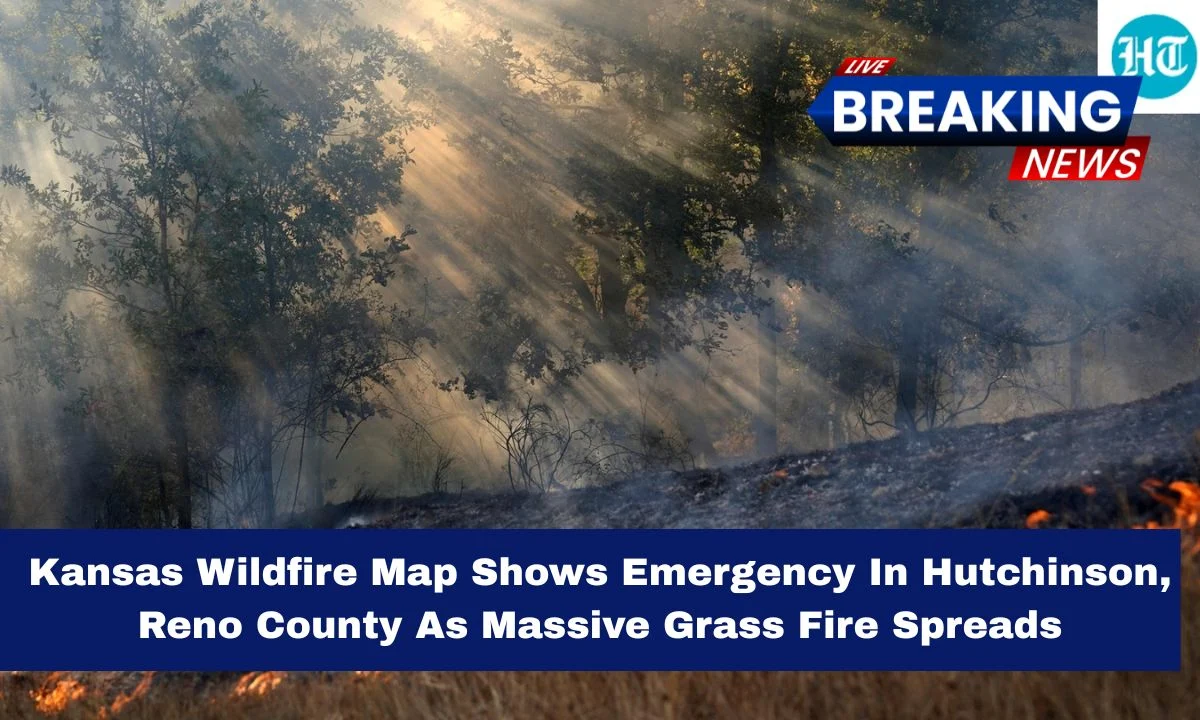
A major wildfire emergency has been declared in Hutchinson and Reno County, Kansas, after a fast-moving grass fire spread rapidly across hundreds of acres.
The Kansas wildfire map highlighted the area as a high-risk zone as flames advanced quickly due to dry weather, low humidity, and strong winds. Emergency officials acted swiftly to protect residents, livestock, and infrastructure as conditions worsened throughout the day.

Local fire departments described the situation as extremely dangerous, with wind-driven flames jumping fire lines and threatening nearby neighborhoods and rural properties.
Where the Fire Started and How It Spread
The wildfire ignited in northern Hutchinson, near the 82nd Street and Monroe Road area, before spreading southeast into parts of Reno County. Dry grasslands and open fields allowed the fire to grow rapidly, burning through wide stretches of land in a short time.
Strong wind gusts pushed flames toward residential areas, forcing emergency crews to fight the fire on multiple fronts. Fire officials confirmed that grass fires can spread faster than structural fires, making early evacuation critical in such situations.
Evacuations, Road Closures, and Public Safety Measures

Authorities issued voluntary and precautionary evacuations for residents in threatened areas, including zones north of 56th Street and east toward Halstead.
Law enforcement assisted with door-to-door alerts in some locations to ensure residents were aware of the danger.
Several roads were temporarily closed to allow emergency vehicles to move freely, including sections near Plum Street, Rolling Hills Road, and Blue Spruce Road. Some closures were lifted later once fire lines were stabilized, but officials warned conditions could change quickly.

Residents were urged to:
- Avoid fire-affected zones
- Follow evacuation guidance immediately
- Keep emergency alerts enabled
- Prepare go-bags for rapid evacuation
Firefighting Response and Emergency Resources
More than 100 firefighters and emergency responders from multiple departments across the region were deployed to combat the blaze. Crews used fire engines, water tenders, and controlled backburning techniques to slow the fire’s advance.
The Kansas State Fairgrounds was designated as a temporary shelter area, particularly for livestock and large animals, ensuring displaced residents had a safe place for animals during the emergency.
Emergency management officials confirmed that inter-county mutual aid played a crucial role in containing the wildfire and protecting nearby structures.
Kansas Wildfire Emergency – Key Facts
| Category | Details |
|---|---|
| Affected Area | Hutchinson & Reno County, Kansas |
| Fire Type | Grass wildfire |
| Estimated Area Burned | Approximately 500 acres |
| Primary Cause | Dry grass, strong winds, low humidity |
| Evacuation Status | Partial evacuations issued and adjusted |
| Firefighters Deployed | 100+ responders |
| Animal Shelter Support | Kansas State Fairgrounds |
| Road Closures | Temporary closures near fire zones |
| Structural Damage | No confirmed home losses |
| Injuries Reported | None confirmed |
Impact on Schools, Homes, and Infrastructure
As a precaution, Plum Creek Elementary School and nearby facilities were evacuated to ensure student safety. While the fire burned close to residential areas, officials reported no confirmed destruction of homes or buildings as of the latest update.
Power disruptions were minimal, but residents experienced smoke-related air quality concerns. Health officials advised people with respiratory conditions to remain indoors and limit outdoor exposure.
Why Grass Fires Are So Dangerous in Kansas
Kansas grass fires are especially dangerous because:
- Grass ignites easily in dry conditions
- Fires spread rapidly with wind
- Flames can travel faster than evacuation times
- Rural areas often lack natural fire breaks
Fire officials stressed that even small sparks can ignite large fires during high-risk weather conditions, emphasizing the importance of fire bans and public cooperation.
The Hutchinson and Reno County wildfire emergency highlights the serious threat posed by grass fires in Kansas.
Thanks to rapid emergency response, coordinated firefighting efforts, and community cooperation, major damage was prevented despite extreme conditions.
However, officials continue to monitor hot spots and warn residents to remain alert. As wildfire risks increase, preparedness, early evacuation, and public awareness remain critical to protecting lives and property.