
 Mandy
Mandy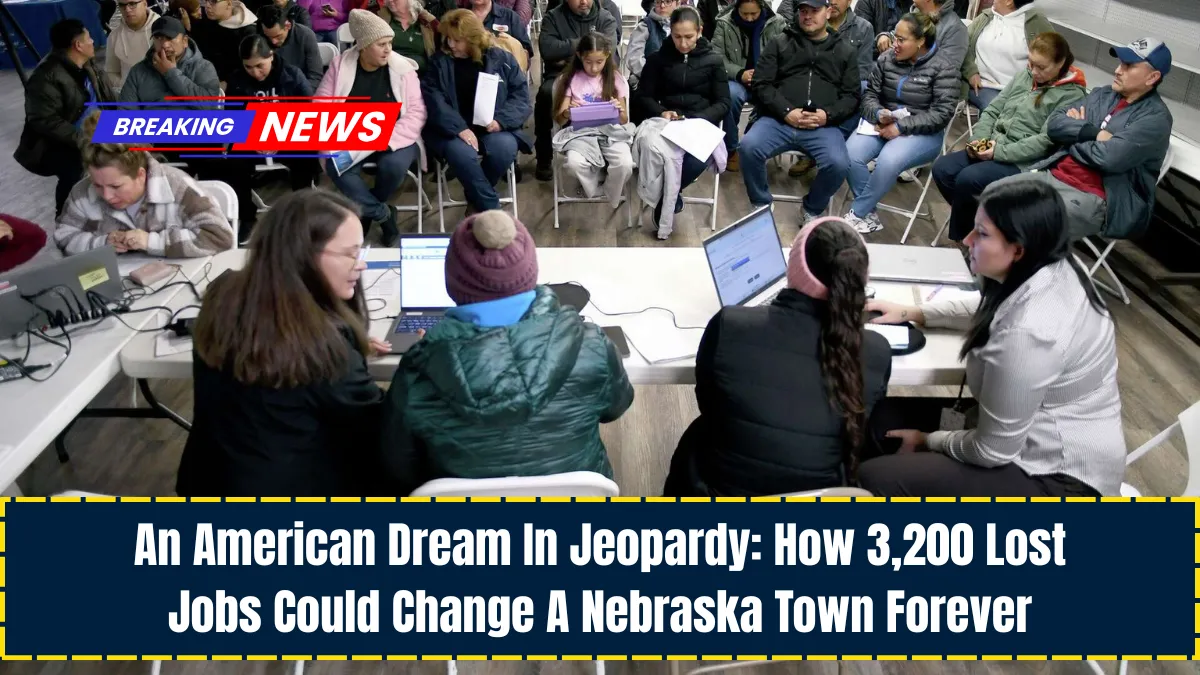
On a bitterly cold day in rural Nebraska, parishioners leaving Mass at St. Ann’s Catholic Church quietly made their way into the basement, sitting shoulder to shoulder on folding chairs.
Behind calm expressions was deep anxiety about the future of their town.

The holiday season felt unusually heavy in Lexington, Nebraska, where residents are grappling with devastating news: Tyson Foods’ beef processing plant, the city’s largest employer, is set to close next month.
The shutdown will eliminate 3,200 jobs, ending more than 20 years of operation.
For workers like Alejandra Gutierrez, the announcement was life-altering.
“One day you’re working, the next day everything stops. It feels like your whole world collapses,” she said.
Economic Shockwaves Through A Town of 11,000

The Tyson facility has been the backbone of Lexington’s economy. With its closure, experts warn the effects will stretch far beyond the plant’s walls.
According to economist Michael Hicks, director of the Center for Business and Economic Research at Ball State University, losing thousands of jobs in a town this size is catastrophic.
“Losing 3,000 jobs in a community of just over 10,000 people is among the most severe economic blows a town can experience,” he said.

A University of Nebraska–Lincoln report estimates that the closure could ultimately result in 7,000 total job losses, including indirect layoffs across nearby counties.
Tyson workers alone are expected to lose $241 million annually in wages and benefits.
Why Tyson Is Closing the Plant
Tyson Foods says the decision is part of a broader effort to “right-size” its beef operations. The company cited a historic low in U.S. cattle supply and projected $600 million losses in beef production next fiscal year.
Despite understanding the business rationale, residents say the human cost is overwhelming.
A Community Built on Opportunity Now at Risk
For decades, Lexington represented the American Dream. Immigrants—many without English fluency or high school diplomas—found stable work, bought homes, raised families, and sent their children to college.
Now, mortgages, car loans, property taxes, and tuition bills loom without paychecks to cover them.
Gutierrez learned of the closure while touring a college campus with her daughter, Kimberly, a high school senior.
“My daughter told me she didn’t want to go to college anymore,” Gutierrez said. “She didn’t know how we could afford it.”
‘Tyson Was Our Lifeline’
Located near the geographic center of the United States, Lexington—known locally as “Lex”—grew rapidly after the plant opened in 1990 and was acquired by Tyson 11 years later. The workforce influx nearly doubled the town’s population.
The town evolved into a culturally diverse community, with Somali grocers next to Hispanic bakeries, more than a dozen churches, and busy recreation centers.
Inside the plant, where up to 5,000 cattle are processed daily, morale has collapsed.
“It feels like attending a funeral every day,” said worker Lizeth Yanes.
Kenyan immigrant Arab Adan described Tyson as “our motherland.” His children, he said, keep asking which state they’ll have to move to next.
Schools, Small Businesses, and Families at Risk
Nearly half of Lexington’s students have at least one parent employed by Tyson. The school district, known for strong graduation and college attendance rates and one of Nebraska’s largest marching bands, could soon face declining enrollment and teacher layoffs.
Local businesses are bracing for impact. At Los Jalapeños, a restaurant frequented by plant workers, owner Armando Martinez fears closure if customers disappear.
“There’s nowhere else for us to go,” he said.
Calls for Corporate Responsibility
City Manager Joe Pepplitsch says Tyson has a moral responsibility to help soften the blow. He noted that the company does not pay city taxes, thanks to decades-old agreements.
While Tyson says it is evaluating how the facility could be repurposed, it has not committed to selling the plant or providing community support.
Starting Over With Limited Options
At the Dawson County Fairgrounds, state agencies hosted emergency job fairs offering help with unemployment benefits, retraining, and resumes. The atmosphere felt clinical and grim.
Many longtime workers are older, lack formal education, and are unfamiliar with modern job applications.
“All we know is working meat,” Adan said.
Some residents may relocate to Kansas, Iowa, California, or Mexico. Others will try to stay, though few see a clear path forward.
“It’s not the job—it’s the home,” said longtime worker Francisco Antonio.
“If there’s no work here, Lexington will disappear.”
The closure of the Tyson Foods plant is more than a business decision—it is a turning point that threatens the social and economic fabric of Lexington, Nebraska.
With thousands of jobs lost, families displaced, schools at risk, and local businesses hanging by a thread, the town faces a defining moment.
Whether Lexington survives this crisis will depend on corporate accountability, government intervention, and whether new opportunities can emerge before the community unravels.
FAQs
Why is the Tyson Foods plant in Lexington closing?
Tyson cites a historically low cattle supply and projected $600 million losses in beef production as reasons for closing the plant.
How many total jobs could be affected?
While 3,200 Tyson jobs will be lost directly, total job losses could reach 7,000 due to ripple effects in surrounding communities.
What happens to Lexington after the closure?
Without new employers or intervention, the town could face population decline, school layoffs, and business closures.