
 Hailey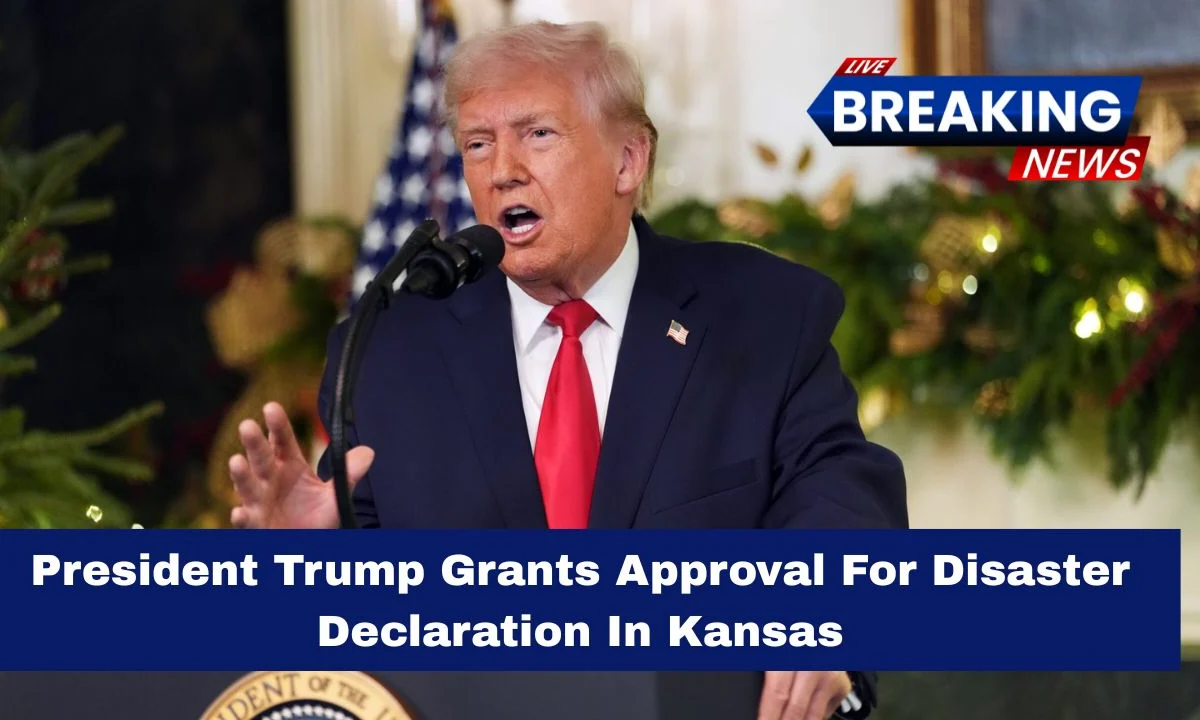
In a major step to help communities recover from severe summer weather, President Donald J. Trump has granted a major presidential disaster declaration for the state of Kansas.
This decision follows months of requests from Kansas leadership after widespread damage from severe storms, straight‑line winds, and flooding that rocked the state in mid‑July 2025.

This comprehensive article provides the latest verified details, facts, figures, and fallout from this federal action, giving readers a complete picture of what the disaster declaration means for Kansas residents, local agencies, and federal support programs.
What Happened: Severe Weather in Kansas
Between July 17 and July 22, 2025, multiple counties across Kansas experienced catastrophic severe storms, including:
- Heavy flooding
- Straight‑line winds
- Infrastructure damage to roads, bridges, and public utilities
These events caused significant structural damage to public infrastructure, forcing local and state officials to request federal support. In response to that request, President Trump approved a disaster declaration on December 22, 2025.
What the Disaster Declaration Enables

A major presidential disaster declaration allows the following:
- Release of federal funding to support recovery.
- Public Assistance for emergency work and permanent infrastructure repair.
- Eligibility for certain local governments and nonprofit organizations (such as rural electrical cooperatives) to apply for federal assistance to repair or replace damaged public infrastructure.
This federal support is intended to supplement local and state resources that are overwhelmed by the scale of the storms’ impact.
Counties Covered by the Declaration
The disaster declaration specifically includes 12 Kansas counties that reported significant storm‑related damage and infrastructure loss:
- Barton
- Comanche
- Edwards
- Hodgeman
- Logan
- Morris
- Ottawa
- Rawlins
- Saline
- Stevens
- Sumner
- Wyandotte

These counties will now have access to public infrastructure funds to help rebuild critical services and facilities.
Timeline of Requests and Approvals
Here’s how the request for federal disaster support unfolded:
| Date | Event |
|---|---|
| July 17–22, 2025 | Severe storms, winds, and floods hit Kansas. |
| September 2025 | Governor Laura Kelly formally requested a major disaster declaration. |
| December 22, 2025 | President Trump approved the request and issued the disaster declaration. |
The approval came after months of advocacy from state officials calling for federal assistance.
Leadership and Official Statements
Kansas Governor Laura Kelly expressed relief at the declaration, emphasizing the positive impact federal support will have on rebuilding efforts.
She noted that these funds will be crucial in helping local governments restore key public infrastructure so residents and businesses can begin meaningful recovery.
Local leaders in affected counties also praised the decision, noting that without public assistance funds through the Federal Emergency Management Agency (FEMA), rebuilding would take much longer and require significantly greater strain on state and local budgets.
Broader Context: Federal Disaster Aid Trends
This action fits into a larger pattern of disaster declarations issued under the Trump administration.
In 2025 alone, President Trump authorized multiple federal disaster declarations for natural disasters across several states facing floods, tornadoes, and storms, reflecting an increased reliance on federal support after major weather events.
President Trump’s approval of the major disaster declaration for Kansas marks a meaningful milestone for affected communities.
The release of federal funds will help repair devastated infrastructure and support long‑term recovery efforts in twelve counties struck by extreme weather in July 2025.
The collaboration between the state government and federal agencies underscores the importance of coordinated responses when natural disasters strike.
As rebuilding begins, thousands of Kansans will now have access to critical resources that can help them restore normalcy and rebuild stronger than before.