
 Patrick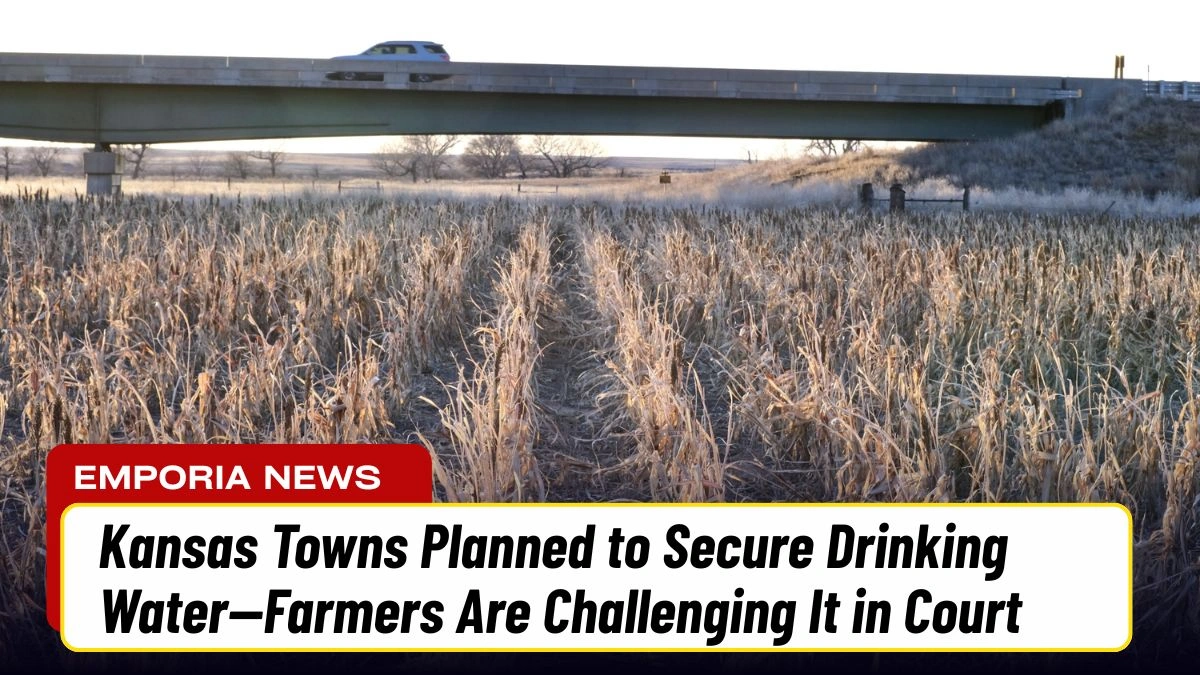
Groundwater has become one of the most valuable and contested resources in western Kansas.
As water supplies continue to shrink, communities such as Hays and Russell are once again defending their long-standing plan to transport water from a ranch located more than 70 miles away in another county.

The renewed court battle highlights a growing regional struggle over how limited water resources should be shared and protected.
Western Kansas towns increasingly recognize that water shortages are no longer a distant threat. For residents, farmers, and city leaders alike, the pressure to act has become urgent, prompting investments in water transfers, recycling systems, and aquifer recharge projects.
Growing Pressure on a Limited Resource
Unlike eastern Kansas, western Kansas receives nearly 40 inches less rainfall each year. The Rocky Mountains block moisture from moving eastward, leaving the region largely dependent on groundwater rather than surface water sources like rivers, lakes, or reservoirs.

As a result, communities and agricultural operations rely almost entirely on water stored deep underground. With aquifer levels steadily dropping, sharing this resource has become increasingly difficult, and legal systems are now being asked to balance water law, precedent, and long-term sustainability.
Ongoing Legal Disputes Over Water Transfers
The latest legal conflict centers on Hays and Russell, two towns in northwest Kansas seeking to pipe groundwater from land they own in Edwards County. Years ago, the cities purchased this land to secure a reliable future water supply.
However, local farmers raised concerns that removing groundwater from the area would threaten their livelihoods. In response, they formed the Water Protection Association of Central Kansas (WaterPACK) to challenge the transfer.

City officials say the dispute has dragged on for more than a decade. According to Hays leadership, groundwater in Edwards County is already leaving the region daily through agricultural products such as corn, cattle, hogs, and dairy operations. From the cities’ perspective, the transfer simply reallocates existing water use.
Farmers’ Concerns and Legal Arguments
WaterPACK argues that allowing the transfer would establish a dangerous precedent, potentially accelerating aquifer depletion and undermining property rights. Representatives for the group maintain that irrigated agriculture supports both local livelihoods and the broader state economy.
Farmers fear that redirecting groundwater away from Edwards County could reduce water availability for staple crops like corn and wheat, increasing economic strain in an already water-stressed region.
Cities Emphasize Agricultural Water Use
City officials counter that agriculture already accounts for about 95% of total water use in western Kansas. From their viewpoint, municipal use represents only a small fraction of groundwater consumption.
They also argue that state law permits water rights holders to change how water is used. The Kansas Department of Agriculture has already approved the cities’ water rights for municipal purposes, leaving the Kansas Supreme Court to decide whether Edwards County and WaterPACK can block the project.
Securing Water Supplies for the Future
Hays and Russell are not alone in searching for long-term water solutions. Other western Kansas cities, including Dodge City and Garden City, are pursuing large-scale water management projects.
In Dodge City, groundwater levels have dropped dramatically. Measurements show that in one well west of town, water depth declined from about 12 feet in 2000 to more than 45 feet by 2020. The city depends entirely on the Ogallala Aquifer for drinking water.
To address this decline, Dodge City plans to return treated wastewater to the dry Arkansas River bed, allowing it to slowly seep back into the aquifer. While full recharge can take hundreds or even thousands of years, the approach is designed to reduce long-term losses.
Closed-Loop Water Systems Gain Momentum
Cities like Garden City have adopted similar closed-loop systems. These projects aim to make communities “water neutral” by recycling treated wastewater and industrial water—such as runoff from new manufacturing facilities—back into the aquifer.
Dodge City is seeking $34 million in state and federal funding, while contributing $22 million locally. In the meantime, recycled water is also being used by nearby farmers to reduce their reliance on groundwater pumping.
Climate Stress and the Road Ahead
As climate pressures intensify, tensions between municipalities and agricultural producers are likely to persist. Both groups depend on the same shrinking water supply, making compromise and innovation essential.
According to regional engineers, investments in water reuse and recycling are laying the groundwork for more resilient systems. Direct water reuse is expected to become increasingly necessary as groundwater declines continue.
In the coming weeks, the Kansas Geological Survey will conduct new measurements across western Kansas. Previous data showed the region lost nearly one foot of groundwater on average in 2024, underscoring the urgency of finding sustainable solutions.
Western Kansas is facing a defining challenge as groundwater supplies diminish and demand continues to grow. Legal disputes like the one involving Hays and Russell reflect broader regional tensions between agricultural needs and municipal survival.
While court decisions will shape near-term outcomes, long-term stability will depend on cooperation, innovative water reuse, and careful management of the Ogallala Aquifer. Without these efforts, both rural economies and growing communities risk an increasingly uncertain future.