
 Mandy
Mandy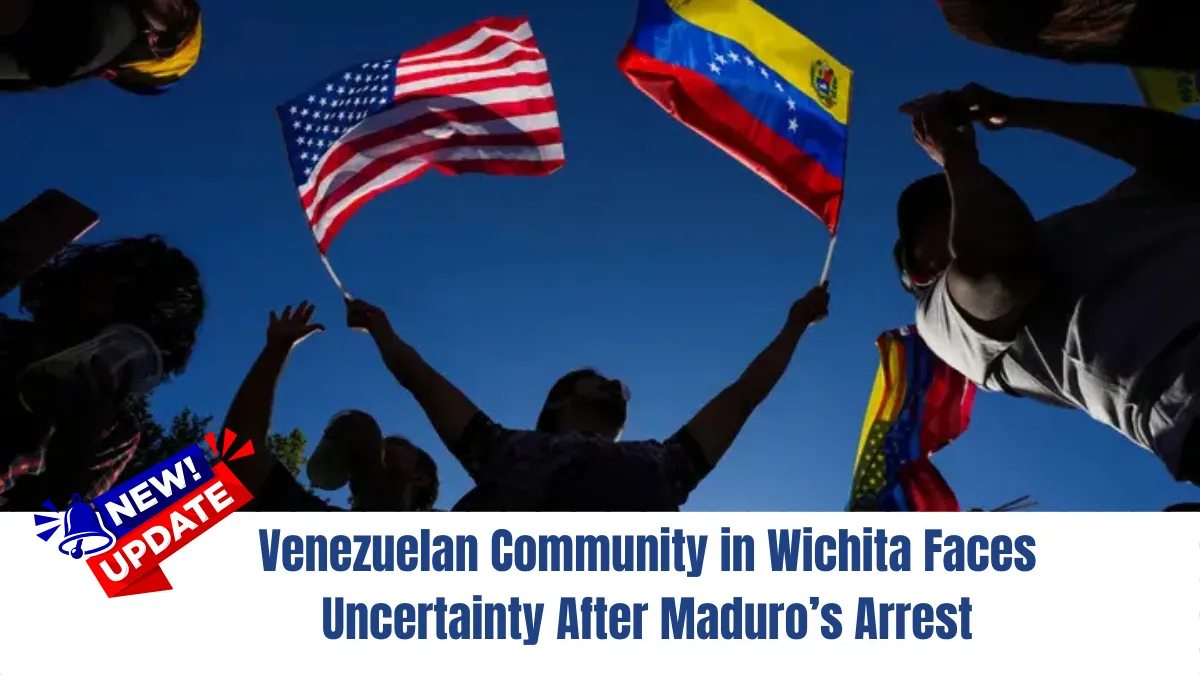
Venezuelans living in Wichita are grappling with uncertainty about what lies ahead after Nicolás Maduro was arrested on Saturday.
The news has stirred concern and cautious hope among families who fled political turmoil and violence in Venezuela, many of whom still have loved ones there.
A Family’s Journey to Safety in the United States
Carlos and Gabriella arrived in the United States in 2016 with their one-year-old daughter, escaping political persecution and rising violence back home.
They initially entered on tourist visas and later applied for asylum, which was approved in November 2016.
Since settling in Wichita, the couple has built a new life. Still, their connection to Venezuela remains strong, and developments there deeply affect them.
Why Leaving Venezuela Became Inevitable?

Their outspoken opposition to Venezuela’s political leadership made staying increasingly dangerous. According to Carlos, nearly every institution—government, military, police, and courts—operated in alignment with the ruling power, leaving ordinary citizens with no protection or legal recourse.
With threats escalating, leaving the country became the only way to safeguard their family.
Reaction to U.S. Intervention and Hopes for Democracy
Carlos and Gabriella view the U.S. intervention as a last option, but one they believe was necessary to move Venezuela toward democracy.
While they dream of visiting their homeland someday, their immediate priority is the safety of family members still living there.
Carlos described the system as overwhelming and unyielding, saying there was effectively “no other option” for people seeking change.
Monitoring a “Tense Calm” Back Home
The couple remains in close contact with relatives and friends in Venezuela. They describe the current mood as a “tense calm,” with widespread uncertainty about what will follow the arrest.
Maduro, who faces narco-terrorism charges, appeared in court on Monday, pleaded not guilty, and is scheduled to return to court on March 17.
For Venezuelans in Wichita, Maduro’s arrest has reopened difficult questions about the future of their country and the people they left behind.
While some feel cautious optimism, fear and uncertainty persist. Families like Carlos and Gabriella’s continue to watch events unfold closely, hoping for meaningful change while prioritizing the safety of loved ones still living under an unstable system.
FAQs
Why are Venezuelans in Wichita concerned about Maduro’s arrest?
They worry about political instability, possible retaliation, and what changes may follow for family members still in Venezuela.
When did Carlos and Gabriella receive asylum in the U.S.?
Their asylum application was approved in November 2016.
What charges is Nicolás Maduro facing?
He is accused of narco-terrorism and has pleaded not guilty, with another court date set for March 17.