
 Hailey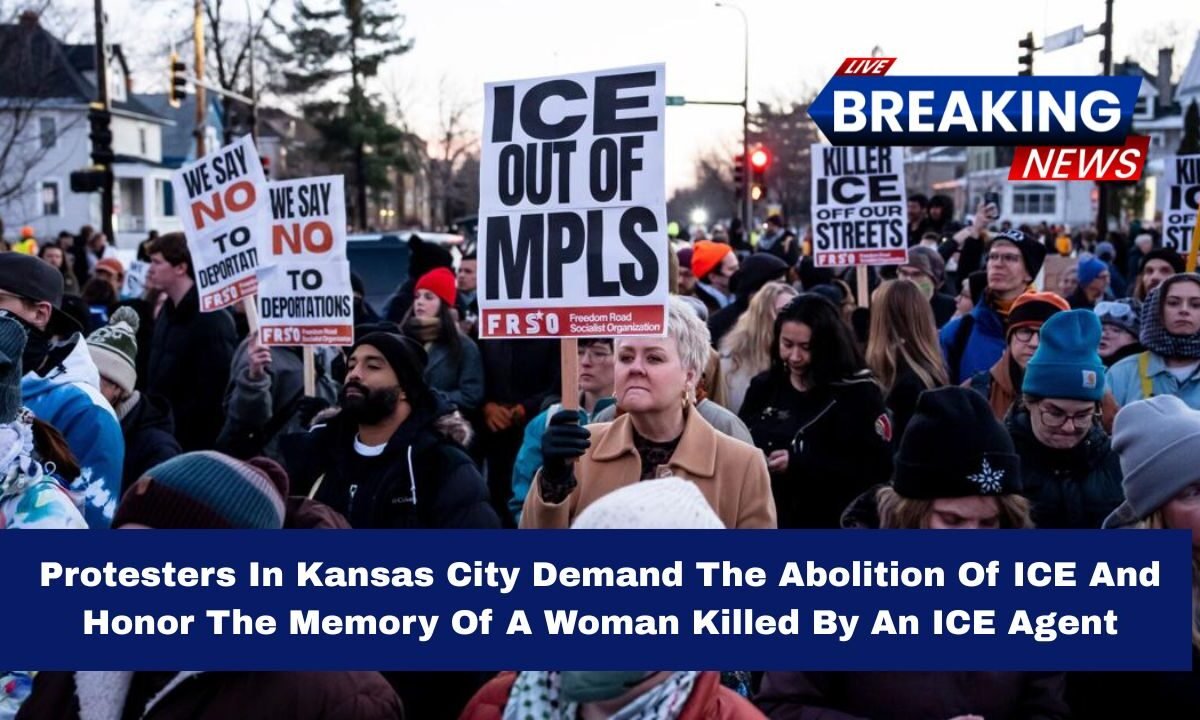
On January 7, 2026, a tragic incident in Minneapolis, Minnesota involving U.S. Immigration and Customs Enforcement (ICE) has sparked nationwide outrage.
The death of Renee Nicole Good, a 37-year-old woman who was fatally shot by an ICE agent during a federal enforcement operation, led to protests in Kansas City.

Local residents are now calling for the abolition of ICE and honoring the memory of Good, whose tragic death has amplified the growing concerns over the agency’s use of force.
Shooting of Renee Nicole Good: What Happened
Renee Nicole Good was killed by an ICE agent during a federal operation aimed at immigration enforcement in Minneapolis.
Federal officials claimed that the officer acted in self-defense, asserting that the vehicle Good was driving had moved toward agents, and thus justifying the use of lethal force.
However, this narrative has been challenged by local community members and activists who argue that video footage from the scene disputes the federal account.
Good had ties to Kansas City, with her vehicle registered in the area as recently as 2023. This connection brought additional emotional weight to the situation for the Kansas City community, where her tragic death sparked a call for justice and reform.
Local Outrage and Protest in Kansas City
In response to the fatal shooting, over 100 protesters gathered in downtown Kansas City, demanding action and calling for ICE to be abolished.

The rally in the Crossroads District was organized by various community groups, including the Kansas City Women’s Action Collective and Boots on the Ground Midwest.
The protesters expressed their outrage at the actions of ICE agents, highlighting concerns over the excessive use of force and the negative impact of the agency on immigrant communities.
In addition to the protests, a memorial vigil was held in Mill Creek Park to honor Good’s life. Participants shared stories about Good and called for transparency and accountability in the investigation of her death.
Kansas City’s Mayor Quinton Lucas also issued a statement, expressing sorrow for Good’s death and demanding a thorough investigation. Local leaders emphasized the need for justice for Good and transparency in how ICE operates within the community.
National Reaction and Broader Context
The incident has sparked protests not just in Kansas City but across other U.S. cities, including Minneapolis, New York City, and Los Angeles, where demonstrations have similarly called for changes to ICE policies.
The growing public outcry is part of a broader conversation on the role of immigration enforcement in American society.
On a national level, the debate has become increasingly polarized. Some lawmakers and federal officials have defended ICE, arguing that the agency’s operations are necessary for national security and public safety.
Others, however, have called for police and immigration reform, saying that the actions of ICE agents put civilians at unnecessary risk.
Key Facts About the Incident and Protest
| Aspect | Details |
|---|---|
| Victim Name | Renee Nicole Good |
| Age | 37 years old |
| Location of Shooting | South Minneapolis, Minnesota |
| Date of Incident | January 7, 2026 |
| Federal Agency Involved | U.S. Immigration and Customs Enforcement (ICE) |
| Cause of Controversy | Fatal shooting by ICE agent |
| Local Connection | Good previously lived in Kansas City, Missouri |
| Protest Location | Downtown Kansas City, MO |
| Protest Demands | Abolition of ICE, justice for Good |
| Organizations Involved | Kansas City Women’s Action Collective, Boots on the Ground Midwest |
| Political Reaction | Calls for investigation and accountability |
Why This Matters
The tragic death of Renee Nicole Good has sparked a nationwide debate on the role of ICE and federal immigration enforcement.
Critics argue that ICE’s enforcement tactics, particularly during operations like the one in Minneapolis, contribute to violence and a breakdown in trust between law enforcement and the communities they are meant to serve.
Supporters of ICE, on the other hand, maintain that the agency’s work is essential to ensuring national security and upholding the rule of law.
This incident underscores the deep divisions in U.S. society over immigration policy and enforcement. As protests continue across the country, the question of ICE’s future and the reform of federal law enforcement agencies remains at the forefront of political discourse.
Renee Nicole Good’s death has become a flashpoint for activism against ICE and federal immigration enforcement. In Kansas City, protesters are demanding not only justice for Good but also systemic change to prevent future tragedies.
The calls for abolishing ICE reflect broader concerns about the agency’s practices and the need for a more compassionate approach to immigration enforcement.
Whether these protests will lead to meaningful reform or policy change remains to be seen, but the growing movement for justice continues to gain momentum.