
 Mandy
Mandy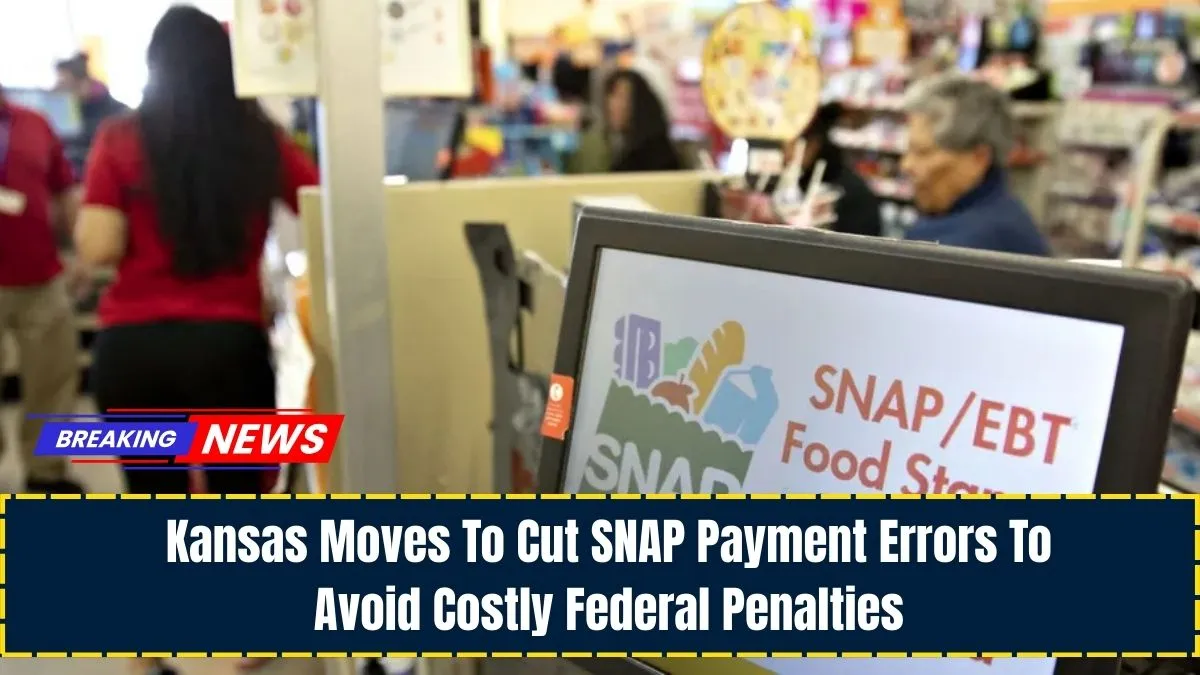
On Tuesday, Kansas legislators were briefed on ongoing efforts to lower the state’s SNAP payment error rate, a key metric used by the federal government to evaluate how accurately states determine benefit eligibility and payment amounts.
The error rate includes both overpayments and underpayments, reflecting mistakes made during eligibility reviews or benefit calculations.
Current Error Rate and Federal Benchmark

As of August in fiscal year 2025, Kansas’ SNAP error rate stands at 9.13%, which is well above the federal target. The U.S. government expects states to keep their SNAP payment error rates below 6% to avoid financial penalties.
If Kansas fails to meet this threshold, the state could face penalties starting in fiscal year 2028, with projected costs exceeding $41 million.
Financial Impact if Targets Are Missed
According to Carla Whiteside-Hicks, Director of Economic and Employment Services at the Kansas Department of Children and Families, the financial consequences depend on how close the state gets to the federal goal.

She explained that reducing the error rate below 6% by the end of federal fiscal year 2026 would establish a lower baseline and prevent added costs. However, if the rate improves but remains above 6%, Kansas could still be responsible for approximately $20.7 million, based on current caseload estimates.
New Federal Law Offers a Second Chance
A recently passed federal measure—part of President Donald Trump’s Big Beautiful Bill—provides Kansas with some flexibility. Under the new rule, the state can apply the lower error rate from either fiscal year 2025 or 2026 when determining penalties.
This adjustment gives Kansas another opportunity to meet the federal standard and potentially avoid millions in future costs.
Ongoing Efforts to Improve Accuracy

State officials say work is underway to strengthen eligibility reviews, improve staff training, and refine internal processes. The goal is to reduce errors while ensuring that SNAP benefits continue reaching eligible households accurately and on time.
Kansas is racing against the clock to reduce its SNAP payment error rate below the federally required 6% threshold.
While the state currently exceeds that limit, new federal flexibility and targeted improvements provide a realistic path to avoiding penalties that could cost taxpayers tens of millions of dollars.
The next two fiscal years will be critical in determining whether Kansas succeeds in protecting both public funds and program integrity.