
 Hailey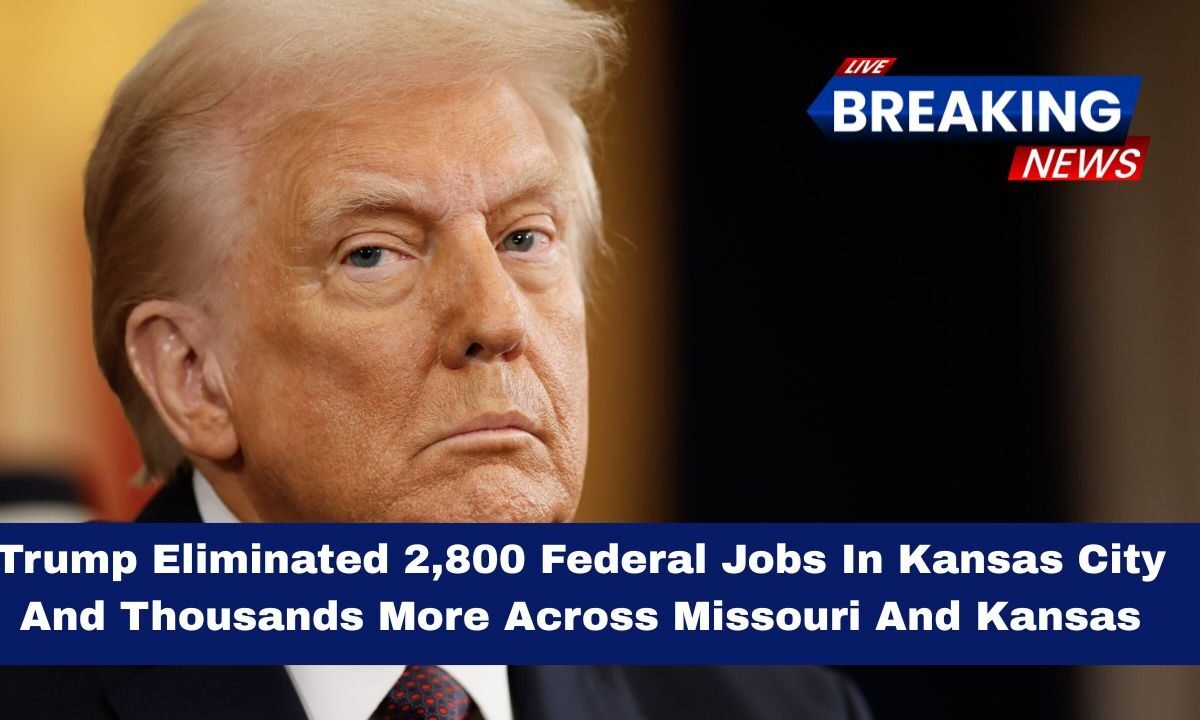
Kansas City and the wider Midwest have experienced a sharp reduction in federal jobs, with the Kansas City metro alone losing around 2,800 positions.
These job losses are part of a broader effort under former President Donald Trump to reduce the size of the federal government.

Across Missouri and Kansas, thousands more federal employees were removed from payrolls, marking one of the most significant regional workforce reductions in recent years.
Federal employment has long been a stable source of income in this region, supporting not only workers but also local businesses, housing markets, and service industries.
Kansas City: A Major Federal Employment Hub
Kansas City is one of the most federal-job-dependent metro areas in the United States. Nearly one in ten federal jobs in the region disappeared during the workforce reduction period. The cuts affected a wide range of departments, including offices connected to tax administration, veterans services, defense operations, and social security processing.

The loss of 2,800 federal jobs represents roughly a 10% decline in Kansas City’s federal workforce. Because many of these roles were well-paid and highly skilled, the economic shock has been significant.
Missouri And Kansas Statewide Impact
The impact was not limited to Kansas City. Across Missouri, the federal workforce declined by about 13%, while Kansas experienced an even steeper drop of roughly 15%. Before the cuts, Missouri employed close to 30,000 federal workers, while Kansas had more than 11,000.
When applied statewide, these percentages translate into several thousand eliminated federal jobs, intensifying economic pressure in communities that rely heavily on government employment.
Federal Job Loss Summary
| Region | Estimated Federal Workforce Before Cuts | Percentage Reduction | Estimated Jobs Lost |
|---|---|---|---|
| Kansas City Metro | Large regional workforce | ~10% | ~2,800 |
| Missouri (Statewide) | ~29,900 | ~13% | ~3,800–4,000 |
| Kansas (Statewide) | ~11,300 | ~15% | ~1,600–1,700 |
How The Job Cuts Were Carried Out

The workforce reduction was achieved through a combination of voluntary exits, deferred resignation programs, early retirement incentives, and direct terminations. Many affected employees were newer or probationary workers, though long-term staff were also impacted through buyouts and restructuring.
The administration also proposed additional future reductions, signaling that the cuts were part of a long-term plan rather than a one-time adjustment.
Economic Consequences For Local Communities
The removal of thousands of federal paychecks had a ripple effect across the region. Economic estimates suggest that Kansas City alone could see up to $900 million in reduced annual economic activity due to lost wages, lower consumer spending, and decreased demand for local services.
Economists estimate that for every federal job lost, approximately 1.5 additional private-sector jobs may be affected. This includes losses in retail, real estate, transportation, and professional services.
Impact On Public Services
Beyond economics, residents are also feeling the effects through slower government services. Staffing reductions have contributed to longer wait times for tax processing, benefit approvals, and social security claims. In some cases, processing timelines reportedly expanded from a few weeks to several months, increasing frustration for citizens who rely on these services.
The elimination of 2,800 federal jobs in Kansas City, along with thousands more across Missouri and Kansas, has reshaped the region’s economic and employment landscape.
These cuts affected not only government workers but also the broader community through reduced spending power and slower public services.
As the Midwest adjusts to a smaller federal footprint, the long-term consequences will depend on whether new private-sector growth can offset the loss of stable federal employment.