
 Hailey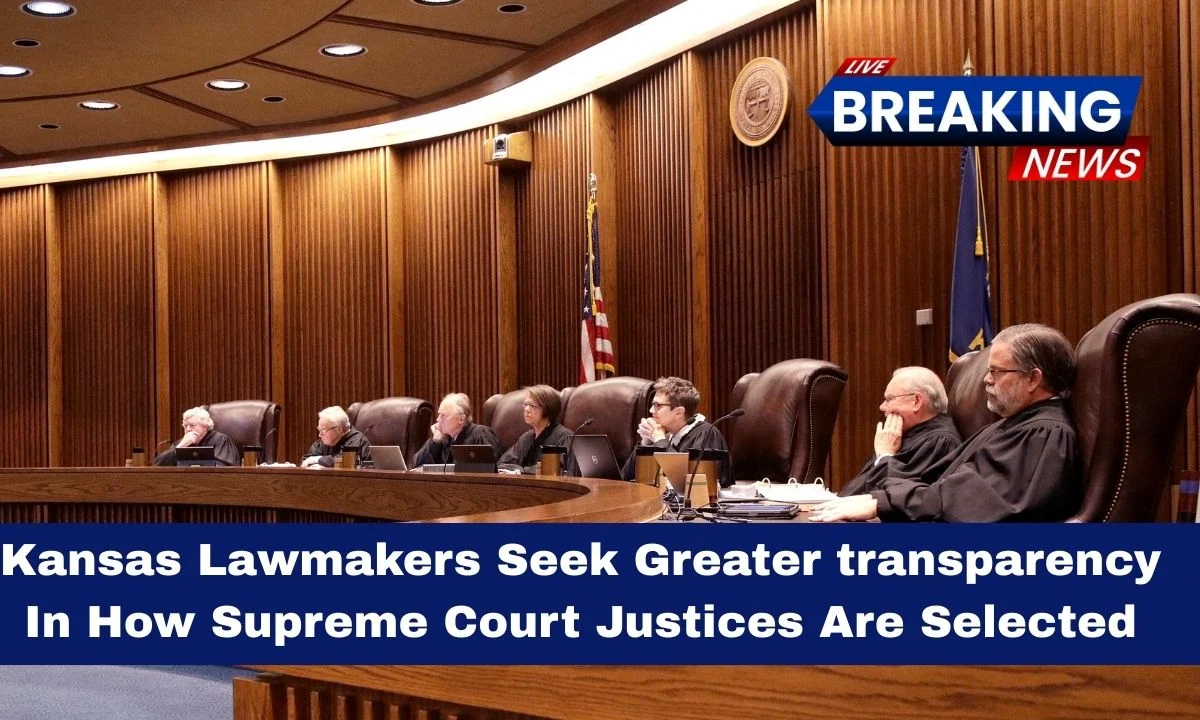
Kansas lawmakers are debating a major change aimed at increasing transparency in how Supreme Court justices are selected. For decades, Kansas has used a merit-based system where a small group helps decide which judges reach the state’s highest court.
While supporters say this process protects judicial independence, critics argue that the public knows too little about the people involved.

The debate is gaining urgency because Kansas voters are expected to decide in August 2026 whether the state should continue using this appointment system or move to electing Supreme Court justices.
As that vote approaches, lawmakers say Kansans deserve clearer information about who holds influence in the current process.
How Kansas Currently Picks Supreme Court Justices
Kansas uses a Supreme Court Nominating Commission to screen candidates for the state’s highest court. This commission reviews applications, interviews candidates, and then submits three finalists to the governor. The governor must choose one of those three names to fill a vacancy.

The commission has nine members in total. From each of Kansas’ four congressional districts, there is one lawyer and one nonlawyer, making eight members.
The ninth member, who serves as chair, is also a lawyer. The nonlawyer members are appointed by the governor, while the lawyer members are elected by other attorneys in Kansas.
What Lawmakers Want To Change
Lawmakers supporting the proposal argue that the current system shields too much information from the public. A bill under consideration would require the nominating commission to release more records under the Kansas Open Records Act.

Supporters say the public should be able to know who applies, how many people apply, and basic identifying information such as names and cities of residence. At present, much of that information is kept confidential under court rules, and disclosure is largely at the commission’s discretion.
The push intensified after requests for information about applicants to serve on the commission itself were denied. Lawmakers say that if the commission plays such a powerful role in shaping the judiciary, its operations should not be hidden from public view.
Supporters And Opponents Of The Proposal
Supporters believe transparency builds public trust. They argue that revealing basic information does not threaten judicial independence but instead reassures voters that the process is fair and balanced.
Opponents worry that opening records too broadly could discourage qualified candidates from applying or expose commission members to political pressure.
They caution that judges must remain insulated from politics to protect impartial decision-making.
The Bigger Picture: A Possible System Overhaul
This transparency effort is happening alongside a much larger debate. Kansas lawmakers have also advanced a proposal that would allow voters to decide whether Supreme Court justices should be elected rather than appointed.
If voters approve the change in 2026, Kansas would shift away from the commission-based system entirely. Supporters of elections argue that voters should directly choose judges.
Critics warn that elections could inject partisan politics and campaign money into the courts.
Key Facts At A Glance
| Topic | Current System | Proposed Change | Key Figures | Why It Matters |
|---|---|---|---|---|
| Commission Size | 9 members | No change | 9 total members | Determines who controls nominations |
| Member Selection | 4 appointed, 5 elected by lawyers | More public disclosure | 4 nonlawyers, 5 lawyers | Shows balance of influence |
| Justice Selection | Governor chooses from 3 names | No direct change | 3 finalists | Shapes long-term court decisions |
| Public Access | Limited information | More records released | Names, counts, locations | Improves transparency |
| Future Decision | Appointment system | Possible elections | August 2026 vote | Could reshape Kansas courts |
Kansas lawmakers are pushing to shine more light on the Supreme Court nominating process, arguing that the public deserves to know who helps choose the state’s most powerful judges.
With a potential 2026 vote that could overhaul the system entirely, the debate over transparency versus judicial independence is intensifying.
Whether Kansas keeps its current process or moves toward elections, the decisions made now could shape the state’s courts for decades.