
 Hailey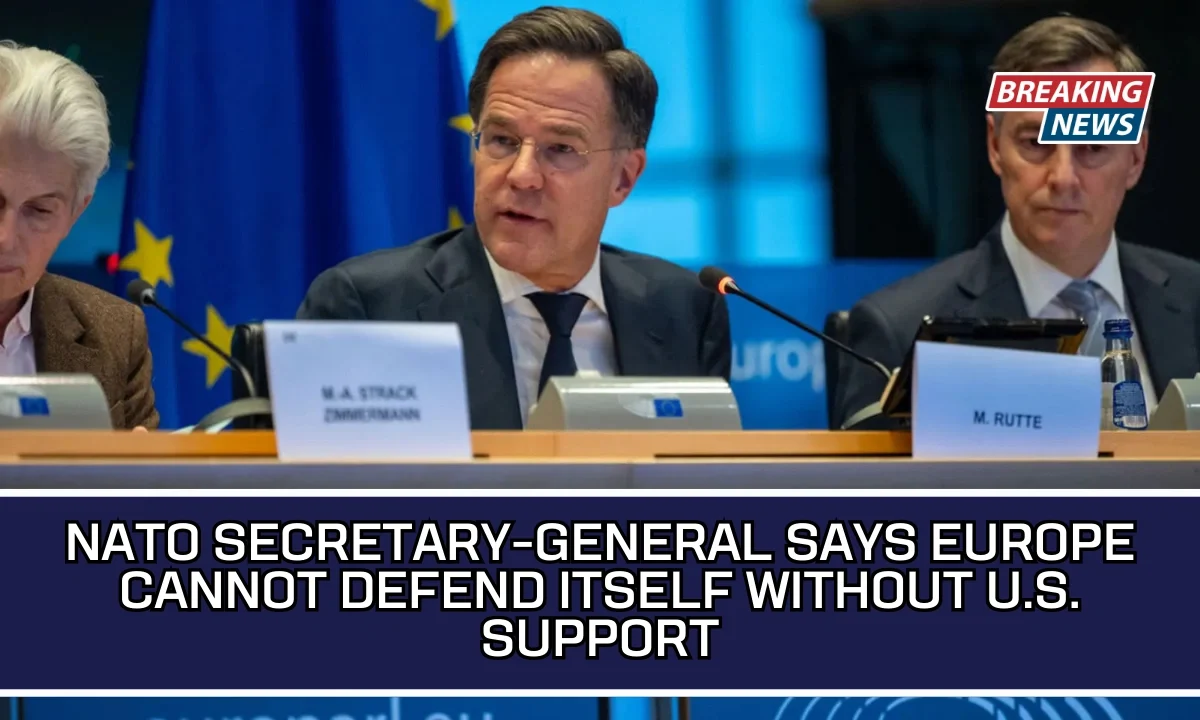
Europe’s security has once again become a big topic of discussion after strong comments from NATO’s top leader. At a time when global tensions are rising and military alliances are being tested, the future of Europe’s defense has come under the spotlight.
NATO’s Secretary-General made it very clear that Europe cannot protect itself alone without help from the United States. His message was direct, serious, and meant as a warning to those who believe Europe can stand on its own militarily.

In this article, we explain what NATO’s chief said, why the United States is so important for Europe’s defense, how much Europe would need to spend to go alone, and what this means for the future of global security.
What NATO’s Chief Said About Europe’s Defense
NATO Secretary-General Mark Rutte told European Union lawmakers that Europe is not capable of defending itself without U.S. military support. Speaking in Brussels, he said that anyone who believes Europe can manage without America is simply dreaming.
According to him, Europe and the United States need each other. Their military partnership has been the backbone of peace and security for decades. Without American help, Europe would face serious risks.
Why the United States Is Critical for Europe

The United States plays a huge role in European security for several reasons:
- The U.S. provides advanced military technology
- It offers nuclear protection to NATO allies
- It has the largest defense budget in the alliance
- American forces are already stationed across Europe
Without the U.S., Europe would lose what NATO’s chief called the “ultimate guarantor of freedom”, meaning America’s nuclear umbrella.
NATO, Article 5, and Mutual Defense
The North Atlantic Treaty Organization is based on a powerful promise known as Article 5. This rule says that if one NATO country is attacked, all members must come to its defense.

This agreement has kept Europe safe for many years. But it depends heavily on U.S. military strength. If America stepped away, this protection would become much weaker.
Defense Spending Targets Set by NATO
At a NATO summit in The Hague, most European countries and Canada agreed to increase defense spending. This move followed pressure from Donald Trump, who demanded fairer sharing of defense costs.
New NATO Defense Spending Goals
| Category | Spending Target |
|---|---|
| Core military defense | 3.5% of GDP |
| Security infrastructure | 1.5% of GDP |
| Total defense spending | 5% of GDP by 2035 |
Spain was the only major country that did not agree to this plan.
Can Europe Defend Itself Without the U.S.?
NATO’s chief said that even 5% of GDP would not be enough if Europe tried to go alone. According to him, Europe would need to spend around 10% of GDP on defense to truly protect itself without U.S. help.
He also warned that Europe would need to build its own nuclear weapons, which would cost billions and billions of euros and take many years.
France and the Push for Strategic Autonomy
France has been leading calls for Europe to develop strategic autonomy, meaning Europe should be able to defend itself without depending on others.
Support for this idea has grown after the U.S. warned that its future security focus may shift away from Europe. Still, NATO leaders believe full independence is not realistic in the near future.
Greenland Tensions and NATO Unity
Tensions inside NATO increased after President Trump suggested annexing Greenland, which belongs to Denmark, a NATO member. He also threatened trade tariffs before a temporary agreement was reached with help from NATO leadership.
This situation showed how fragile alliances can become when political interests clash.
What This Means for Europe’s Future
Europe now faces a tough choice. It can continue working closely with the United States or try to build a much more expensive and risky independent defense system. NATO’s chief made it clear where he stands: Europe cannot afford to lose U.S. support.
Europe’s security depends heavily on its long-standing partnership with the United States. NATO’s leadership has clearly warned that defending Europe without U.S. military power would require massive spending, nuclear development, and years of preparation.
While ideas like strategic autonomy sound appealing, the reality is far more complex and costly. For now, strong cooperation between Europe and the United States remains the safest and most practical path forward for peace and stability.