
 Mandy
Mandy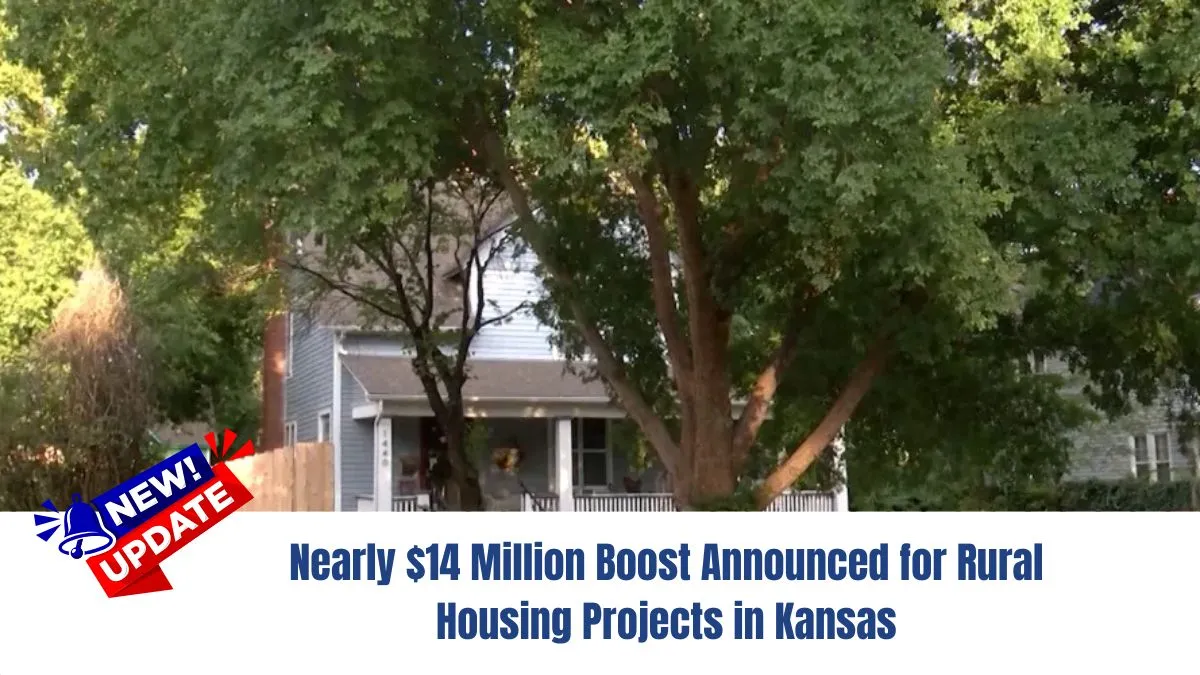
Rural communities across Kansas are set to receive a major housing boost, as the Kansas Housing Resources Corporation (KHRC) has approved nearly $14 million in funding to support new residential developments.
The investment is designed to assist moderate-income households—families who earn too much to qualify for public housing but still struggle to afford homes in today’s market.

This new funding package aims to expand housing supply, support local economies, and strengthen small-town growth across the state.
Funding Programs Supporting Rural Growth
The approved funding will be distributed through two key programs operated by KHRC:
- Moderate-Income Housing (MIH) Program
- Kansas Housing Investor Tax Credits (KHITCs)
What Is the Moderate-Income Housing (MIH) Program?
The Kansas Legislature established the MIH program in 2012 to bridge a critical gap in housing support. The initiative targets working individuals and families who may earn steady incomes but still find it difficult to purchase or rent homes due to rising housing costs.

According to Ryan Vincent, Executive Director of KHRC, there is a common assumption that full-time workers—especially dual-income households—should be able to afford homes. However, market conditions tell a different story.
“Even households with two incomes often struggle to make the housing market work,” Vincent explained.
He noted that while increasing housing supply can reduce costs, developing properties in rural areas presents unique challenges.

Smaller towns typically offer limited markets for developers and contractors, making large-scale construction projects more difficult.
Still, Vincent emphasized that improving housing availability is essential for the long-term health of rural communities.
“Providing safe, quality, and affordable homes helps communities attract and retain workers, making local businesses stronger and more successful,” he added.
Dodge City to Receive Major Housing Support
One of the largest allocations from the funding package will go to Dodge City.
Dodge City
The city is set to receive assistance for the construction of more than 230 new single-family homes, along with additional rental units. The initiative aligns closely with economic development efforts in the region.
Economic Development Driving Housing Demand
In 2025, Hilmar Cheese Company opened a new production facility in Dodge City.
Hilmar Cheese Company
Before committing to the project, company leaders raised concerns about whether the community could provide adequate housing for incoming workers.
Mollea Lightner, Assistant Director of Economic Development for the Dodge City-Ford County Development Corporation, explained that securing funding through both the MIH grant and the KHITC program made the housing expansion possible.
By combining these resources, developers were able to build the necessary number of homes while maintaining quality standards. The coordinated approach ensures that economic growth is matched with residential development.
Smaller Towns Also Benefit from Funding
The funding initiative is not limited to larger rural cities. Smaller communities are also receiving support for critical housing projects.
Ulysses
In Ulysses, funding has been awarded for an eight-unit rental development. While that number may seem modest, local leaders say it represents significant progress for a town of roughly 6,000 residents.
A Major Milestone for Ulysses
Luke Grimes, City Administrator of Ulysses, described the project as historic for the community.
He pointed out that there have been periods when no new homes were built in the town for years. In that context, adding eight rental units is a meaningful step forward.
Beyond providing housing, the development supports broader efforts to improve quality of life and strengthen local morale.
Grimes said recent revitalization efforts have already brought renewed energy to the community. Main Street has seen increased activity, and residents are regaining confidence in the town’s future.
Housing, he emphasized, is a critical piece of that long-term strategy.
Why Rural Housing Development Matters?
The nearly $14 million housing investment reflects a broader understanding of how essential housing is to economic stability and growth in rural areas.
Key benefits include:
- Increased availability of affordable housing
- Stronger ability to attract new employers
- Improved workforce retention
- Enhanced community development
- Support for small-town economic revitalization
Without adequate housing, businesses may hesitate to expand, and communities risk losing residents to larger urban centers.
By addressing the housing shortage now, KHRC is helping rural Kansas communities build a stronger foundation for future success.
The announcement of nearly $14 million in funding for rural housing development in Kansas marks a significant step toward addressing housing challenges in smaller communities. Through the MIH program and Kansas Housing Investor Tax Credits, the state is investing in moderate-income families who often fall into a housing affordability gap.
From large-scale development in Dodge City to critical rental expansion in Ulysses, these projects are designed not only to provide homes but also to support economic growth, workforce stability, and long-term community vitality.
Strengthening rural housing today helps secure a more sustainable and prosperous future for Kansas tomorrow.