
 Hailey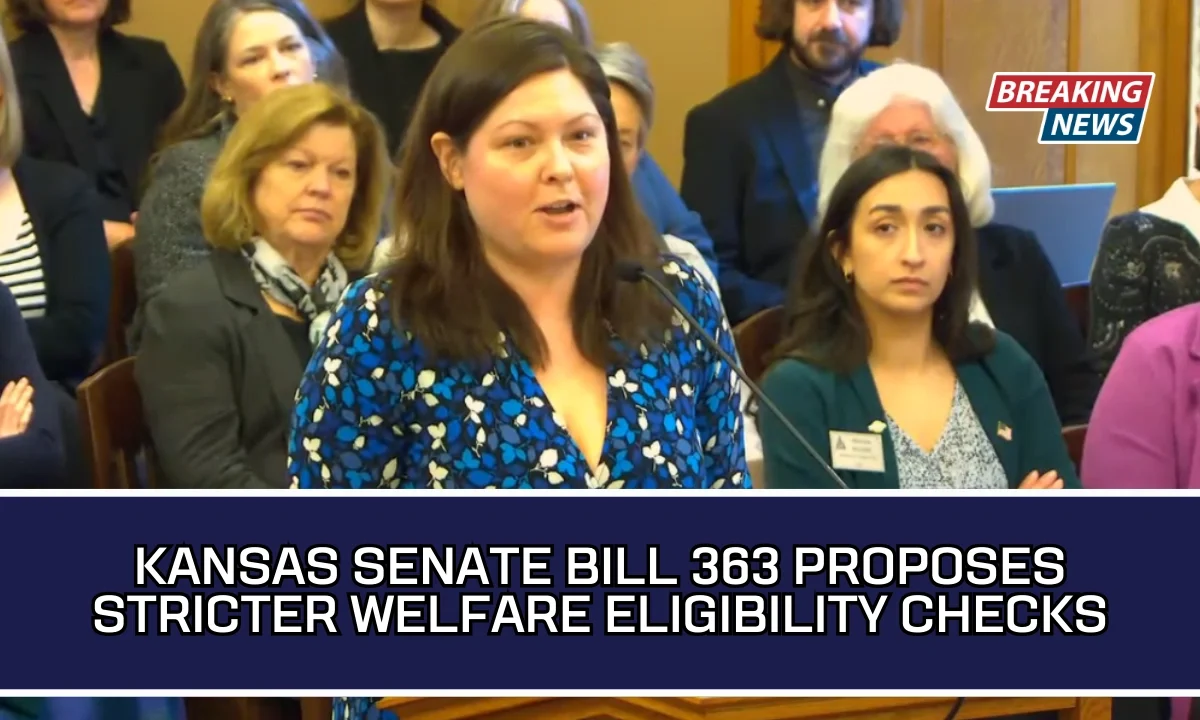
Senate Bill 363: A new Kansas welfare reform bill is creating a big debate between Republicans and Democrats in the state. Lawmakers say they want to cut waste and stop fraud in programs like food assistance (SNAP) and Medicaid.
But critics argue that the proposed changes may actually increase mistakes, cost more money, and make it harder for eligible families to receive benefits. So, what exactly is this bill about, and why is it dividing Kansas leaders? Let’s break it down in simple words.
What Is Senate Bill 363?

The proposed law, called Senate Bill 363, aims to tighten rules around social service programs in Kansas. Supporters say it will reduce waste and save taxpayers money in the long run. Opponents believe it may create more paperwork, confusion, and problems for families who truly need help.
The bill adds stricter requirements for people applying for:
- Food assistance (SNAP)
- Medicaid (medical assistance)
- Temporary Assistance for Needy Families (TANF)
- Child care subsidies
It also plans to hire 256 new state employees to check applications more often.
Key Changes Proposed in the Bill

Here’s a simple table explaining what the bill would change:
| Proposed Change | What It Means |
|---|---|
| Quarterly eligibility checks | Families must prove eligibility every 3 months |
| Ban on self-reporting | Income, address, and household size must be verified by staff |
| 20-hour weekly work rule | Certain adults must work, volunteer, or study 20 hours per week to get food assistance |
| Medicaid coverage cut | Retroactive Medicaid reduced from 3 months to 2 months |
| More data sharing | Frequent data exchange between state and federal agencies |
| Legislative approval for waivers | Lawmakers must approve some program exceptions |
Why Republicans Support the Bill
Republican lawmakers believe that stronger eligibility checks will reduce fraud and save millions of dollars. They argue that current error rates in programs like SNAP are costing Kansas taxpayers money.
Sen. Mike Thompson said error rates are costing “tens of millions of dollars.” Supporters believe that hiring more staff and increasing checks will reduce long-term costs.

Sen. Douglas Shane also dismissed concerns about the bill’s cost, saying the financial estimate focuses only on expenses and ignores future savings.
The bill is supported by FGA Action, a conservative think tank based in Florida.
Why Democrats and Other Opponents Disagree
Many Democrats and local experts strongly oppose the bill. Sen. Cindy Holscher said dozens of Kansas-based experts are against the proposal.
Critics say:
- It will cost $18.5 million in 2027 and $17 million in 2028.
- Extra paperwork may increase human errors.
- Families may lose benefits even if they qualify.
Current Systems Already Exist
The Kansas Department for Children and Families (DCF) and the Kansas Department of Health and Environment (KDHE) already require proof of income.
Opponents argue that:
- Businesses report job information quarterly.
- Checking employment twice a month may not provide updated data.
- Federal law protects pregnant women and children with Medicaid for one full year, even if income changes.
So, some changes may not legally remove benefits but will increase staff workload.
Real-Life Concerns From Kansas Residents
Carla Whiteside-Hicks from DCF explained that staff already need one year of training to handle SNAP applications correctly. Adding more applications and more checks could increase mistakes.
Karla Hagemeister of the Flint Hills Breadbasket shared a story about a man who had a steady job for 14 years but ended a month with only $9 in his bank account. She worries that quarterly checks will make it harder for working people to respond quickly, especially those without email access.
Another story involved a mother whose child with Down syndrome lost Medicaid coverage due to paperwork errors. The child only regained coverage after being hospitalized.
Opponents warn that stricter rules may cause:
- Families losing Medicaid
- Children having less food at home
- Delays in medical treatment
What About SNAP Error Rates?
Kansas has already reduced its SNAP error rate from 12% to 5% in a recent month. Officials say nothing in Senate Bill 363 guarantees that error rates will drop further.
Some mistakes are simply human errors, not fraud. Overworked staff may make more errors if additional responsibilities are added.
The Bigger Question: Act Now or Study More?
Some policy experts suggest forming a committee to study the issue carefully before making big changes. They believe Kansas should understand why errors happen before creating new rules.
However, supporters argue that waiting another year means losing more money.
This debate shows a clear divide:
- Republicans want quick action to reduce waste.
- Democrats and advocacy groups want careful review to protect families.
The debate over Senate Bill 363 in Kansas highlights a major challenge: how to reduce government waste without hurting families who truly need help.
While supporters believe stricter rules and more checks will save taxpayer money, opponents worry that added paperwork, staffing pressure, and tighter requirements may increase errors and push vulnerable families out of essential programs like SNAP and Medicaid.
The final decision will impact thousands of Kansans. Lawmakers must carefully balance financial responsibility with compassion to ensure that reforms improve the system instead of creating new problems.