
 Mandy
Mandy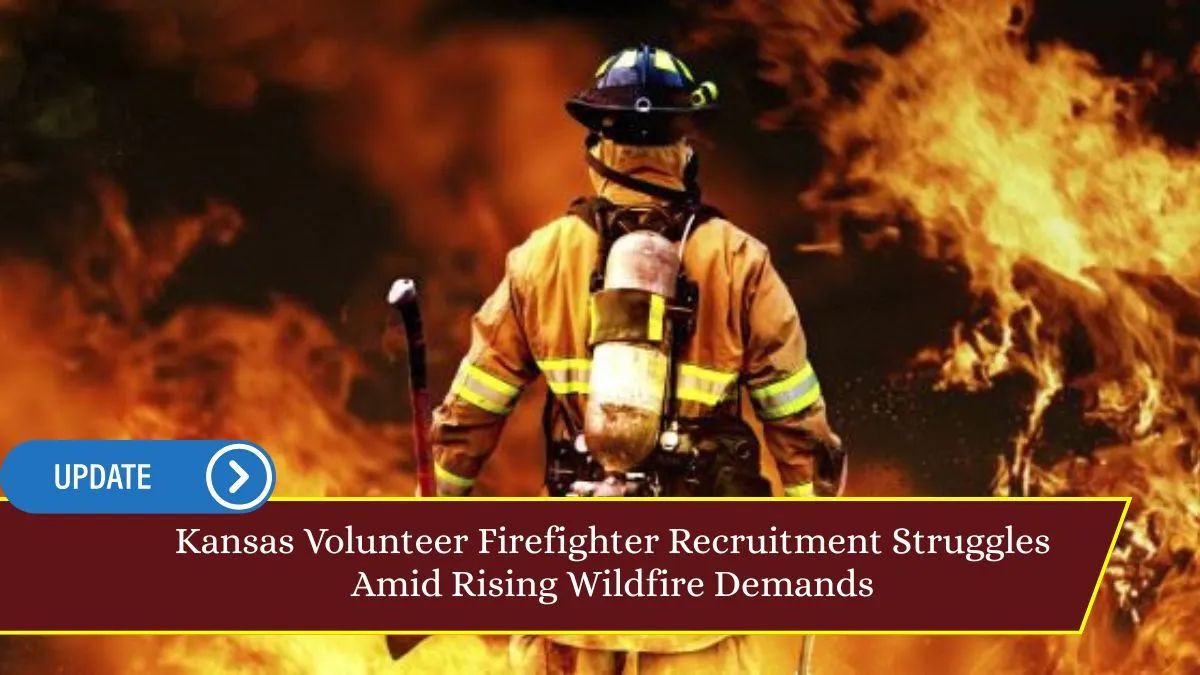
Recent wildfires in southwest Kansas required an “all hands on deck” emergency response, and most of the firefighters who stepped forward were volunteers. Across the state, volunteer personnel form the backbone of local fire protection services.
In Kansas, more than three-quarters of fire departments rely primarily on volunteers. However, attracting new recruits—especially younger individuals—has become increasingly difficult, mirroring a broader national trend.

“Volunteer firefighters are really kind of keeping the system flowing for the state of Kansas right now,” said Lance Feyh, Public Information Manager for the Kansas State Fire Marshal’s Office.
Volunteers Play A Vital Role In Statewide Fire Protection
The Kansas State Fire Marshal’s Office reported that 525 out of 632 fire departments in the state operate entirely with volunteers. This statistic became especially significant following the destructive wildfires that swept through parts of southwest Kansas.
Feyh emphasized the impact volunteers have on public safety.

“If you took away the volunteer fire departments, it would be scary what would be left out there to help protect these communities,” he explained.
Without volunteer participation, many rural and small-town areas would struggle to maintain adequate emergency coverage.
Inside The Life Of A Volunteer Firefighter
Kevin Leis, who has served as a volunteer firefighter in Rose Hill with Butler County Fire District Number 3 for 23 years, understands the commitment firsthand. Outside of his volunteer service, Leis works full-time as a plumber. Yet he remains ready to respond at any moment.

“You never know. You might get a call and you’re gone for an hour, or you’re gone for the next 12 hours,” Leis said.
His district operates using a combination of volunteer members and full-time staff. Unlike many departments, volunteers in his district receive a small stipend per call. However, most volunteer departments across Kansas do not have significant financial resources.
Funding And Resource Limitations Add Pressure
Leis pointed out that many rural fire departments face funding shortages. Limited budgets mean fewer resources, aging equipment, and tighter operational constraints.
“A lot of times their departments are underfunded. They don’t have the resources we’re lucky to have here, so they are doing incredible work with very little,” Leis said.
He acknowledged that if cities and counties were forced to transition to fully paid fire departments, the financial burden would increase substantially.
“Taxes would have to increase or something, and none of us want that,” Leis added.
This financial reality reinforces the importance of maintaining a strong volunteer base to keep operational costs manageable for communities.
Nationwide Decline In Volunteer Firefighters
The recruitment challenge is not unique to Kansas. According to the National Fire Protection Association (NFPA), the number of volunteer firefighters nationwide dropped to a historic low in 2020.
Departments across the country are finding it harder to recruit younger members. Changing work schedules, family commitments, and economic pressures have all contributed to reduced volunteer participation.
The Kansas Fire Marshal’s Office believes that ensuring rural districts have access to modern equipment and proper protective gear could help improve recruitment efforts. Updated tools and better safety measures may make volunteer service more appealing to potential recruits.
The recent Kansas wildfires have once again demonstrated the essential role that volunteer firefighters play in protecting communities. With 525 of 632 fire departments relying entirely on volunteers, the state’s emergency response system depends heavily on their dedication.
However, recruitment challenges—particularly among younger generations—pose a serious concern. Financial constraints prevent many communities from shifting to fully paid departments without raising taxes.
As a result, strengthening volunteer recruitment and ensuring adequate funding and equipment remain critical priorities.
If Kansas hopes to maintain strong rural fire protection services, encouraging community involvement and supporting volunteer departments will be key to safeguarding lives and property in the years ahead.