
 Mandy
Mandy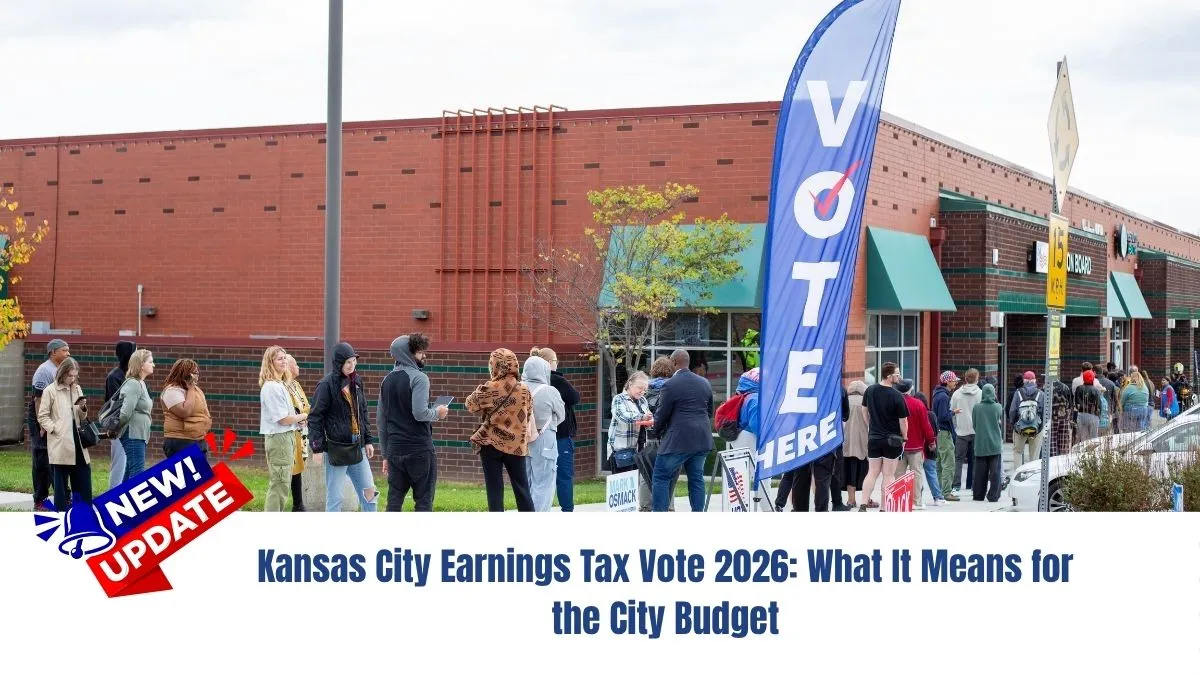
The Kansas earnings tax is once again in the spotlight as voters prepare for a major decision in April 2026. This long-standing tax plays a crucial role in funding Kansas City’s daily operations. If approved, the Kansas earnings tax will continue as it has for decades.
But if rejected, the city could face serious financial challenges, including budget cuts or the need for new revenue sources.
What Is the Kansas Earnings Tax?

The Kansas earnings tax is a 1% tax applied to:
- Wages and salaries of people who live or work in Kansas City
- Business profits, including both large corporations and self-employed individuals
For example:
- A person living outside the city but working in Kansas City still pays the tax
- A Kansas City resident working in another city also pays it
However, the Kansas earnings tax does not apply to:
- Social Security benefits
- Retirement income
- Unemployment benefits

This tax has been in place since 1963, when voters approved it as part of the city’s charter.
Why the Kansas Earnings Tax Matters
The Kansas earnings tax is one of the most important revenue sources for the city.
Key Financial Facts
| Category | Amount / Share |
|---|---|
| Annual Earnings Tax Revenue | $351 million |
| Share of General Fund | 44% |
| Property Tax Revenue | $81.6 million |
| Property Tax Share | 10% |
This means nearly half of Kansas City’s general fund depends on the Kansas earnings tax. The money helps pay for:
- Police and fire services
- Road maintenance and resurfacing
- Affordable housing programs
- Other essential city services

Unlike some funding sources, the city has flexibility in how it spends earnings tax revenue.
What’s on the April 2026 Ballot?
Voters will decide whether to continue the Kansas earnings tax for another five years.
Ballot Question Simplified
- Yes Vote: Keep the 1% tax until 2031
- No Vote: Gradually eliminate the tax over 10 years
If voters reject the tax:
- The rate will decrease by 0.1% each year
- It will reach 0% by January 1, 2036
- The city will not be allowed to bring it back unless state law changes
Why Renewal Is Required Every Five Years
Under Missouri law, the Kansas earnings tax must be approved by voters every five years.
This rule came from Proposition A (2010), which made two major changes:
- Cities like Kansas City must regularly renew the tax
- No new earnings taxes can be created in other cities
This means if Kansas City ever loses this tax, it cannot reintroduce it in the future.
History and Political Background
The Kansas earnings tax has consistently received strong support from voters in past elections.
However, the 2010 statewide vote that created renewal requirements was controversial:
- Funded largely by businessman Rex Sinquefield
- Opposed by Kansas City leaders like Ed Ford
- Approved by 68% of Missouri voters
Interestingly:
- Voters in Kansas City and St. Louis largely opposed it
- Despite that, it became law statewide
Critics warned that putting such a large portion of the budget at risk every five years could:
- Make city finances unstable
- Lower credit ratings
- Increase borrowing costs
What Happens If the Tax Is Removed?
If the Kansas earnings tax is not renewed, Kansas City will face a major financial gap.
Possible Outcomes:
- Budget cuts to essential services
- Need for new taxes or revenue sources
- Reduced funding for infrastructure and housing
- Long-term financial uncertainty
Because the tax generates hundreds of millions of dollars, replacing it will not be easy.
The upcoming vote on the Kansas earnings tax is more than just a routine election—it is a decision that could shape Kansas City’s financial future for years. With nearly 44% of the city’s general fund tied to this tax, its continuation ensures stability in funding essential services like public safety, roads, and housing.
On the other hand, rejecting the tax would trigger a gradual phase-out, leaving the city with a massive budget gap and limited options to recover those funds. Since the law prevents reintroducing the tax once it is gone, voters are essentially deciding whether to keep a reliable revenue stream or face uncertain financial adjustments.
The outcome of this vote will directly impact how the city operates and serves its residents in the coming decade.