
 Mandy
Mandy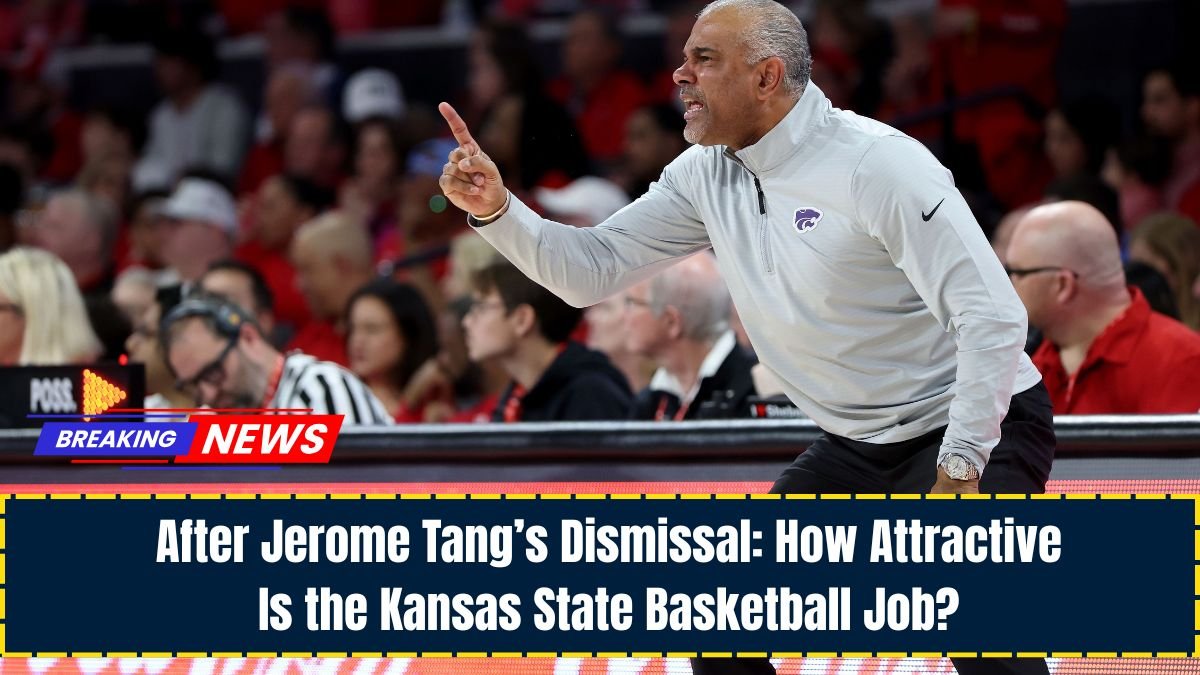
The Kansas State basketball program officially entered the coaching carousel on February 15, when the school parted ways with Jerome Tang. As the first high-major vacancy to open this offseason, the Wildcats’ job immediately drew national attention.
While it may not rank as the single most coveted position available, it remains one of the more appealing opportunities among major conference programs. Kansas State has historically shown a willingness to invest in basketball success, and recent coaching tenures prove that winning big in Manhattan is possible.

Below is a detailed breakdown of the job’s standing, financial backing, competitive position, and long-term outlook.
Kansas State’s Position Within the Big 12
According to Jeff Goodman of Field of 68, Kansas State ranked ninth among the 16 Big 12 basketball jobs earlier this season. While that places the Wildcats in the middle tier of the conference, being mid-tier in the Big 12 still compares favorably to many programs nationwide.
Other Big 12 schools that could potentially enter the market include Cincinnati, Arizona State, and Colorado. Of those, only Cincinnati was ranked ahead of Kansas State, though the gap is considered debatable by many analysts.

Nationally, Kansas State will compete with other prominent openings that may emerge. Programs such as Syracuse (searching for its post-Jim Boeheim identity), Georgetown, Providence, Ohio State, LSU, Oklahoma, and South Carolina could also factor into the coaching carousel. Every offseason typically includes a surprise vacancy or two, which can shift the pecking order.
Even so, Kansas State’s combination of conference strength, resources, and competitive ceiling keeps it firmly in the conversation.
Strong NIL Backing Remains a Major Selling Point
One of Kansas State’s biggest advantages is its robust Name, Image, and Likeness (NIL) resources. The Wildcats have consistently operated with one of the larger NIL budgets in the country.

Although Tang struggled to maximize those resources, the program still committed significant funding to high-profile players such as PJ Haggerty and Coleman Hawkins.
Reports suggested NIL contributions might have declined had Tang remained in charge. With a fresh coaching hire on the horizon, however, donors and financial backers are expected to regain enthusiasm. A new coach inheriting an already well-funded roster structure makes the position even more appealing.
For many candidates, financial backing for roster construction will be a decisive factor — and Kansas State checks that box.
Competitive Coaching Salaries and Staff Support
Kansas State has proven it is willing to pay competitive salaries.
According to the USA TODAY Coaches Salaries Database (March 2025 update), Tang ranked among the top 30 highest-paid head coaches during the 2024–25 season. His compensation exceeded that of Michigan’s Dusty May and Florida’s Todd Golden.
Assistant coaching salaries are also competitive:
- Matthew Driscoll – $550,000
- Jareem Dowling – $550,000
- Rodney Perry – $350,000
- Two additional assistants – $125,000+
For comparison, Kansas committed $360,000 to Jacque Vaughn, a former NBA head coach who could potentially succeed Bill Self.
These figures reinforce Kansas State’s willingness to invest heavily in its basketball infrastructure.
A Proven Track Record of NCAA Tournament Success
Despite recent struggles, Kansas State’s basketball history under its last several coaches demonstrates clear potential.
The Wildcats’ last three head coaches — Jerome Tang, Bruce Weber, and Frank Martin — each guided the team to at least one Elite Eight appearance.
Additional historical milestones include:
- Nine NCAA Tournament appearances between 2008–2019
- First NCAA appearance since 1996 under Tom Asbury, achieved by Martin in 2008
- Four consecutive NCAA Tournament trips under Lon Kruger in the late 1980s
Since 2019, however, Kansas State has made just one NCAA Tournament appearance, marking one of the program’s roughest stretches since Martin revitalized it.
Still, three Elite Eight appearances since 2010 prove that Manhattan is not an impossible place to win big.
Athletic Director Gene Taylor’s Role
Athletic director Gene Taylor, age 68, has overseen Kansas State athletics since 2017. He recently hired Collin Klein as the Wildcats’ football head coach.
Taylor will oversee this basketball hire as well, but his age suggests he could be nearing the latter stages of his tenure. Any incoming coach should consider the possibility of eventually working under a new athletic director during their contract.
That uncertainty is worth monitoring but is not uncommon in major college athletics.
Will Tang’s Departure Impact the Program’s Reputation?
Some online discussions suggest Kansas State’s handling of Tang’s firing could give potential candidates pause. However, history suggests such concerns rarely derail major searches.
For example:
- LSU hired Lane Kiffin after attempting to dismiss Brian Kelly for cause.
- UConn secured Dan Hurley following the firing of Kevin Ollie.
While Kansas State may not operate at the same national profile as those programs, the broader point remains: strong jobs continue to attract strong candidates, even amid controversy.
Ultimately, the Wildcats will draw interest from mid-major head coaches, Power Five assistants, and possibly sitting high-major coaches seeking a new opportunity.
The Kansas State basketball job stands as a solid, well-funded opportunity within one of the nation’s toughest conferences. Though not the most prestigious opening in the country, it offers:
- Strong NIL support
- Competitive coaching salaries
- A recent history of Elite Eight success
- Commitment from the athletic department
Questions remain about administrative continuity and how Tang’s exit will be perceived. However, the program’s resources and competitive ceiling ensure it will attract serious interest.
The Wildcats’ future now depends on identifying the right leader — one capable of maximizing financial backing, recruiting at a high level, and restoring consistent NCAA Tournament success in Manhattan.