
 Hailey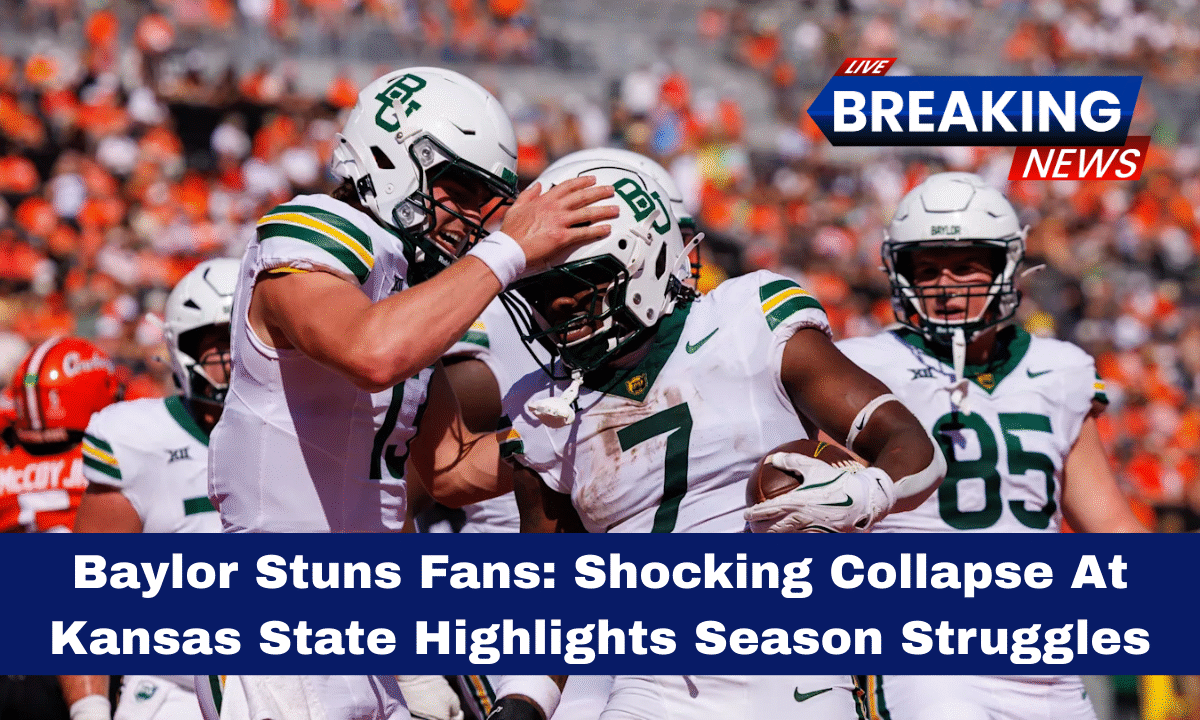
In a crucial Big 12 showdown, the Kansas State Wildcats delivered a commanding 90–74 victory over the Baylor Bears, exposing serious weaknesses in Baylor’s execution on both ends of the floor. Played at Bramlage Coliseum, this matchup quickly turned into a statement performance by Kansas State and a troubling collapse for Baylor.
The loss not only extended Baylor’s recent struggles but also raised concerns about their offensive rhythm, perimeter shooting, and defensive discipline.
Game Overview And Key Numbers

Kansas State controlled the game from the opening minutes, capitalizing on Baylor’s missed shots and defensive lapses. The Wildcats played with urgency, precision, and energy, while Baylor struggled to find consistency.
Game Statistics Table
| Category | Kansas State | Baylor |
|---|---|---|
| Final Score | 90 | 74 |
| Field Goal Percentage | 56.7% | 40.0% |
| Three-Point Shooting | 8/17 (47.1%) | 3/24 (12.5%) |
| Total Points By Top Two Scorers | 67 | 30 |
| Assists (Team Focus) | Strong Ball Movement | Limited Flow |
| Turnovers Impact | Forced Key Errors | Costly Mistakes |
Kansas State’s efficient shooting and ability to convert open looks made the difference, while Baylor’s poor perimeter shooting prevented any meaningful comeback attempt.
Offensive Breakdown: Baylor’s Shooting Collapse
The biggest issue for Baylor was their three-point shooting, converting only 3 of 24 attempts (12.5%). In today’s college basketball landscape, perimeter shooting often determines momentum, and Baylor simply could not find their range.

Key offensive problems included:
- Poor shot selection under pressure
- Limited ball movement in half-court sets
- Inability to respond after Kansas State scoring runs
- Difficulty finishing possessions efficiently
Meanwhile, Kansas State shot nearly 57% from the field, demonstrating strong offensive spacing and disciplined shot creation.
Kansas State’s Offensive Explosion
Kansas State’s backcourt delivered a standout performance. Two players combined for 67 points, overwhelming Baylor’s defense and maintaining control throughout the game.

What stood out most was:
- Efficient scoring inside and outside
- Smart transition basketball
- Consistent attacking of defensive gaps
- Aggressive perimeter defense leading to fast-break opportunities
The Wildcats also displayed renewed energy and cohesion, something that had been inconsistent earlier in their season.
Defensive Gaps That Hurt Baylor
Defense was another area where Baylor struggled. Kansas State repeatedly found open lanes and uncontested perimeter looks. Baylor’s rotations were late, and defensive communication appeared disjointed.
Major defensive concerns included:
- Failure to close out shooters
- Poor containment in transition
- Inconsistent interior defense
- Difficulty defending high pick-and-roll plays
Kansas State’s offensive rhythm only improved as Baylor’s defense continued to falter.
Momentum And Psychological Impact
Basketball is often about momentum, and Baylor never regained it after Kansas State’s early scoring surge. Once the Wildcats built a double-digit lead, Baylor struggled to shift the energy of the game.
The psychological pressure of a hostile road environment combined with recent struggles likely contributed to:
- Rushed offensive possessions
- Defensive hesitation
- Lack of composure during scoring droughts
The loss now places Baylor in a difficult position within the competitive Big 12 standings, where consistency is crucial.
What This Means For Baylor Moving Forward
This defeat highlights several urgent areas for improvement:
- Perimeter Shooting Consistency – Baylor must improve three-point efficiency.
- Defensive Communication – Stronger rotations and closeouts are necessary.
- Game Tempo Control – Slowing opposing runs will be critical.
- Mental Toughness On The Road – Responding under pressure is essential in conference play.
Without adjustments, Baylor risks further setbacks in conference competition.
The Baylor collapse at Kansas State was a revealing moment in the season. Kansas State executed with confidence, shot efficiently, and controlled the pace from start to finish. Baylor, on the other hand, struggled offensively and defensively, exposing vulnerabilities that opponents may continue to target.
If Baylor hopes to rebound, improvements in shooting discipline, defensive structure, and in-game composure must happen quickly. In a highly competitive Big 12 race, there is little room for repeated breakdowns like this one.