
 Hailey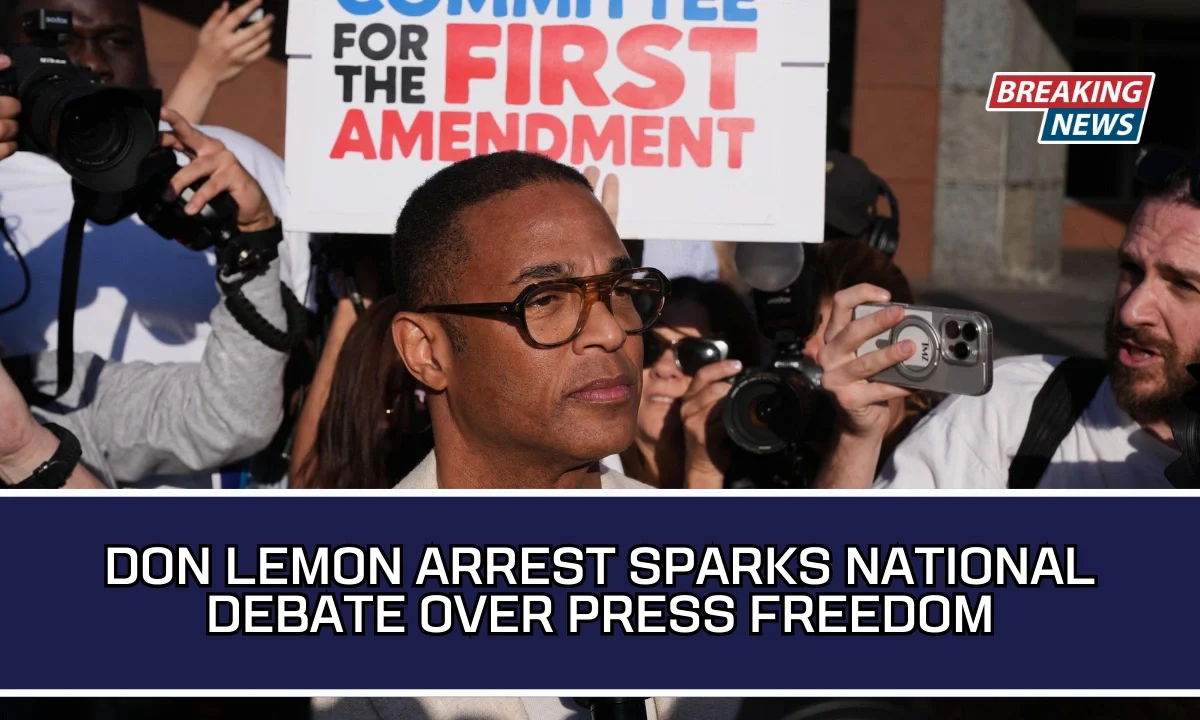
The debate over press freedom, government power, and the rights of journalists has once again become a major topic in the United States. Recently, the arrest of journalist Don Lemon during a protest investigation created strong reactions across the country.
Many people are asking important questions: Can journalists be arrested for covering protests? What are the limits of government authority? And how does the First Amendment protect the media?

This article explains what happened, the legal steps taken, the charges filed, and why the issue of a free press matters so much in a democracy.
What Happened in St. Paul, Minnesota?
On January 18, a protest took place at Cities Church in St. Paul, Minnesota. The demonstration was connected to concerns about Immigration and Customs Enforcement (ICE).
Protesters entered the church during a service and chanted slogans like “ICE Out!” to raise awareness about immigration enforcement.

Journalist Don Lemon, a former CNN anchor who now works independently, reported on the protest. He interviewed protest organizers before the event and live-streamed coverage during the protest. Afterward, he spoke with both protesters and church members to understand their views.
About ten days later, on January 29, federal authorities arrested Lemon late at night in Los Angeles while he was covering the upcoming Grammy Awards. The arrest took place around 11:30 p.m. at his hotel.
Legal Steps Before the Arrest
Attempts to Get an Arrest Warrant
According to reports, the Department of Justice (DOJ) made several attempts to secure an arrest warrant.
- A federal magistrate judge refused to approve the warrant, saying there was not enough evidence.
- The DOJ then asked a district judge to overturn that decision, but the judge declined.
- The department appealed to the Eighth Circuit Court of Appeals, but the court also refused to order an arrest warrant.
After these attempts, prosecutors presented the case to a grand jury, which later issued an indictment.
The Arrest in Los Angeles
With the indictment approved, federal agents arrested Lemon in Los Angeles. Because the arrest happened late at night, he spent the night in custody before appearing before a judge the next day.
Shortly after the arrest, the White House shared a social media post announcing it.
The Charges Filed
The charges against Lemon were listed in a 14-page indictment. He was accused of:
- Conspiracy to violate federally protected rights
- Interfering with religious worship at a place of worship
The indictment mentioned that Lemon asked the pastor questions during the protest coverage.
The law cited in the charges was originally created after the Civil War to punish organized civil rights crimes. This has added more discussion about whether applying that law in this case is appropriate.
Lemon’s Court Appearance
On January 30, Lemon appeared in court in Los Angeles. Prosecutors argued that his travel should be limited, claiming he could be a “danger to the community.” However, the judge rejected that argument. Lemon was released without bail and without travel restrictions.
After the hearing, Lemon released a public statement saying he had spent his career reporting news and would continue to do so. He referred to the First Amendment, which protects freedom of speech and freedom of the press in the United States.
Why the First Amendment Matters
The First Amendment of the U.S. Constitution protects several important rights, including:
- Freedom of speech
- Freedom of religion
- Freedom of the press
- Right to peaceful protest
These protections are important because they allow journalists to report on events without fear of punishment simply for doing their jobs.
In democratic societies, a free press plays a key role in holding governments accountable. When journalists can report freely, citizens can stay informed and make better decisions.
Timeline of Key Events
| Date | Event |
|---|---|
| Jan. 18 | Protest at Cities Church in St. Paul |
| Jan. 29 | Don Lemon arrested in Los Angeles |
| Jan. 30 | Court appearance and release without bail |
Larger Concerns About Press Freedom
Many critics argue that arresting journalists for covering protests could create fear in the media industry. Supporters of press freedom believe that reporting on public events is not a crime. They say that if journalists feel threatened, it could limit public access to important information.
At the same time, government officials argue that laws must be followed and that any illegal actions connected to protests should be investigated.
The case has now become part of a larger national conversation about journalism rights, government authority, and the limits of legal enforcement.
The arrest of Don Lemon has raised serious questions about the balance between law enforcement and press freedom. In a democracy, the media plays a powerful role in informing citizens and questioning authority. At the same time, governments are responsible for enforcing laws.
The key issue is whether reporting on a protest crosses a legal line or remains protected under the First Amendment. As the case moves forward in court, it will likely shape future discussions about how journalists operate and how far government power can go.
A healthy democracy depends on open discussion, legal fairness, and respect for constitutional rights. No matter which side people support, most agree that protecting fundamental freedoms is essential for the country’s future.