
 Hailey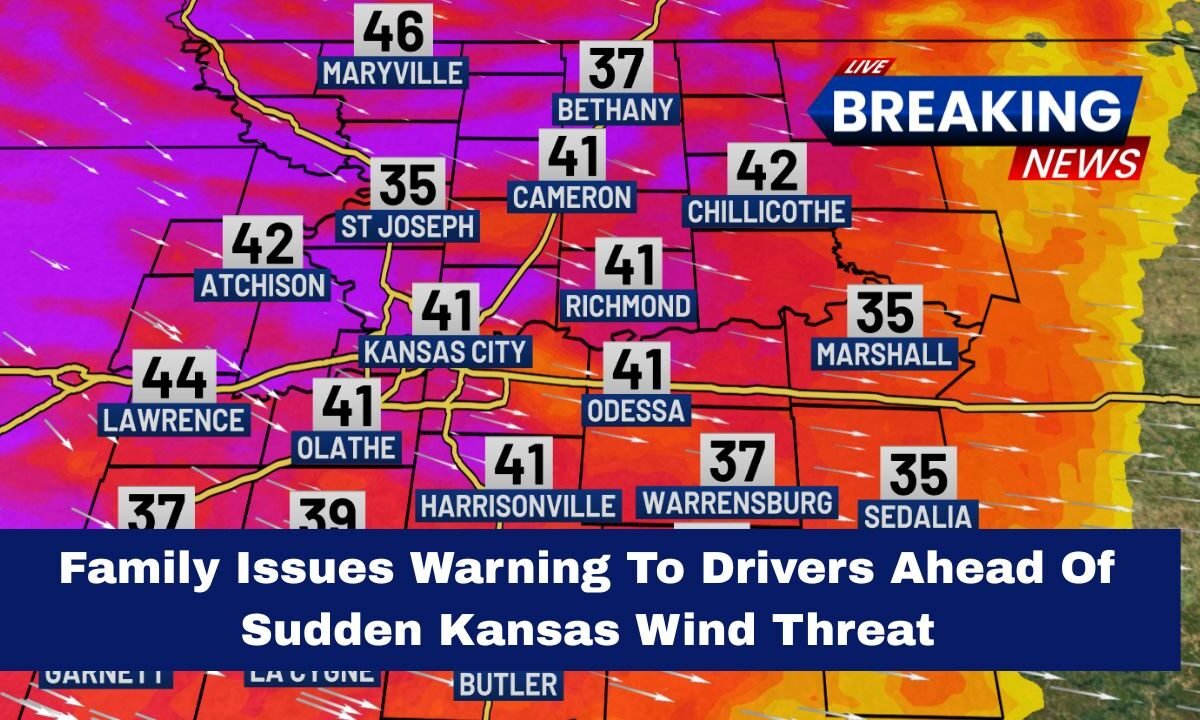
Kansas Wind Threat: Kansas is facing dangerous weather conditions as sudden high winds have prompted local families and authorities to issue urgent warnings to drivers.
With strong wind gusts, reduced visibility, and blowing debris, motorists are urged to take extra precautions when traveling across the state.

These extreme winds can be unpredictable, and safety is paramount for anyone on the road, especially drivers of high-profile vehicles like trucks and RVs.
The Risk of High Winds in Kansas
In recent hours, a High Wind Warning has been issued for much of Kansas, affecting major highways, rural roads, and metropolitan areas like Wichita.
The wind gusts in these areas are expected to exceed 58 mph, which can be strong enough to push vehicles off course and cause significant road hazards.

These gusts, combined with blowing dust and debris, can lower visibility to dangerously low levels, especially on highways such as Interstate 70 and U.S. Highways.
These conditions present a serious threat to drivers, with high-profile vehicles such as trucks, buses, and RVs being at increased risk of being blown off the road. However, even smaller cars can face challenges navigating the high winds, making it essential for all drivers to exercise caution.
Details of the Kansas Wind Threat
The current wind threat is characterized by sustained winds reaching 40 mph or more, with gusts up to 58 mph or higher.

The weather service has warned that conditions may worsen rapidly, especially as the wind speed can suddenly increase or shift direction.
The visibility is also a concern, as dust storms can quickly reduce sight on major roads and cause blind spots, making it hard to react to sudden obstacles.
For drivers who must travel during this time, the advice is clear: slow down and stay alert for rapidly changing conditions.
Wind Threat Details in Kansas
| Category | Details / Figures |
|---|---|
| Wind Advisory Type | High Wind Warning |
| Sustained Wind Threshold | ~40 mph |
| Wind Gusts Potential | 58 mph or greater |
| Visibility Hazard | Dust and debris reducing sight |
| Affected Areas | Western 2/3 of Kansas, including Wichita metropolitan area |
| Main Roads at Risk | I‑70, U.S. Highways |
| Vehicle Risk Factors | High-profile vehicles, trucks, motorcycles |
| Recommended Actions | Avoid travel, secure load, slow speed |
What Drivers Should Do in These Conditions
Motorists are urged to take proactive steps to stay safe while traveling through areas impacted by high winds. Below are some key tips that can make a significant difference:
- Check the Weather: Before traveling, it’s important to check for any updated wind warnings or advisories, especially for longer trips.
- Slow Down: The wind can suddenly push vehicles off course. Slowing down will give drivers more time to react.
- Secure Cargo: For those carrying loads, make sure everything is properly secured. Loose cargo can become a danger in windy conditions.
- Avoid High-Profile Vehicles: If possible, avoid traveling in trucks, RVs, or other vehicles that have a higher center of gravity and are more vulnerable to crosswinds.
- Pull Over Safely: If the winds become too dangerous, it’s best to find a safe place to pull over and wait until conditions improve. Ensure you’re off the road to avoid blocking traffic.
Additional Risks and Incidents in Recent History
Kansas has experienced similar wind events in the past, with incidents involving vehicles being pushed off the road or colliding with debris.
In one instance, a truck was overturned on U.S. Highway 50 due to a sudden gust. This highlights the need for drivers to stay cautious, especially when wind gusts reach sudden peak speeds.
Kansas Wind Threat: The current high wind conditions in Kansas are not to be taken lightly. With sustained winds reaching dangerous levels and the possibility of sudden gusts, motorists are advised to delay travel if possible or take extra precautions when driving.
Reducing speed, securing cargo, and staying updated on the weather forecast are essential steps to ensure safety on the roads during this challenging period.