
 Hailey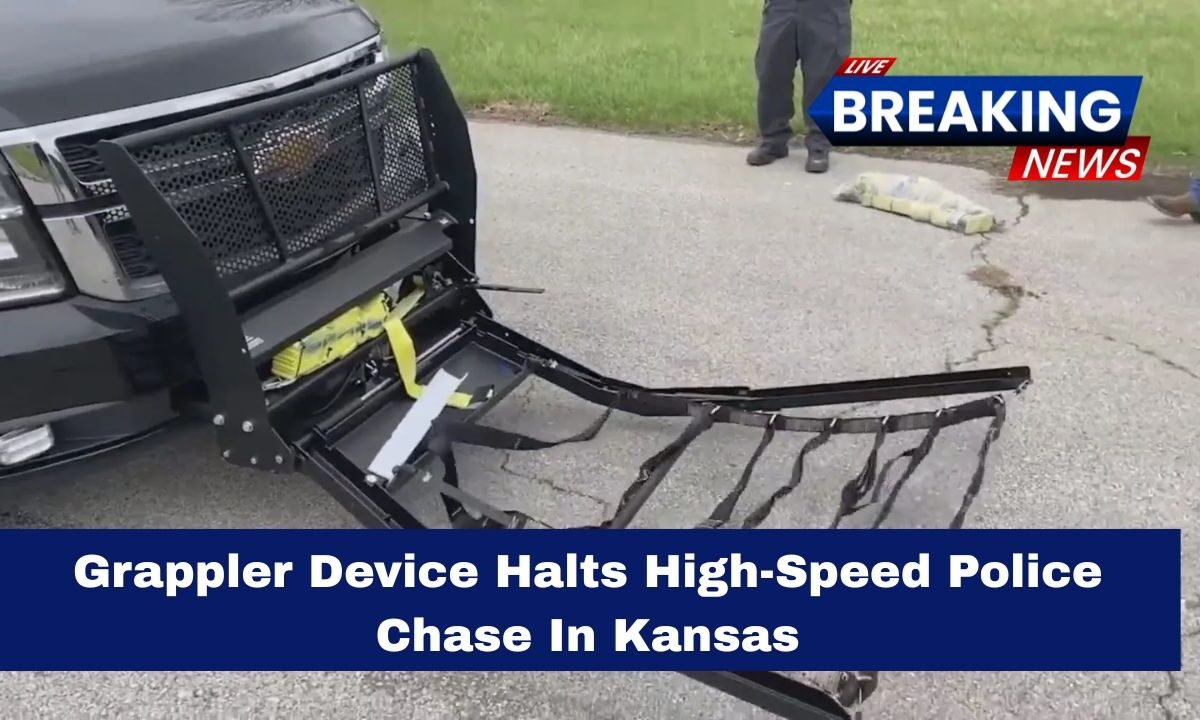
A high-speed police chase in Kansas came to a dramatic but safe end this week after officers deployed a Grappler Police Bumper device to stop a fleeing stolen truck.
The incident, which involved multiple patrol units, highlighted the growing use of advanced pursuit-intervention technology that helps officers halt dangerous suspects without risking crashes or injuries.

The operation demonstrated how modern tools like the grappler are reshaping police strategy in fast-moving chase situations.
How the Chase Began
According to police details, the chase unfolded when officers attempted to pull over a stolen pickup truck that was being driven recklessly through a suburban Kansas neighborhood.
Instead of stopping, the suspect accelerated, reaching highway speeds and weaving through traffic. Officers initiated a controlled pursuit while monitoring traffic patterns to minimize public danger.

As the chase continued, additional units joined to support containment. Traditional methods such as spike strips were considered, but officers decided to use the grappler device—a safer option for both the suspect and surrounding drivers.
What Is a Grappler Device?
The Grappler Police Bumper is a mechanical tool attached to the front of a patrol vehicle. It works by extending a strong, web-like strap that locks onto the rear tire or axle of a fleeing vehicle.
Once attached, the strap forces the suspect’s vehicle to slow down and eventually stop, preventing the dangerous spinning or swerving often seen in PIT maneuvers.

The device is designed to:
- Reduce high-speed chase risks
- Prevent collisions
- Improve officer and public safety
- Allow controlled deceleration of the suspect vehicle
Kansas law enforcement agencies have increasingly adopted the grappler, especially in suburban or highway chases where public traffic is heavy.
How Police Used the Grappler During the Kansas Chase
During the chase, officers positioned a grappler-equipped patrol vehicle behind the suspect’s stolen truck. After coordinating speed and distance, the operator deployed the device.
The strap successfully hooked onto the truck’s rear wheel, causing the vehicle to slow down rapidly but safely.
Within seconds, the truck lost momentum, allowing officers to surround the vehicle and order the suspect to exit. The controlled stop prevented the possibility of a crash, property damage, or injuries.
Officers later confirmed that no civilians were harmed, and the suspect was taken into custody without serious injury.
Key Facts of the Incident
| Detail | Information |
|---|---|
| Location | Kansas (Suburban Area) |
| Type of Incident | High-Speed Police Chase |
| Suspect Vehicle | Stolen Pickup Truck |
| Top Speed Reached | Approx. 70–80 mph |
| Stopping Method | Grappler Police Bumper |
| Outcome | Vehicle Disabled, Suspect Arrested |
| Injuries | None Reported |
| Police Units Involved | Multiple Patrol Vehicles |
Why the Grappler Was the Best Choice
The grappler allowed officers to maintain complete control over the end of the pursuit. Unlike a PIT maneuver, which can cause rollover crashes, or spike strips, which leave a driver struggling to control their tires, the grappler applies a steady, mechanical slowing force.
This makes it one of the safest available tools for ending pursuits involving stolen or fleeing vehicles.
Law enforcement agencies across the country have emphasized that devices like this reduce the number of collisions, hospitalizations, and lawsuits connected to high-speed pursuits.
The Kansas high-speed chase demonstrates how modern policing tools such as the grappler device are transforming law enforcement safety.
By using this technology, officers stopped a dangerous stolen vehicle without causing harm to the public or themselves.
As more agencies adopt the grappler, high-speed chases are becoming safer, controlled, and more predictable—marking an important step forward in public safety operations.