
 Patrick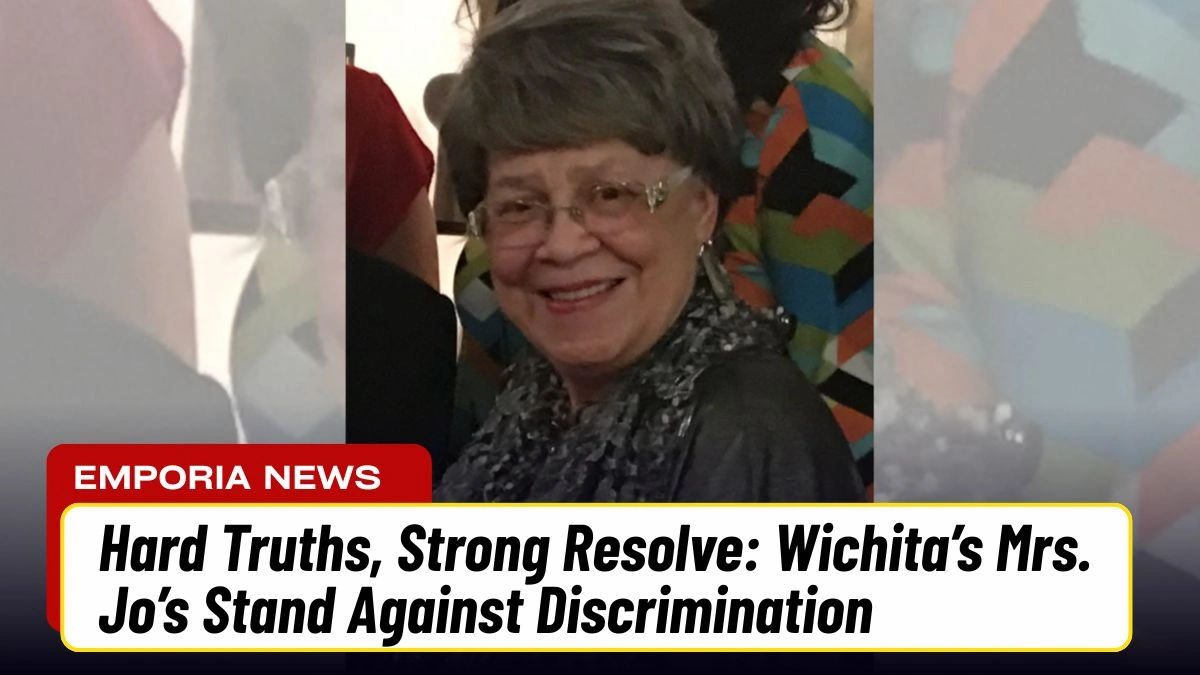
In the 1980s, Josephine Vonceal Pace “Jo” Brown visited my high school after being invited by the administration of North High. By then, she had already made history as the first Black woman to serve as chair of the Wichita School Board. Her presence alone commanded attention, but it was her words that truly transformed the room.
Mrs. Jo spoke with elegance and authority, delivering truths that were uncomfortable yet impossible to ignore. No one questioned her credibility or attempted to soften her message. Her voice carried weight because it was grounded in lived experience—and it resonated deeply.
Confronting Wichita’s Segregated Past

During her address, Mrs. Jo described the Wichita she had known—one shaped by discriminatory practices that many preferred to forget.
She recounted how Black students were once permitted to use public swimming pools only late on Friday evenings, after white students had finished. The pools were then drained and refilled so white children would not have to swim in the same water.
For many of us, this revelation struck hard. We were part of the final generation raised by parents who had grown up before the civil rights movement. While we understood segregation as history, Mrs. Jo made it immediate and personal. She didn’t just tell us what happened—she made us feel its injustice.
A Legacy Rooted in Truth and Courage

That fearless honesty became the cornerstone of her legacy. Mrs. Jo stood firmly in truth—whether in flats or high heels—and gave others permission to speak openly about painful realities. Her life was a masterclass in moral balance: unwavering yet composed, bold yet refined.
She passed away on New Year’s Eve at the age of 96, as if determined to close the year—and her life—on her own terms.
Standing Firm Amid Backlash
Years later, while working as a columnist, I referenced the same pool story in print. The response was immediate and fierce. Some white readers who had graduated during the Jim Crow era insisted that pools had never been segregated. Demands for a retraction followed, along with calls for my dismissal.

As pressure mounted, I refused to back down. That’s when Mrs. Jo stepped in once more.
“They’re coming after you, aren’t they?” she asked.
When I confirmed it, she responded with calm resolve—and a plan.
Evidence That Could Not Be Denied
Mrs. Jo directed me to the Central Branch Library’s Special Collections, where I would find a book by Sandra Van Meter. As school board chair, she had commissioned this work to document the district’s history. Inside its pages was proof that went even further than my column.
The district had once seriously discussed building a separate school to prevent Black and white students from sharing swimming facilities. Though that building was never constructed, the discriminatory water practices remained.
Similar accounts existed not only in Wichita but also in other Kansas cities and across the South. These stories echoed a broader national pattern—one many Americans still resist confronting.
Why This History Still Matters
This resistance to facing the past explains why such histories are often minimized or denied today. The discomfort many feel when confronted with these truths contrasts sharply with the lived experiences of Black communities restricted to certain days for basic services like skating or dental care.
Mrs. Jo actively challenged these injustices, and her example shaped my own commitment to telling difficult truths—despite the backlash that often follows.
Teaching Strength, Not Dependence
Her goal was never to shield me indefinitely but to show me how to stand independently. The courage I later drew upon—whether challenging unethical practices or calling out public humiliation—was rooted in her guidance.
She had endured more than most could imagine: navigating education after the Brown decision, working in a district that once considered rejecting federal funds to avoid integration, and receiving hate-filled letters from parents who opposed Black educators.
Grace Without Bitterness
Yet, she carried herself with warmth and dignity. She was never resentful—just confidently unbothered. A stanza from “Still I Rise” always brings her to mind, capturing her refusal to dim her light in a society that expected her to do so.
When confronted with lingering prejudice in everyday spaces, she corrected it calmly and firmly—like a teacher guiding a young student.
“You don’t pay and beg,” she once reminded me.
A Voice That Endures
Mrs. Jo could be direct without being cruel. Her words might sting, but they clarified vision and strengthened resolve. She often credited her husband, Dr. Val J. Brown Sr., whose medical practice provided her protection from retaliation, allowing her to speak freely.
That voice—bridging generations—continues to echo. Through it, she empowered countless individuals and inspired many more to discover their own.
Josephine Vonceal Pace “Jo” Brown leaves behind more than a list of historic achievements. She leaves a blueprint for courage, integrity, and truth-telling.
Her life reminds us that confronting uncomfortable history is not about dwelling on pain—it is about restoring balance, dignity, and justice.
By standing unwaveringly in truth, Mrs. Jo ensured that her voice would outlive her, guiding future generations to speak boldly, clearly, and without apology.