
 Hailey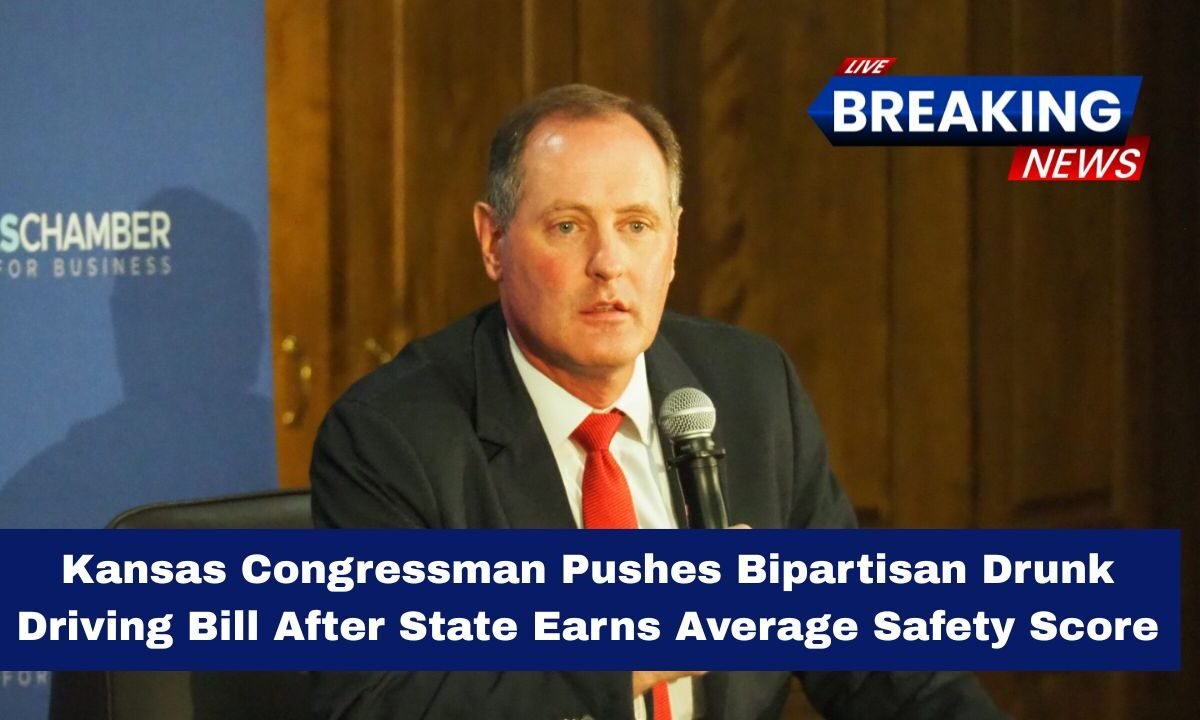
Kansas has recently landed in the spotlight after receiving an average road-safety score, raising new concerns about the state’s traffic laws and highway protection measures.
In response, a Kansas Congressman has introduced a bipartisan federal bill aimed at reducing drunk-driving incidents and improving safety standards across the country.

The legislation proposes tougher preventive tools, especially for first-time DUI offenders, and could significantly reshape how impaired-driving cases are handled nationwide.
Kansas Receives an “Average” Safety Rating
A nationwide road-safety assessment recently graded Kansas at a mediocre or average level, pointing out gaps in enforcement, impaired-driving prevention, and road-user protections.
Kansas has long struggled with alcohol-related crashes, rural-road fatalities, and limited adoption of advanced safety technologies.

The rating raised red flags among policymakers because:
- Kansas has a high number of rural highways, where accidents tend to be more severe.
- The state reported hundreds of alcohol-related crashes annually, with dozens leading to deaths.
- Kansas lags behind several states in adopting recommended ignition-interlock standards for DUI offenders.
The Congressman, who represents mostly rural counties, stressed that safe roads are essential because residents often travel long distances for school, health care, and work.
What the Bipartisan Drunk-Driving Bill Proposes
The Congressman partnered with a Democratic colleague from another state to introduce a bill known informally as the End DWI Act.

This legislation aims to strengthen impaired-driving laws by creating a nationwide ignition-interlock requirement for first-time DUI offenders.
Key goals of the bill include:
- Mandatory ignition-interlock devices for all first-time intoxicated-driving convictions.
- Increased federal support for states that adopt strict impaired-driving standards.
- Reducing repeated DUI offenses through preventive technology rather than relying only on punishment.
- Addressing more than 37 alcohol-related deaths per day in the United States.
Ignition-interlock devices prevent a car from starting until the driver passes a breath-alcohol test, making them one of the most effective tools available to stop repeat drunk driving.
Research shows such devices can reduce recidivism by up to 70%, especially for high-risk offenders.
Kansas DUI Laws- What the State Already Requires
Kansas already has strong DUI laws, but the Congressman argues that adding national consistency will improve outcomes even further.
Current Kansas DUI Structure
- A driver is considered impaired with a BAC of 0.08 or higher.
- DUI is treated seriously, even for first-time offenders.
- Repeat offenses lead to stricter jail time, fines, and potential felony charges.
Kansas DUI Penalties
| Offense | Classification | Penalties & Fines |
|---|---|---|
| First DUI | Class B misdemeanor | 48 hours–6 months jail or 100 hours community service; $750–$1,000 fine |
| Second DUI | Class A misdemeanor | 90 days–1 year jail; $1,250–$1,750 fine |
| Third DUI (no recent prior) | Class A misdemeanor | 90 days–1 year jail; $1,750–$2,500 fine |
| Third DUI with prior within 10 years | Felony | 17–46 months jail; long-term license restrictions |
| Additional penalties | — | Ignition-interlock periods, alcohol treatment programs, license suspensions |
Kansas also recently strengthened its treatment-funding structure by redirecting DUI-related fines to support addiction-treatment and recovery programs.
Why the Federal Bill Matters
Even with existing state laws, problems persist:
- Too many first-time offenders return to drunk driving.
- States have inconsistent ignition-interlock requirements.
- Kansas’ average safety score shows current measures are not enough.
- Rural states like Kansas face unique risks due to high-speed roads and longer emergency response times.
The Congressman argues that a national standard will:
- Close safety gaps between states.
- Reduce the number of impaired drivers on the road.
- Create consistent accountability for first-time offenders.
- Save lives through preventive technology rather than solely relying on punishment.
Kansas’ average road-safety score has highlighted the need for stronger, more consistent impaired-driving prevention tools.
The Congressman’s bipartisan bill shows growing national momentum to combat drunk driving using technology, not just punishment.
By promoting ignition-interlock devices for first-time offenders and pushing for uniform standards across states, the legislation aims to reduce alcohol-related crashes and protect families on the road.
If passed, it could significantly improve safety in Kansas and serve as a turning point for national DUI prevention efforts.