
 Hailey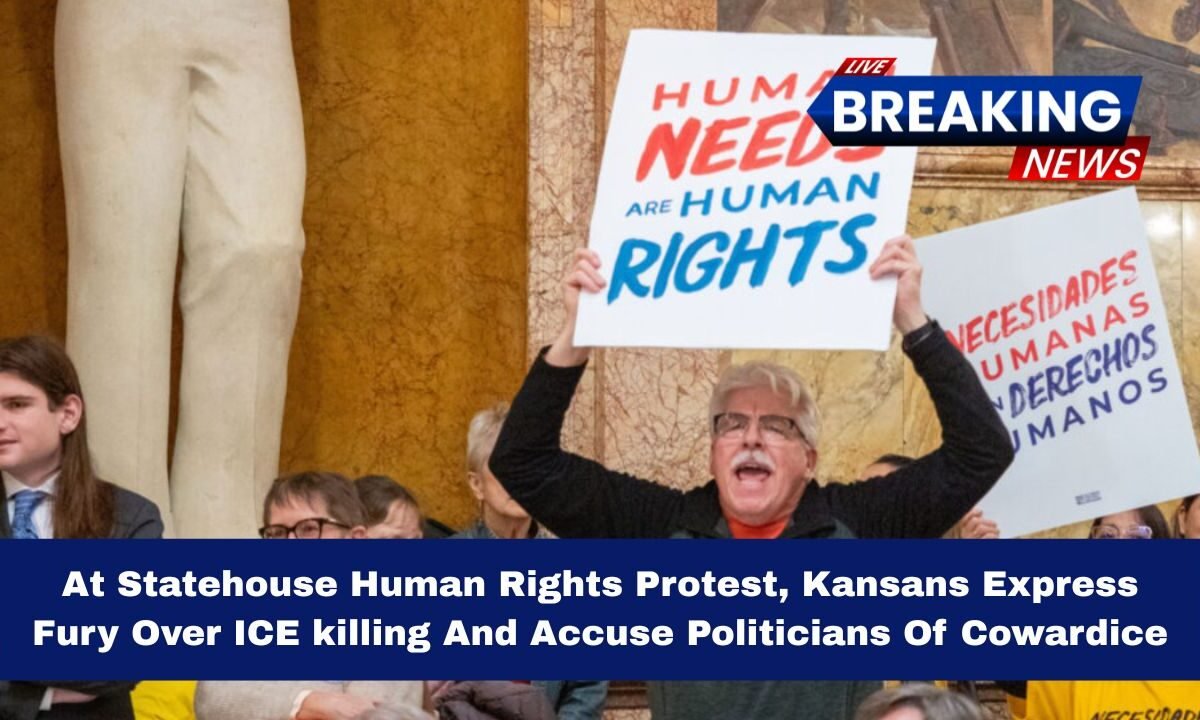
On January 14, 2026, hundreds of Kansans gathered inside the Kansas Statehouse in Topeka for a large Human Rights protest that quickly turned into a forceful display of anger and grief.
The second-floor rotunda was packed shoulder to shoulder, with people lining the upper railings as chants echoed throughout the building for nearly two hours.

The rally brought together a 14-organization coalition, including civil rights groups, faith organizations, immigration advocates, reproductive-rights groups, and environmental activists.
Protest leaders said the goal was to show lawmakers that human needs are human rights, and that immigration enforcement, healthcare, education, and democracy are deeply connected.
Why Protesters Are Furious Over The ICE Killing
The protest was fueled by the recent killing of Renee Nicole Good, a 37-year-old woman who was shot and killed by an U.S. Immigration and Customs Enforcement (ICE) agent in Minneapolis earlier this month. Her death sparked outrage across the Midwest and quickly became a rallying point for immigration-rights activists.
Demonstrators said the killing represents a broader pattern of excessive force, lack of transparency, and limited accountability in federal immigration enforcement.
Many signs carried her name, with messages demanding justice and an end to what protesters described as “violent and unchecked enforcement practices.”
Accusations Of Political Cowardice
Anger at ICE was matched by sharp criticism of elected officials. Protesters accused state and federal politicians of remaining silent after the killing and failing to challenge federal immigration actions.

Handwritten signs throughout the rotunda carried blunt messages such as:
- “History Will Remember The Cowards Who Stayed Silent”
- “Who Do You Really Serve?”
- “Silence Is Complicity”
Several signs directly named Kansas lawmakers, accusing them of prioritizing political safety over moral leadership. Speakers said silence from elected officials sends a message that immigrant lives are expendable.
Chants, Songs, And Emotional Speeches
The mood inside the Statehouse was intense and emotional. Protesters chanted “Human Needs Are Human Rights” repeatedly, along with chants directly condemning ICE. Religious leaders, community organizers, and immigrant advocates addressed the crowd, calling for courage, compassion, and action.
Some speakers emphasized that immigration enforcement does not exist in isolation. They linked the killing to cuts in public services, restrictions on voting rights, and policies that disproportionately affect low-income and marginalized communities.
Key Details From The Protest
| Category | Details |
|---|---|
| Date | January 14, 2026 |
| Location | Kansas Statehouse, Topeka |
| Attendance | Hundreds of protesters |
| Duration | About two hours |
| Organizers | 14 advocacy, faith, and civil-rights groups |
| Central Issue | ICE killing of Renee Nicole Good (37) |
| Core Message | Human needs are human rights |
| Political Focus | Condemnation of silence by elected officials |
Why This Protest Matters
Advocates say the protest reflects a growing frustration among Kansans who feel their leaders are ignoring serious human-rights concerns. By holding the rally inside the Statehouse, organizers deliberately brought the message directly to lawmakers during the legislative session.
Many attendees said this was not just a protest about one death, but about accountability, transparency, and the role of government in protecting — not endangering — people living in the United States.
The Kansas Statehouse Human Rights protest showed how deeply the killing of Renee Nicole Good has resonated far beyond where it occurred.
For many Kansans, the issue is no longer abstract or distant. Inside the rotunda, protesters made it clear they expect action, not silence, from those in power.
Their message was unmistakable: human lives must come before political convenience, and history will judge those who choose to remain quiet.