
 Hailey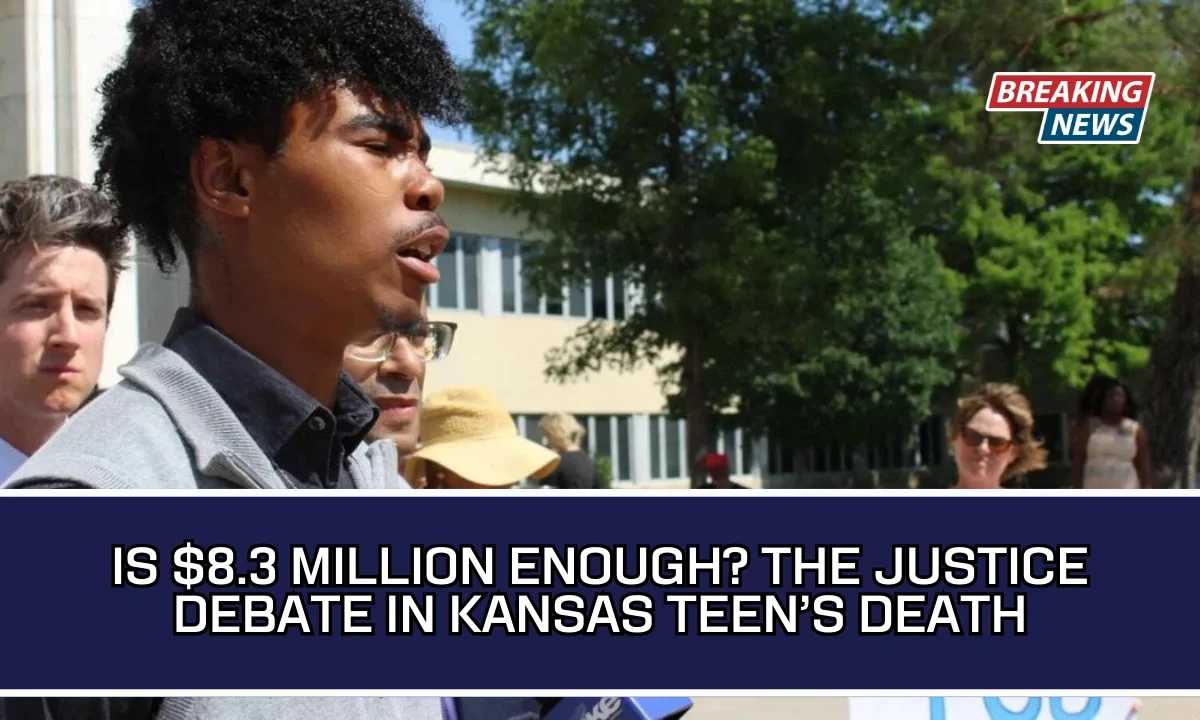
When a young life is lost, no amount of money can truly fix the pain. But when a court awards millions of dollars to a grieving family, many people start asking an important question: Is this real justice, or just compensation?
The recent case of Kansas teenager C.J. Lofton has once again raised serious concerns about police accountability, excessive force, and wrongful death cases in the United States.

While a jury awarded Lofton’s family $8.3 million, many citizens are still wondering whether this verdict is enough to prevent similar tragedies in the future.
What Happened in the C.J. Lofton Case?
In Sedgwick County, Kansas, a federal court jury awarded $8.3 million in compensation to the family of C.J. Lofton. Lofton died after juvenile intake officers held him face down for more than 30 minutes. Medical officials ruled his death a homicide.
However, despite the ruling, the local District Attorney chose not to prosecute the officers involved. This decision shocked many in the Wichita community, where people had hoped for stronger legal action.
Why The Verdict Matters

According to the family’s attorney, the jury’s decision sends a message about the dangers of prolonged prone restraint — a method where a person is held face down for a long period.
Medical experts and human rights groups have repeatedly warned that prone restraint can be deadly, especially when used for extended periods.
Understanding The Legal Outcome
Although the family received financial compensation, the officers were not arrested or criminally charged. This has led to a bigger debate about how difficult it is to hold law enforcement officers accountable in wrongful death cases.

Here is a simple breakdown:
| Issue | What Happened |
|---|---|
| Cause of Death | Ruled homicide |
| Method Used | Prolonged prone restraint |
| Criminal Charges | None filed |
| Civil Court Verdict | $8.3 million awarded |
| Public Reaction | Mixed relief and frustration |
The verdict provided financial support to the family. But many argue that true justice also requires criminal responsibility, not just monetary payment.
Why Police Accountability Is So Difficult
Holding officers accountable in the U.S. legal system can be extremely challenging. Prosecutors often work closely with law enforcement, which creates concerns about fairness when officers are investigated.
Legal experts have pointed out that:
- Officers are rarely charged in excessive force cases.
- Prosecutors often face limited consequences for refusing to file charges.
- Systemic issues may protect institutions rather than focus on broader accountability.
This pattern has appeared in other high-profile cases as well.
Lessons From Other Cases
The debate around accountability is not new. Cases like George Floyd and Rodney King showed how video evidence changed public understanding.
In both situations, official reports initially described events differently from what video footage later revealed. Without recordings, the public might never have known the full story.
In Kansas City, allegations involving former detective Roger Golubski also raised questions about systemic misconduct and racial injustice. Advocates argue that institutions sometimes avoid admitting wrongdoing, even when individuals are accused of serious crimes.
The Role Of “Excited Delirium”
During Lofton’s case, the defense argued that his death was caused by a condition known as “excited delirium.”
However, many medical associations have discredited this diagnosis. Human rights groups claim that the term has sometimes been used to justify excessive force by law enforcement.
The jury rejected this explanation, which many see as a positive step toward recognizing the real dangers of restraint methods.
Is Financial Compensation Enough?
An $8.3 million verdict is significant. It acknowledges that something went seriously wrong. It offers the family financial support and a sense that a jury believed their case.
But money cannot replace a life.
For many advocates, justice means:
- Criminal accountability when appropriate
- Policy changes to prevent future deaths
- Clear restrictions on dangerous restraint methods
- Greater transparency in investigations
Without these changes, similar tragedies may continue.
Can Repeat Cases Be Prevented?
Preventing future deaths requires both legal reform and community awareness. Possible steps include:
1. Clear Ban On Dangerous Restraints
Many states are reviewing or banning prolonged prone restraint methods.
2. Independent Investigations
Independent prosecutors may reduce conflicts of interest.
3. Body Cameras And Video Evidence
Video recordings have proven crucial in exposing truth in many cases.
4. Public Voting And Policy Change
Citizens play a role by supporting reforms and demanding transparency.
A small shift in public opinion — like the jury’s decision in this case — could signal broader change.
The $8.3 million verdict in the death of C.J. Lofton sends a powerful message that dangerous restraint practices can have deadly consequences. It shows that juries are willing to recognize wrongdoing when evidence is presented clearly.
However, financial compensation alone does not fully answer the call for justice. When officers are not criminally charged, many citizens feel that accountability remains incomplete.
True justice should combine fair compensation, responsible investigations, policy reform, and prevention efforts. Until legal standards make it easier to hold individuals and institutions accountable, families may continue to fight long battles for recognition and fairness.
The real question is not just whether this case delivered justice — but whether it will inspire meaningful change that prevents another young life from being lost.