
 Hailey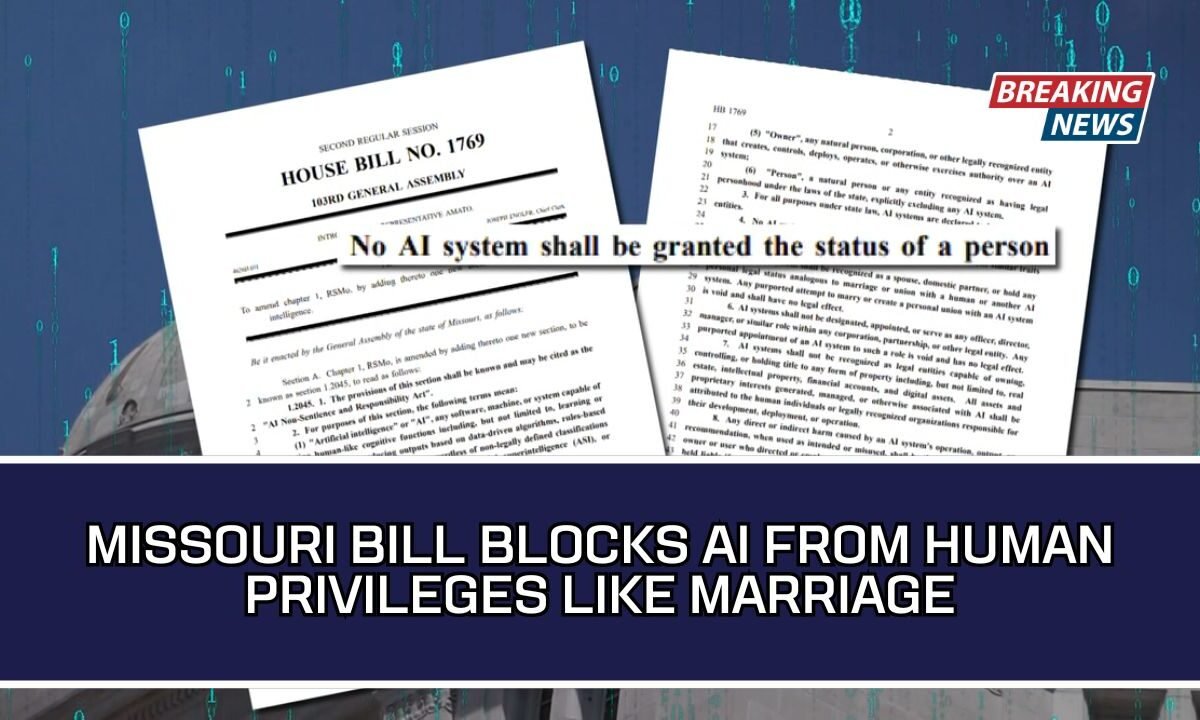
Artificial intelligence is becoming smarter every year. It can talk, think, and even create videos or images that look real. Because of this, many people and governments worry about what AI might be able to do in the future.
To avoid problems before they begin, the state of Missouri in the United States has proposed a new bill.

This bill clearly states that AI should not be treated like a human being and should not receive any human privileges, including marriage. The decision has started a big discussion across the country.
What Is This Bill About?
The Missouri bill is very simple in its goal: it wants to make sure that AI systems can never be confused with humans in the eyes of the law. Even though AI can act like a person through text and voice, lawmakers say AI is still a machine created by humans and not a living being.
Because of this, the bill includes rules such as:
- AI cannot marry a human or another AI
- AI cannot hold human legal rights
- AI cannot be recognised as a person
- AI cannot sign documents that need human identity
- AI cannot claim human benefits like privacy or ownership

Lawmakers want to avoid a future where advanced AI systems start acting like legal partners or human substitutes.
Why Did Missouri Create This Bill?
Missouri lawmakers say they created this bill because of how fast AI is developing. They believe that if they do not set rules now, the future could become confusing and unsafe.
To Avoid Legal Confusion
If AI becomes advanced enough to copy human behaviour, it might be used to sign documents, make decisions, or even become part of legal relationships. This could cause serious problems that the law is not prepared for. The bill blocks this from happening.
To Protect Human Relationships

Some people already feel emotionally attached to AI chatbots. Lawmakers worry that future AI might become so realistic that people could try to legally marry them. This bill makes it clear that marriage is only between human beings.
To Prevent Misuse or Fraud
If AI were legally recognised as a “person,” it could be misused. Someone might use AI to hide identity, commit crimes, or trick systems. By banning human-like rights for AI, the bill aims to protect citizens and businesses.
What Does the Bill Ban?
Below is a clear summary of what the bill does not allow:
Simple Table:
| AI Action | Allowed? | Explanation |
|---|---|---|
| AI marrying humans | No | Only humans can form legal marriages |
| AI being a legal person | No | AI cannot have human identity |
| AI signing contracts | No | Only humans can sign official papers |
| AI having human rights | No | AI cannot claim privacy or ownership |
| AI used for work | Yes | AI can still be used as a tool or service |
How Are People Reacting?
People across the US have different opinions about this bill. Supporters say it is necessary to protect human identity and avoid problems as AI becomes smarter.
They believe clear rules today will protect future generations. Opponents argue that the bill might be too strict and could slow down technology development. They say the world should focus more on responsible innovation instead of hard restrictions.
Still, many experts agree that it is smart to start making AI laws now instead of waiting for problems to happen.
Missouri’s new bill is one of the first major steps in the US to limit how AI can behave. By banning AI from having human privileges such as marriage, legal status, and personal rights, the state hopes to keep the difference between humans and machines very clear.
As AI continues to grow, more states may create their own rules. This debate will likely continue for many years, but one thing is certain: defining AI limits today will help guide a safer future for everyone.