
 Hailey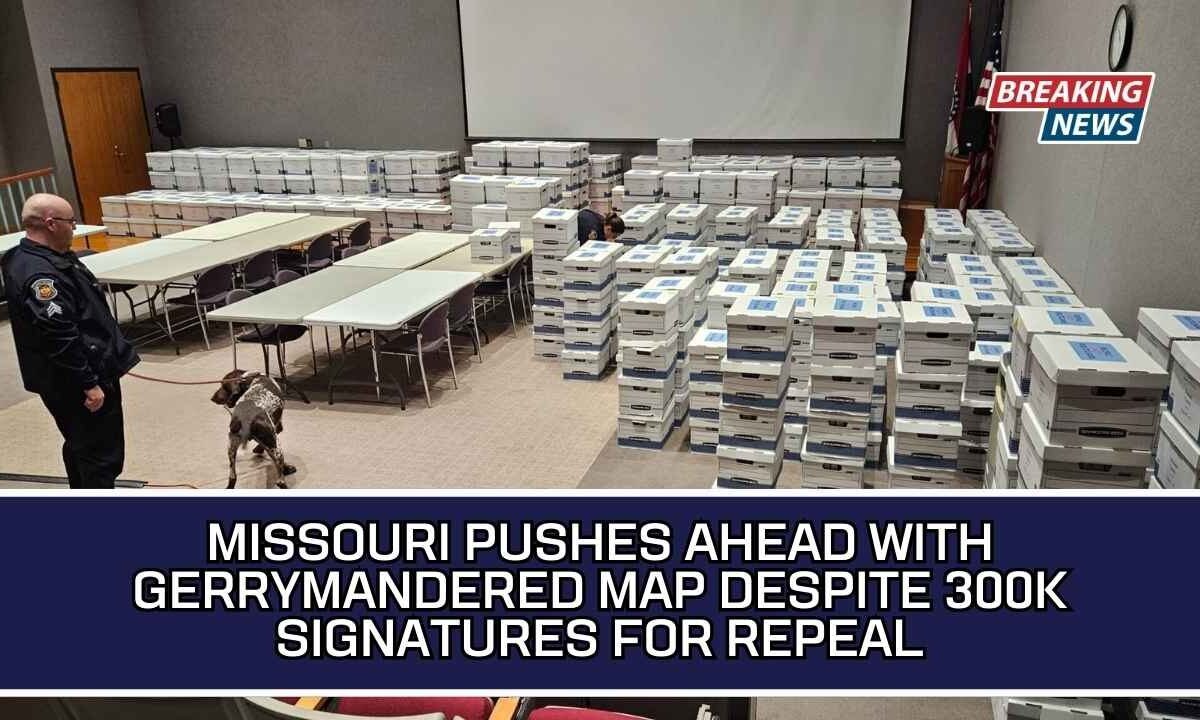
Missouri is heading into a major political fight after state leaders decided to let a new congressional map take effect, even though more than 300,000 people signed a petition to challenge it.
Many voters believe the map is gerrymandered, meaning it is drawn in a way that gives one political party an unfair advantage. Normally, when enough signatures are turned in for a referendum, the law is paused.

But this time, state officials are taking a very different approach, and it has caused confusion, anger, and legal battles across the state.
Why the Map Is Being Challenged
A group called People Not Politicians submitted more than 305,000 signatures in 691 boxes to push for a statewide referendum in 2026. Their goal is simple: allow Missouri voters to decide whether the new congressional map should stay or be repealed.
But Missouri Secretary of State Denny Hoskins says the map will still go into effect immediately. He also says he has the power to declare the referendum unconstitutional after signatures are verified.

This breaks from long-standing Missouri practice, where laws were usually placed on hold as soon as signatures were submitted.
Opponents argue that the map was created for political gain and not to reflect the real voices of Missouri communities.
What the New Map Changes
The map was pushed by former President Donald Trump, who urged Missouri Republicans to redraw districts so the GOP could control seven out of the state’s eight seats.
The major target is the 5th District, currently represented by Democrat Emanuel Cleaver. Under the new plan, parts of his district will be split and attached to areas with more Republican voters.
District Changes
(Simple Table Format)
| District | Change |
|---|---|
| 5th District | Split into multiple parts; Democratic areas reduced |
| 4th District | Gains new Republican-leaning rural regions |
| 6th District | Absorbs suburban and rural communities from Kansas City |
Supporters of the petition say this clearly shows the map was designed for political purposes instead of fair representation.
Legal Battles and Court Rulings
A Cole County judge ruled that lawmakers had the authority to pass the revised map, even though they had already drawn districts earlier using the same census. But this ruling did not settle the bigger question: Should the map take effect while a referendum is pending?
Missouri’s Constitution states that any law being challenged by voters should not take effect until the public votes on it. This was the rule followed in a major 2017 referendum on the right-to-work law. That law was frozen until voters rejected it in 2018.
However, Attorney General Catherine Hanaway advised that laws are not paused unless signatures are verified first. Since verification will take months, the map would become active immediately.
Signature Verification Timeline
Hoskins says the petition pages will be sent to local election boards within two weeks. Clerks then have until July 28 to verify signatures.
People Not Politicians argues that all signatures gathered should count, but Hoskins plans to reject those collected before October 14. That could remove nearly 90,000 signatures from the total.
Even with that hurdle, organizers believe they will still meet the required number to place the issue on the 2026 ballot.
A Costly and Emotional Fight
Millions of dollars have already been spent on both sides. People Not Politicians has raised over $5 million, while a group supporting the map has raised over $2 million. Both sides expect a long legal battle.
Hoskins believes voters will support the map if it appears on the ballot, but petition organizers say the large turnout of volunteers and signatures shows strong public opposition.
The fight over Missouri’s new congressional map shows how deeply voters care about fairness in elections.
With more than 300,000 signatures demanding a public vote and state leaders insisting the map should take effect anyway, this issue has become a major test of Missouri’s democratic process.
The decisions made in the coming months will shape future elections and determine whether political power rests with elected leaders or the voters themselves.