
 Hailey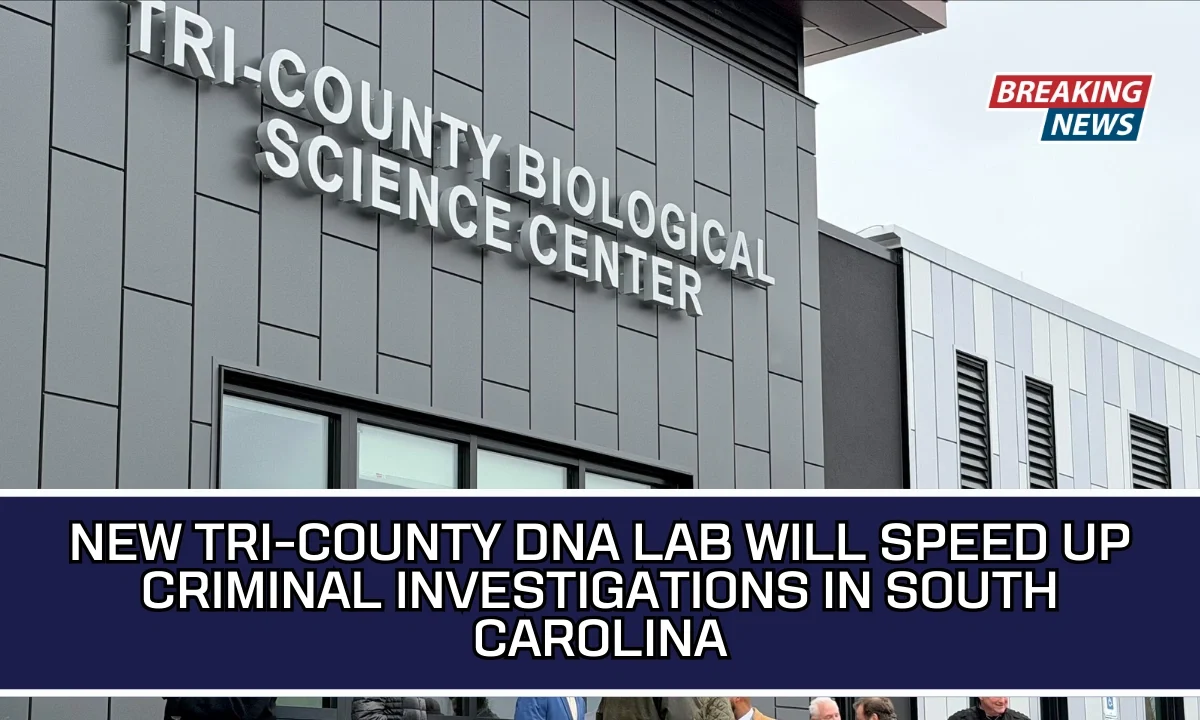
Exciting news for law enforcement and the public in the Lowcountry! A brand-new DNA and forensic science center is coming soon that will help counties work together to solve criminal cases faster and more efficiently.
The Tri-County Biological Science Center on Leeds Avenue was unveiled recently, promising cutting-edge technology for crime investigation in Charleston, Berkeley, and Dorchester counties.
Tri-County Collaboration: Why It Matters

The name Tri-County is important because it highlights collaboration. For the first time in the state’s history, law enforcement agencies from three counties will share DNA evidence and forensic resources. This will make criminal investigations quicker and more connected.
State-of-the-Art Facility
The new facility spans nearly 22,000 square feet and features advanced DNA testing equipment. Law enforcement officers say the center will greatly improve the speed of processing evidence.
“The future of law enforcement in our area,” said Dorchester County Sheriff Sam Richardson.
Charleston County Sheriff Carl Ritchie added, “Having a lab here means Tri-County partners can share information, compare notes, and better understand crime trends in their jurisdictions.”
Local Control and Faster Results
The center will allow counties to manage forensic cases locally, reducing delays and pressure on the system. Ton Van Koughnett, forensic lab director for the center, explained:
“We are able to control locally what happens with our forensic science cases. Faster results help us serve justice more efficiently.”
Accreditation and CODIS Access
Before opening, the center must complete a strict certification process, which means it will likely be ready in about two years. Once accredited, it will have access to CODIS, a national database used to match unknown DNA samples with convicted offenders.
Future of Genetic Genealogy
Currently, the center will not use forensic genetic genealogy—a tool that can identify individuals not in CODIS. Experts say this technology could be added in the future.
Colby Lasyone, chief of staff with Othram, explains, “Genetic genealogy works across generations. It can help identify people even if they aren’t in a database.”
The center is designed to last 30 years, meaning it can adapt to new DNA technologies as they become available. Van Koughnett noted that DNA platforms usually last 5–10 years, and the center is prepared to upgrade as technology evolves.
Cost and Statewide Impact
The $29 million facility was completed under budget. Its collaborative model could serve as an example for the rest of the state, showing how counties can work together to improve criminal investigations and reduce case backlogs.
| Feature | Details |
|---|---|
| Size | 22,000 square feet |
| Counties Covered | Charleston, Berkeley, Dorchester |
| Technology | Advanced DNA testing, state-of-the-art forensic lab |
| Cost | $29 million (under budget) |
| Opening Timeline | Approximately 2 years (after accreditation) |
| Future Upgrades | Potential inclusion of forensic genetic genealogy |
The Tri-County Biological Science Center marks a major step forward for law enforcement in South Carolina.
By allowing counties to collaborate, control forensic cases locally, and adopt new technologies in the future, this center will speed up criminal investigations, reduce backlogs, and improve public safety.
Its innovative design and collaborative approach may inspire similar projects across the state in the coming years.