
 Mandy
Mandy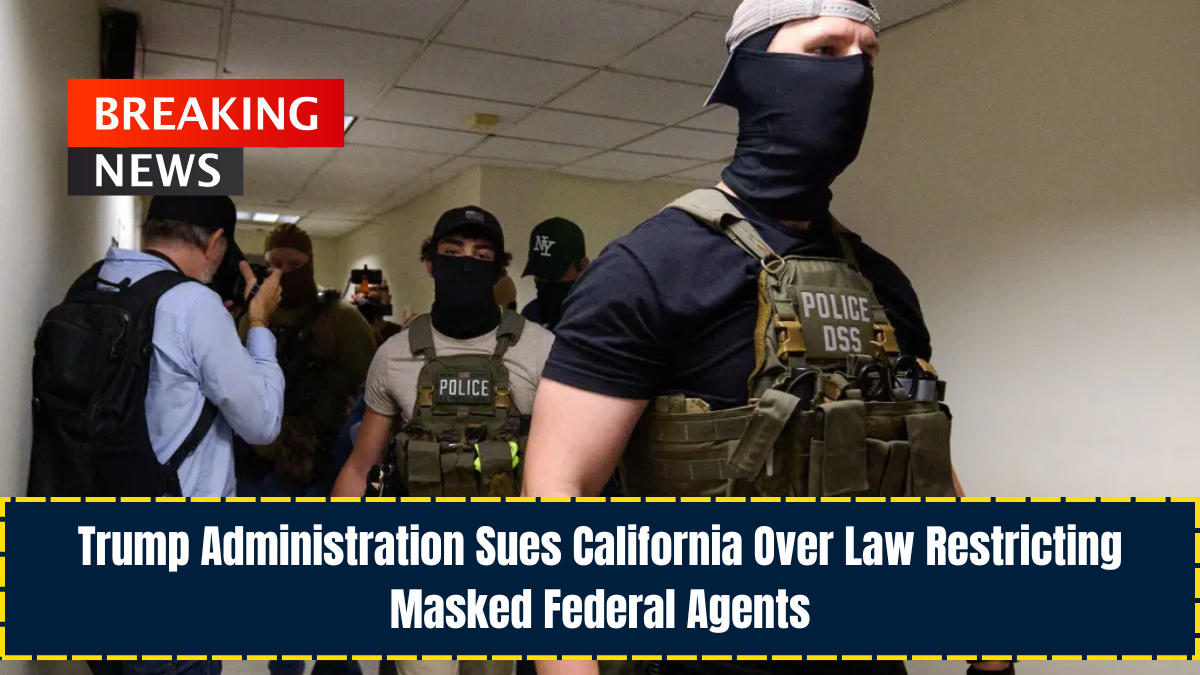
The Trump administration has launched a federal lawsuit against California over its recently enacted “No Secret Police Act,” a law prohibiting most law enforcement personnel — including federal agents — from covering their faces while on duty.
Set to take effect on January 1, 2026, the legislation was drafted in response to immigration raids where masked federal officers conducted arrests across the state.

The law makes limited exceptions, including allowances for California Highway Patrol officers and the use of motorcycle or safety helmets.
Federal Officials Argue the Law Puts Agents at Risk
U.S. Attorney Bill Essayli announced the lawsuit on Monday, filed in the U.S. District Court for the Central District of California. Named in the suit are the State of California, Governor Gavin Newsom, and Attorney General Rob Bonta.
In a statement posted on X, Essayli claimed that enforcing the mask ban could expose federal agents to doxxing, arguing that hostile individuals might release their private information online.
He added that attacks on federal personnel have risen sharply in recent months, blaming what he described as irresponsible political rhetoric. Laws such as California’s, he argued, only heighten the dangers faced by federal officers.
Essayli previously stated in an interview with California Politics 360 that federal agents intended to disregard the mask prohibition once it takes effect.
California Leaders Respond to DOJ Lawsuit
KCRA 3 contacted the offices of Newsom, Bonta, and state Senator Scott Wiener, who authored the legislation.
Sen. Scott Wiener’s Response
Wiener issued a forceful condemnation of the Trump administration, accusing it of prioritizing unchecked authority over public safety.
He argued that even the FBI had warned that ICE’s masked operations were damaging public trust and enabling criminals to impersonate federal officers.
According to Wiener, agents should act as transparent public servants, not as “masked thugs preparing to rob a liquor store.”
He concluded: “No one is above the law. We’ll see you in court.”
Governor Gavin Newsom’s Office Responds
Newsom spokesperson Diana Crofts-Pelayo criticized the administration, asserting that if federal officials cared as much about public safety as they did about pardoning violent offenders and conducting questionable detentions, communities would be safer.
She echoed: “We’ll see the U.S. Department of Justice in court.”
Attorney General Rob Bonta Comments
Bonta’s office noted that the complaint is under review. In a public statement, Bonta said Californians should not have to question whether someone approaching them is a legitimate law enforcement officer or a criminal impersonator.
He referenced FBI warnings that unidentified ICE agents have allowed copycat offenders to commit crimes, undermining safety and trust.
Conclusion
The legal clash between the Trump administration and California marks another chapter in the ongoing struggle over immigration enforcement and state authority.
As California seeks to promote transparency by restricting masked operations, federal officials insist the law endangers their agents.
With both sides preparing for a courtroom battle, the outcome may shape future policies on law enforcement identity, public trust, and federal-state jurisdiction.
FAQs
1. What is the ‘No Secret Police Act’?
It is a California law that bans most on-duty law enforcement officers — including federal agents — from covering their faces, with limited exceptions.
2. Why is the Trump administration suing California?
Federal officials argue the law threatens agent safety, increases the risk of doxxing, and violates federal authority.
3. When does the law take effect?
The law is scheduled to take effect on January 1, 2026, unless blocked or altered by the courts.