
 Patrick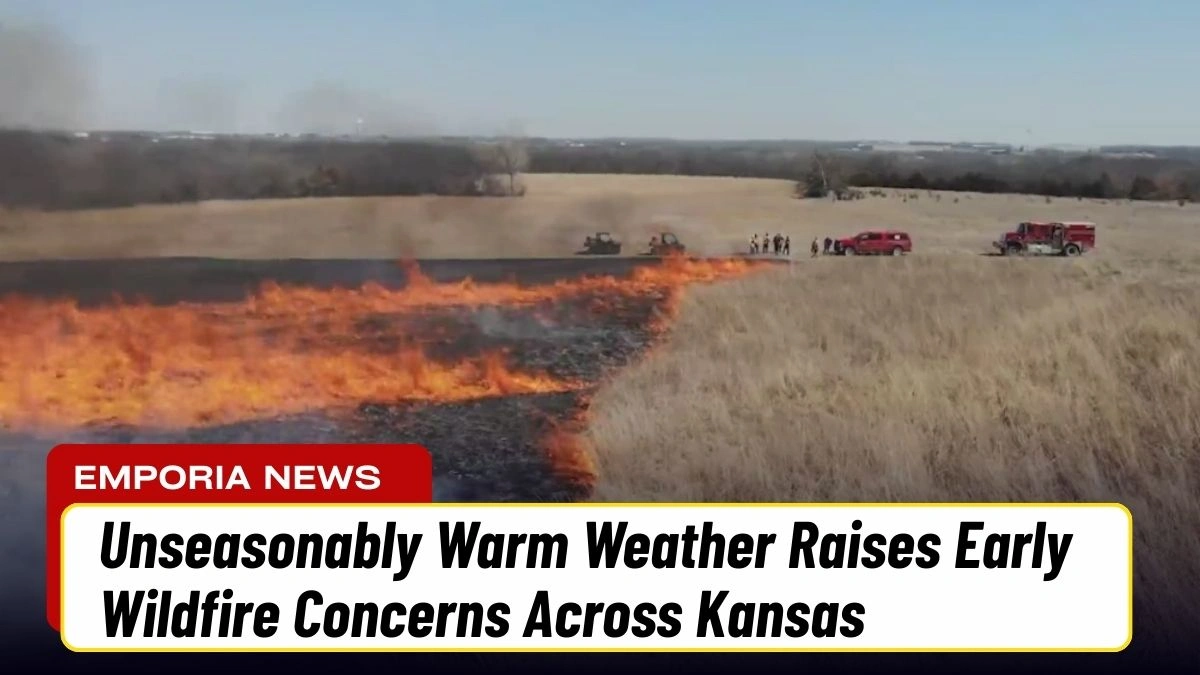
Kansas is facing an elevated wildfire risk due to unexpectedly warm and dry weather—an unusual scenario for January.
Fire officials say the current conditions feel more like early spring, a season typically associated with higher wildfire activity in the state.
Dry Grass, Low Humidity, and Strong Winds Create Danger

Fire departments across Kansas report that dry vegetation, low humidity levels, and gusty winds are combining to form highly flammable conditions.
The warmer-than-normal temperatures are further worsening the situation by drying out grass and other fuels that fires can easily spread through.
According to officials, even a single spark under these conditions can lead to a fast-moving grass fire.
Recent Grass Fire Highlights the Risk

The danger became clear recently in Kingman, where firefighters battled a grass fire sparked amid dry conditions.
Fire officials explained that the lack of recent rainfall has left vegetation brittle and highly combustible, allowing fires to spread quickly—especially with Kansas’ persistent winds.
Fire Officials Urge Vigilance During the “Off-Season”
Experts emphasize that January typically does not bring frequent weather fronts with both low humidity and high winds. However, this year’s weather pattern has created an uncommon and concerning combination that residents may not be prepared for.

Fire authorities are urging Kansans to stay alert, even though wildfire threats are not usually top of mind during winter months.
Wichita Metro Faces Similar Threats
The wildfire risk is not limited to rural areas. Fire crews in the Wichita metro area report the same dry grass conditions, increasing the potential for fires within and around the city.
Officials note that safety concerns remain high because fires can ignite from everyday sources, including vehicle-related sparks or improperly secured equipment.
Small Ignitions Can Lead to Big Fires
Fire officials warn that seemingly minor hazards—such as loose chains dragging from vehicles or sparks from equipment—can easily start fires in the current environment. Taking simple precautions can significantly reduce the risk.
Kansas Forest Service Supports Local Fire Departments
The Kansas Forest Service is working closely with fire departments across the state to help them prepare for the heightened risk. This support includes training and coordination for both large urban departments and smaller volunteer units.
Officials say this preparation is crucial, especially as conditions more typical of spring are appearing in the middle of winter.
Busy Weeks Ahead if Conditions Persist
Fire authorities caution that if the warm, dry weather continues, fire departments statewide could see an increase in wildfire activity throughout the month. Many recent fires, they note, were caused by previously burned areas that were not fully extinguished.
Residents are reminded to ensure any controlled burns are completely out to prevent rekindling.
Kansas’ unseasonably warm and dry January weather has created wildfire conditions that are more typical of spring. With dry grass, low humidity, and strong winds affecting much of the state, fire officials are urging residents to remain cautious and proactive.
Simple preventive measures—such as securing equipment and fully extinguishing burns—can make a critical difference in reducing wildfire risk during this unexpected winter fire season.