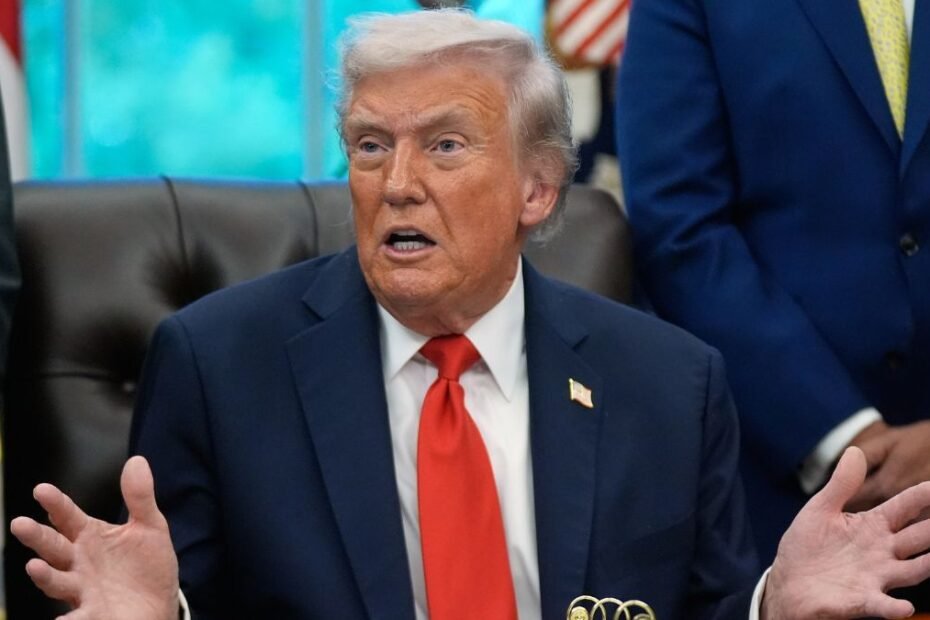
After losing the birthright citizenship case at the Supreme Court, President Donald Trump’s aides and MAGA supporters quickly moved toward a new immigration strategy: preventing pregnant foreign women from entering the United States.
The idea could create a fresh political and legal fight involving pregnancy, travel, immigration enforcement and citizenship rights. Instead of directly challenging the citizenship of children born in the U.S., the new proposal would focus on limiting who can enter the country before a child is born.
Supreme Court Rejects Trump’s Birthright Citizenship Order
On Tuesday, the Supreme Court ruled that Trump’s executive order seeking to deny citizenship to U.S.-born children of noncitizen parents was unconstitutional.
The decision marked a major defeat for the Trump administration’s attempt to narrow birthright citizenship. Soon after the ruling, Trump allies began promoting alternative ways to restrict citizenship access.
MAGA Figures Suggest Blocking Pregnant Foreign Women
Following the court decision, several MAGA-aligned figures raised the idea of barring pregnant foreign visitors from entering the United States.
Federalist founder Sean Davis suggested that the U.S. should stop pregnant foreign women from entering the country. Similar ideas were also discussed by administration figures.
Trump adviser Stephen Miller told Jesse Watters on Tuesday that the country must think carefully about who is allowed to enter, even temporarily. He argued that children born to noncitizens can become U.S. citizens and later access the social safety net.
White House Says Trump Remains Focused on Citizenship Policy
White House spokesperson Abigail Jackson told Axios that President Trump remains committed to protecting the value of natural-born American citizenship.
According to Jackson, Trump directed Congress to take immediate action after the Supreme Court ruling. She also said the Department of Justice would prioritize investigations into birth tourism schemes.
Jackson added that the Trump administration has several tools available to protect American citizenship.
What Is Birth Tourism?
Birth tourism refers to cases where foreign visitors travel to the United States specifically to give birth so their child can receive U.S. citizenship.
The issue has long been criticized by immigration hardliners, who argue that the practice takes advantage of birthright citizenship rules.
Trump has not directly endorsed a ban on pregnant visitors, but his first administration actively targeted birth tourism. He also appeared to reference the issue in a Truth Social post on Tuesday, sarcastically congratulating Chinese President Xi Jinping on what he called a major birthright citizenship win.
Justice Department Urges Prosecutors to Investigate
The Justice Department released a memo Tuesday encouraging prosecutors to investigate birth tourism schemes.
Assistant Attorney General Colin McDonald wrote that existing U.S. criminal laws already cover much of the conduct involved in many birth tourism operations.
He said many such schemes may begin with false visa applications, including lies about the purpose or length of travel to the United States.
Possible Charges in Birth Tourism Cases
McDonald said many cases could be prosecuted under visa fraud laws. However, he also urged prosecutors to consider other possible charges.
These may include:
| Possible Charge | Why It May Apply |
|---|---|
| Visa fraud | If applicants lie about the purpose or duration of travel |
| Wire fraud | If electronic communications are used in the scheme |
| Health care fraud | If medical services are obtained through false claims |
| Money laundering | If funds are moved to hide illegal activity |
| Aggravated identity theft | If false or stolen identities are involved |
How Common Is Birth Tourism?
The federal government does not officially track how many babies are born in the U.S. to foreign visitors.
However, outside estimates suggest there may be between 20,000 and 26,000 birth tourism cases per year.
For comparison, the Centers for Disease Control reported that 3.6 million babies were born in the United States in 2025. That means birth tourism represents a relatively small share of total births.
Privacy Concerns Over Pregnancy Screening
Critics say any plan to block pregnant foreign visitors could create serious privacy and civil rights concerns.
Katie O’Connor, senior director of federal abortion policy at the National Women’s Law Center, told Axios that the idea of pregnancy-related data reaching federal or state governments is dangerous.
She warned that it is unclear how officials would determine whether a traveler is pregnant or how far along the pregnancy is.
According to O’Connor, the process could involve simply asking travelers if they are pregnant, or it could go further. She said she does not know what to expect from the administration.
World Cup Citizenship Debate Adds New Context
The renewed push against birthright citizenship comes as the U.S. celebrates its World Cup team.
Several players on the team would not be eligible to represent the United States without birthright citizenship. One example is striker Folarin Balogun, who scored half of the team’s goals in its opening match.
This detail has added another layer to the debate, showing how birthright citizenship affects not only immigration policy but also national identity and representation.
What Could Happen Next?
The Trump administration has not formally announced a ban on pregnant foreign visitors. However, the Justice Department’s focus on birth tourism and Trump’s call for congressional action suggest the issue could become a major immigration priority.
The next phase may involve legal proposals, increased investigations, stricter visa screening or congressional action aimed at limiting birth tourism.
Any move to restrict pregnant travelers would likely face legal challenges and strong criticism from civil rights, immigration and women’s health advocates.
After the Supreme Court ruled against Trump’s birthright citizenship executive order, his allies quickly shifted attention to a new immigration strategy: restricting pregnant foreign women from entering the United States. Supporters argue the proposal could help stop birth tourism and protect American citizenship, while critics warn it could create serious privacy, discrimination and enforcement concerns.
With the Justice Department now urging prosecutors to investigate birth tourism schemes and the White House calling for congressional action, the debate over citizenship, pregnancy and immigration is likely to intensify.