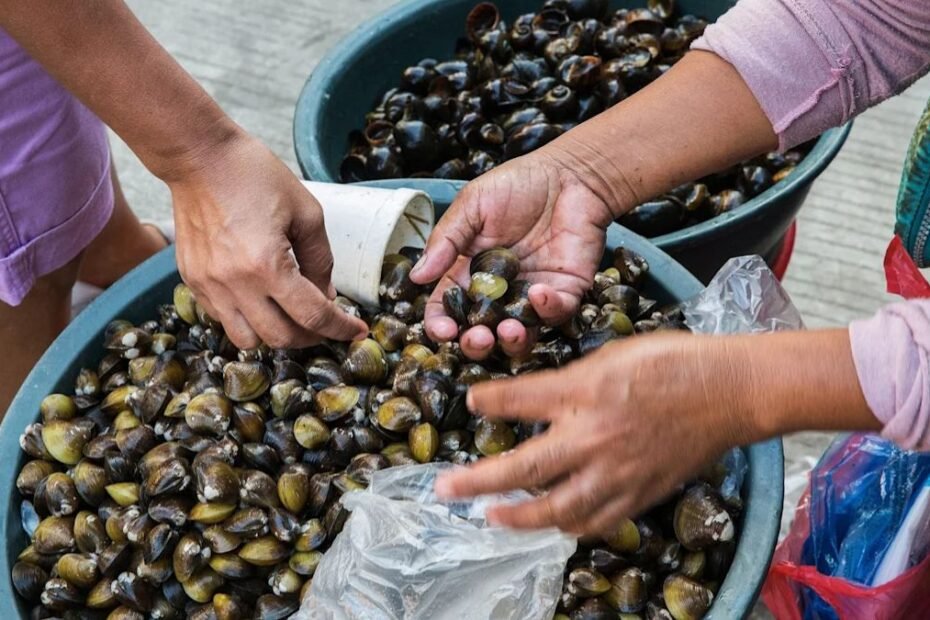
A shellfish prized in cuisines around the world is now raising ecological concerns along the Atlantic coast. Researchers have confirmed that the Manila clam, scientifically known as Ruditapes philippinarum, has established reproducing populations along parts of the northwestern Atlantic coastline, including Cape Cod and the Boston Harbor area.
Researchers Confirm New Established Populations
The discovery was made by a team of biologists led by the University of Massachusetts Amherst, MIT Sea Grant, and the Center for Coastal Studies.
Their study, published in Biological Invasions, reports the first verified records of reproducing Manila clam populations in the Northwest Atlantic Ocean.
Observations were gathered through field surveys, community science platforms such as iNaturalist, and reports from commercial and recreational shellfish harvesters.
Last Northern Hemisphere Region Without Manila Clams
Before this discovery, the northwestern Atlantic was the last major region in the Northern Hemisphere where Manila clams had not been documented as established.
Lead author Aly Putnam, a marine scientist and postdoctoral researcher at UMass Amherst, said researchers had been watching for the species because Manila clams had already spread across many other Northern Hemisphere coastlines.
Cape Cod and Boston Harbor Now Home to the Species
The study found Manila clams at multiple locations around Cape Cod and Boston Harbor between 2023 and 2025.
Researchers also documented northern occurrences reaching Salem Sound, north of Boston. Live individuals from Cape Cod measured between 31 and 71 millimetres in shell length, while samples from Boston Harbor included juveniles and early settlers, confirming the species is reproducing in the region.
A Rare Chance to Watch an Invasion Begin
Scientists say this discovery offers an unusual opportunity to study an invasive species at the early stage of establishment.
Because Manila clams are newly confirmed in this part of the Atlantic, researchers can monitor how quickly they spread, how they interact with native species and whether they become a major ecological force in New England waters.
Native to the Northwest Pacific
Manila clams are native to the Northwest Pacific, including coastal areas around Japan, China, Korea and nearby regions.
Over time, they have been introduced to many other coastlines, partly because they are widely farmed and commercially valuable. The study notes that the species is one of the world’s most widely introduced marine bivalves.
A Valuable Global Seafood Species
Although the species is now an ecological concern in New England, Manila clams remain an important seafood product.
They are popular in many cuisines and support a major global shellfish industry. Their commercial value is one reason the species has been moved and cultivated in different parts of the world.
Potential Ecological Concerns
Researchers say the long-term effects of Manila clams in the Northwest Atlantic remain uncertain.
The species can compete with native shellfish, hybridize with related species and change ecological communities when it forms dense populations.
If the clams expand widely, they could affect existing shellfish beds, food webs and coastal habitats.
Possible Benefits Also Being Studied
The researchers also note that the arrival of Manila clams may not only bring negative effects.
Carolina Bastidas, a research scientist with MIT Sea Grant and co-investigator on the study, said the clams could become food for other animals and potentially reduce predation pressure on native shellfish.
For example, predators such as green crabs may feed on Manila clams instead of softshell clams, which could offer some ecological relief for native species.
How the Clams Arrived Remains Unknown
Scientists do not yet know exactly how Manila clams reached northwestern Atlantic waters.
Possible pathways could include human activity, aquaculture-related movement, vessel traffic or other transport routes, but more research is needed before any source can be confirmed.
The study says further work is required to identify the likely source population, understand the clam’s role in Northwest Atlantic ecosystems and track its future spread.
Community Science Helped the Discovery
The research highlights the importance of community involvement in early detection.
Reports from shellfish harvesters and community science observations helped expand the known distribution of Manila clams and encouraged additional searches in 2025.
Scientists Continue Monitoring the Spread
Putnam said finding the species is only the beginning.
Researchers are now working to map its distribution, determine whether populations are expanding and study how Manila clams interact with native New England species.
The goal is to learn whether the clam will remain a small addition to the ecosystem or become a more influential invasive species in the coming years.
The confirmed arrival of Manila clams in Cape Cod and Boston Harbor marks a major ecological discovery for the northwestern Atlantic.
While the shellfish is globally valued as a seafood delicacy, its establishment in New England raises important questions about competition, habitat change, native shellfish, predators and coastal ecosystem balance.
Scientists say continued monitoring will be essential to understand whether this newcomer becomes a limited presence or a major player along the Atlantic coast.